Reclaim Your Future: Nigeria’s Activists Forge New Path for Women and Youth in Ecological Justice Fight
-
by
Peter Mazzi
Nigeria Social Action Camp 2025 Commenced with a Focus on Ecological Justice, Civic Space, and Legacy
Date of Commencement: 25th November 2025
Theme: “Reclaim your rights, reclaim your future: Women and youth for ecological justice”
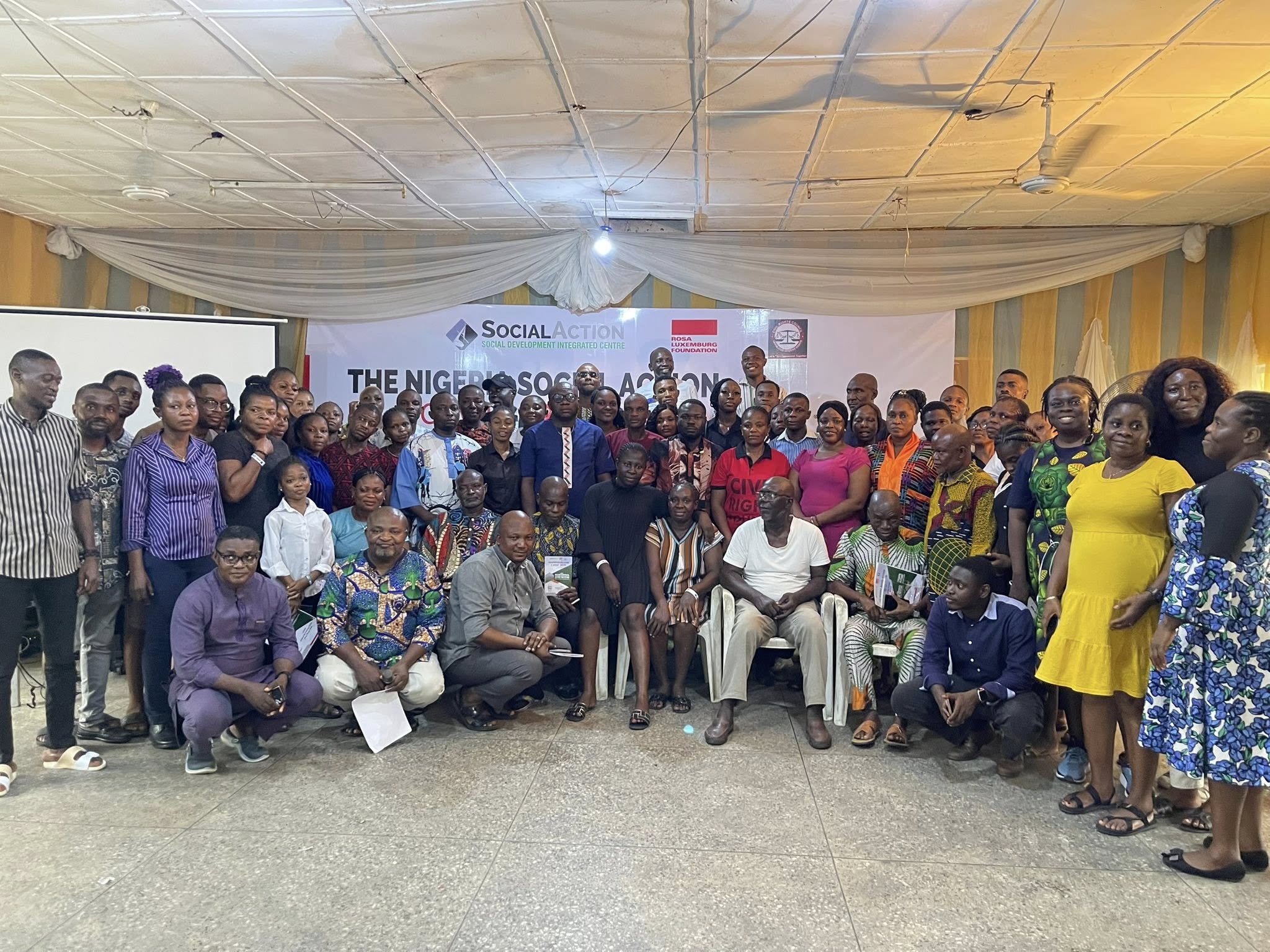
The Nigeria Social Action Camp 2025 officially commenced on November 25th, 2025, at the Citizenship and Leadership Training Centre, Aluu, near the University of Port Harcourt. Centred on the empowerment of women and youth in the struggle for ecological justice, the Camp fused rigorous intellectual discourse, historical remembrance, and strategic political education.
A Movement School Rooted in Struggle
The Social Action Camp—originally inaugurated as the Nigeria Anti-Imperialism Camp—has, since 2008, evolved into Social Action’s flagship political-education, leadership-development, and organising laboratory. Conceived as an intervention in the face of shrinking civic space, militarised extractivism, and deepening socio-economic inequalities, the Camp has become one of Nigeria’s most enduring hubs for radical political thought, grassroots mobilisation, and community leadership incubation.
Hosted annually in different locations across Nigeria, the Camp convenes a deliberately diverse cohort: young activists and student organisers, frontline community leaders, scholars, journalists, artists, environmental defenders, women’s collectives, and a new generation of social-movement builders. Over a week of intensive study, participants would interrogate the structural roots of Nigeria’s crises—imperialism, militarised development, petro-colonialism, state violence, ecological devastation, and democratic deficits—while simultaneously acquiring practical tools for resistance. These include advocacy skills, popular education, digital organising, media engagement, and nonviolent mobilisation.
Crucially, the Nigeria Social Action Camp is not a theoretical symposium; it is grounded in the lived experiences of dispossession. Participants encounter first-hand testimonies of communities in the Niger Delta whose waters have been polluted, whose farms have been destroyed, and whose political agency has been violently undermined by the fusion of state power, corporate impunity, and militarised resource governance. The Camp functions as both a repository of collective memory and a future-making engine—preserving histories of resistance while equipping new actors to imagine and build alternatives.
The Crisis of Governance and Shrinking Civic Space
The 2025 Camp convened in a period defined by a paradox of shrinking civic space within a formal democracy. Despite over two decades of civilian rule, systemic dysfunction persists. State institutions weaponise the judiciary, electoral processes, and security agencies to silence dissent, erode civil liberties, and disenfranchise citizens.
Against this backdrop, the Camp provides an ideological and strategic intervention—bringing activists together to analyse and counter these mechanisms of repression, while formulating coherent approaches to police reform, citizen engagement, and democratic reclamation.
Institutional Legacy: From the Camp to a National Human-Rights Infrastructure
Linked to Social Action’s network of Study Centres—local hubs of civic learning and mobilisation in rural and urban areas, perhaps the Camp’s most significant structural legacy is the Civil Rights Council (CRC). What began as a conceptual exercise in community activism is maturing into a nationwide grassroots human-rights infrastructure—documenting abuses, defending victims of police brutality, providing legal support, challenging corporate and state impunity, and democratising civic awareness. For some Nigerian communities, the CRC is now the first, and sometimes only, institutional line of defence against injustice.
Ecological Justice in the Heart of the Niger Delta
Situating the 2025 edition in the Niger Delta was not symbolic—it was strategic. The region remains the epicentre of Nigeria’s ecological catastrophe and petro-colonial exploitation. By foregrounding the theme “Women and Youth for Ecological Justice”, the Camp underscored how these demographics carry the disproportionate burden of environmental collapse, polluted livelihoods, and militarised extraction.
Sessions throughout the first day unpacked the intersection of gender, feminism, and environmental rights, establishing the political centrality of women and youth not as vulnerable victims but as frontline defenders of land, life, and future generations.
Opening Ceremonies: Setting the Stage
The day began with a series of inaugural interventions that grounded participants in the Camp’s purpose, history, and strategic direction.
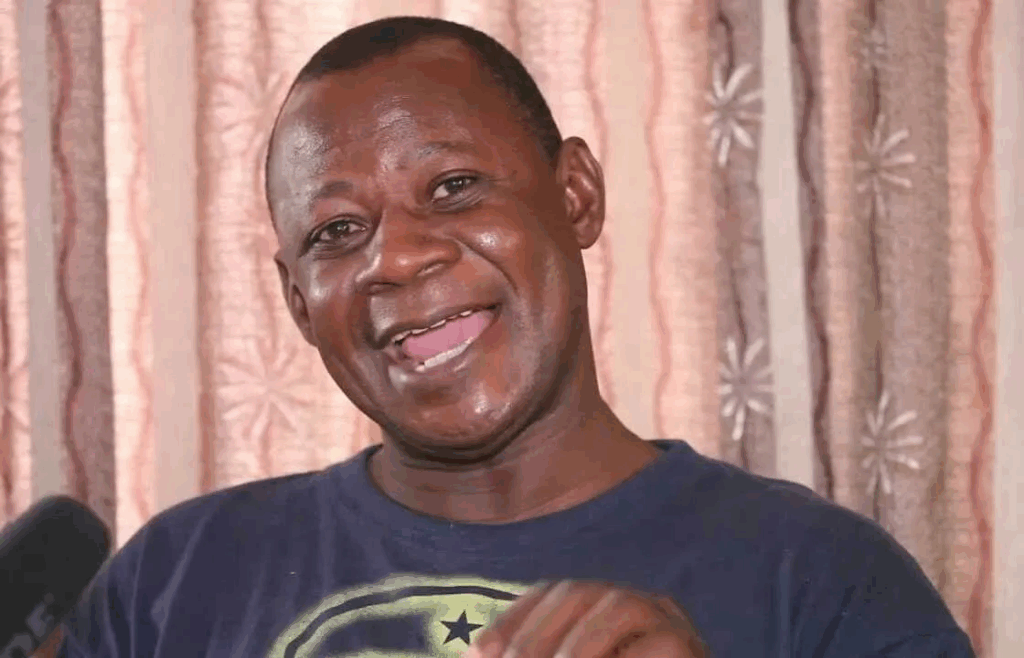
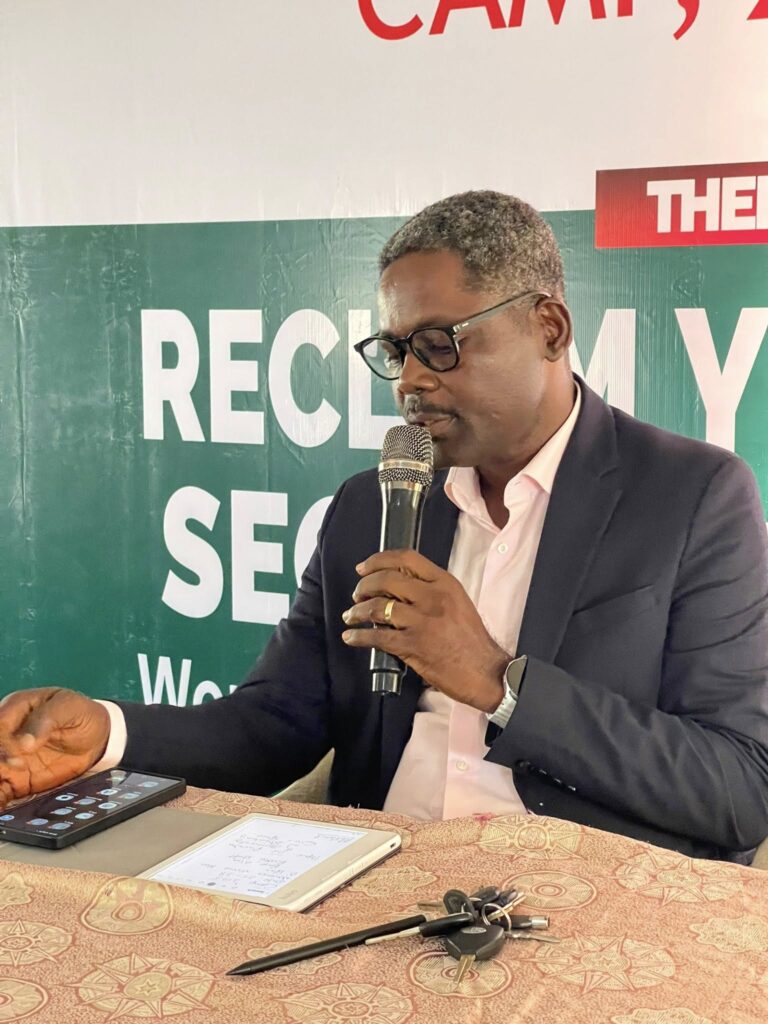
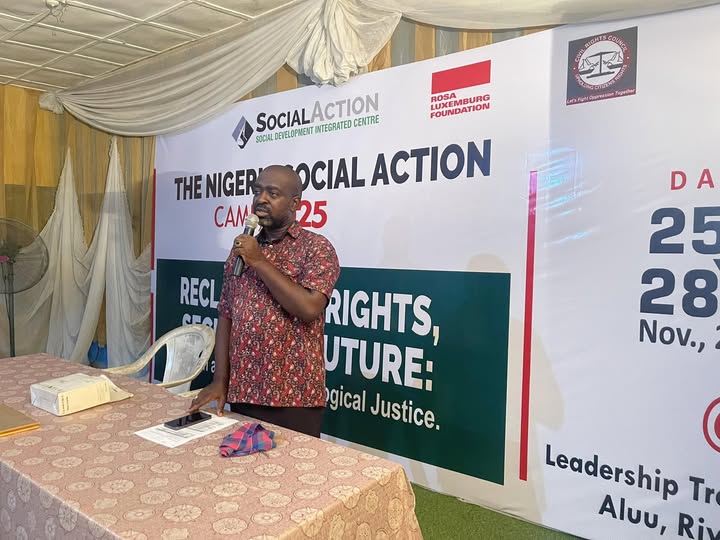
◼ Historical Context and Thematic Justification – Dr. Prince Edegbuo
Dr. Edegbuo of Social Action Nigeria traced the intellectual and organisational trajectory of Social Action, situating the 2025 theme within broader struggles for ecological justice, socio-economic rights, and popular sovereignty. He underscored the necessity of placing marginalised groups—particularly women and youth—at the forefront of the fight for systemic transformation.
◼ Welcome Address – Comrade Botti Isaac
Speaking on behalf of Social Action’s Director, Comrade Botti Isaac formally declared the Camp open. His remarks clarified logistical expectations and articulated a philosophical charge: participants were urged to treat the Camp not as a retreat, but as a battlefield for ideas, solidarity, and mobilisation.
Honouring a Fallen Comrade: The Legacy of Abiodun “Aremson” Aremu
A solemn segment was devoted to celebrating the life and struggles of Comrade Abiodun “Aremson” Aremu, a towering figure in Nigeria’s labour and civil rights movement.
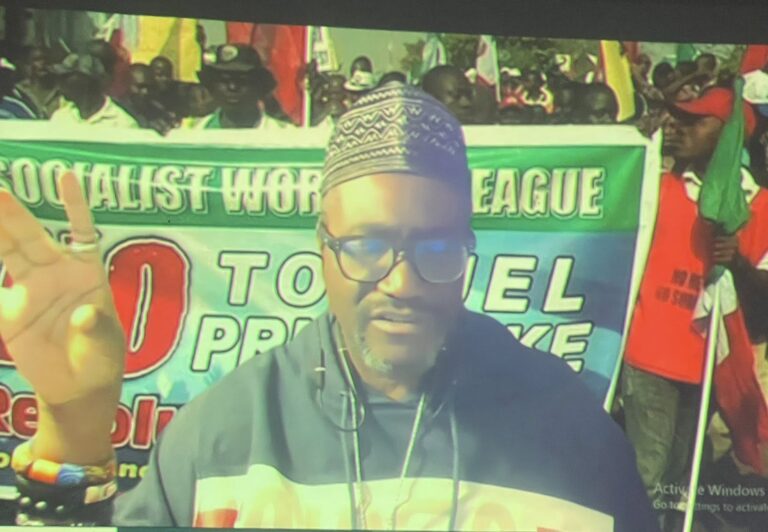
- Virtual Reflection by Comrade Hassan Soweto: Soweto delivered a moving tribute that linked Aremu’s revolutionary ideals to the contemporary struggles animating the Camp.
- Biographical Video: A curated documentary highlighted Aremu’s work as Secretary of the Joint Action Front (JAF) and his role in key pro-people mobilisations—reflecting a loss acknowledged by the NLC, TUC, and the broader progressive community.
- Condolence Register: Participants signed an official register, transforming collective grief into renewed commitment.
Intellectual Engagements: Lectures and Dialogues
Lecture: Democracy and the Paradox of Shrinking Civic Space – Prof. Fidelis Allen
Professor Allen dissected Nigeria’s contradictory political landscape—where the form of democracy persists even as the substance erodes. He outlined legal, political, and coercive strategies deployed to curtail dissent, prompting intense conversations about resistance and democratic reclamation during the subsequent Q&A.
Strengthening Constitutional Awareness Among Participants: A Practical Civic Education Session
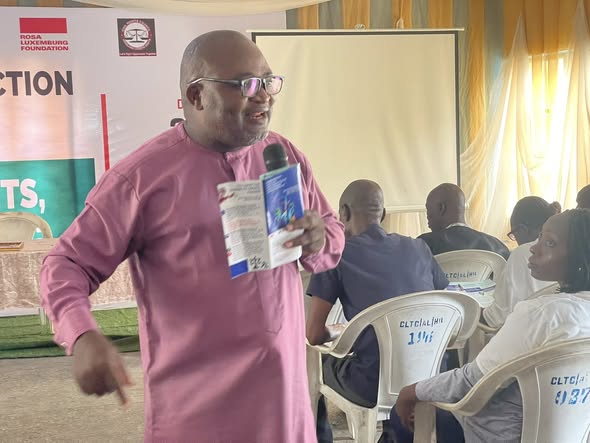
Barrister Arochukwu Paul Ogbonna led participants through an engaging Know Your Rights session, offering a concise yet impactful walkthrough of the key provisions contained in the legal rights pamphlet. He sensitized participants to fundamental elements of citizens’ rights as guaranteed by the Nigerian Constitution, emphasizing their practical relevance in daily life.
During the session, he also provided a vivid demonstration of lawful arrest procedures—explaining what constitutes a legitimate arrest, how the police are expected to conduct themselves, and who can rightly be apprehended for a crime. Importantly, he highlighted the illegality of arrest by proxy, clarifying that no individual should be detained for an offence committed by another, as this contravenes established legal standards
Exposé: Police Reforms and Citizen Engagement – Maureen Ifeanyi
Ifeanyi’s presentation distinguished:
- Institutional Reforms: Governing laws, oversight architecture, funding mechanisms, and systemic accountability.
- Operational Reforms: Everyday policing conduct, human-rights-based training, discipline, and transparency.
She demonstrated how reform simultaneously benefits citizens (through security and dignity) and the police institution (through professional legitimacy). The conversation evolved into practical advocacy strategies.


Practical Application: Breakout Sessions
Participants were divided into three platoons to explore:
Electoral Manipulation and Human Rights
Groups analysed how compromised elections violate fundamental rights, distort representation, entrench poverty, encourage unhealthy political culture, and weaken internal democracy within political parties.
Judicial Failure and Human Rights Impacts
Presentations highlighted how judicial capture denies justice, normalises impunity, and blocks citizens’ access to redress—weakening the rule of law itself.
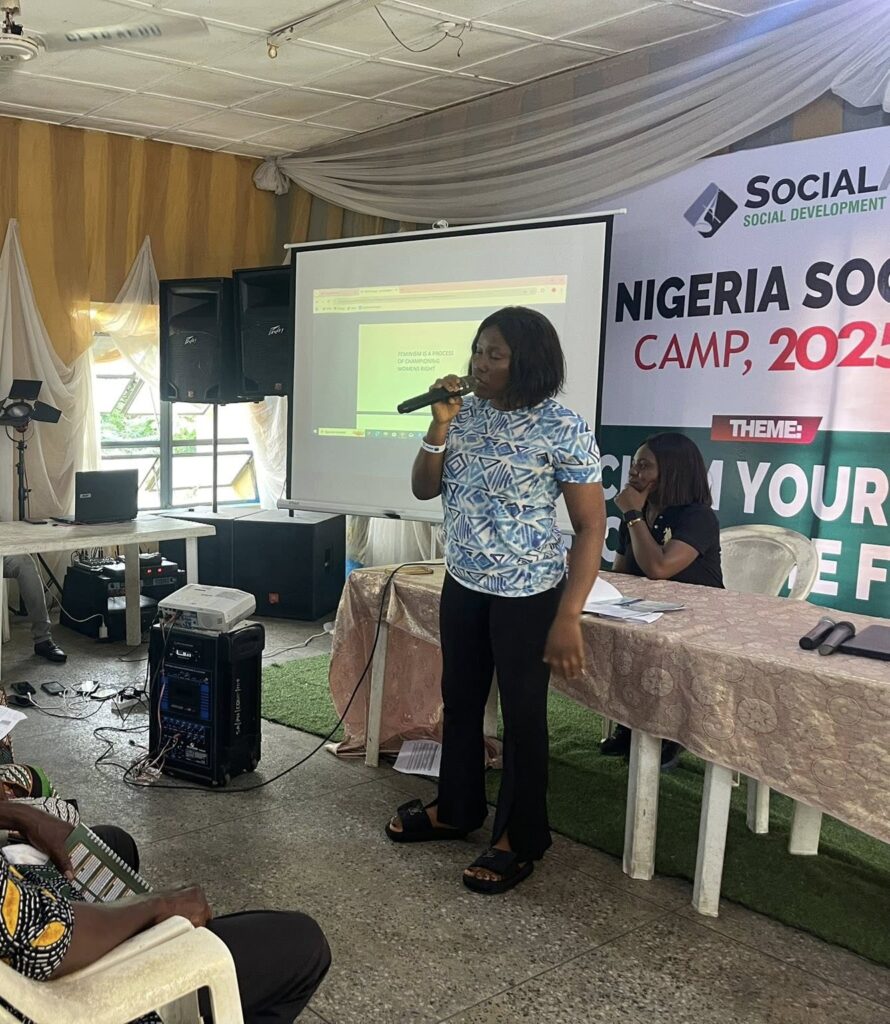
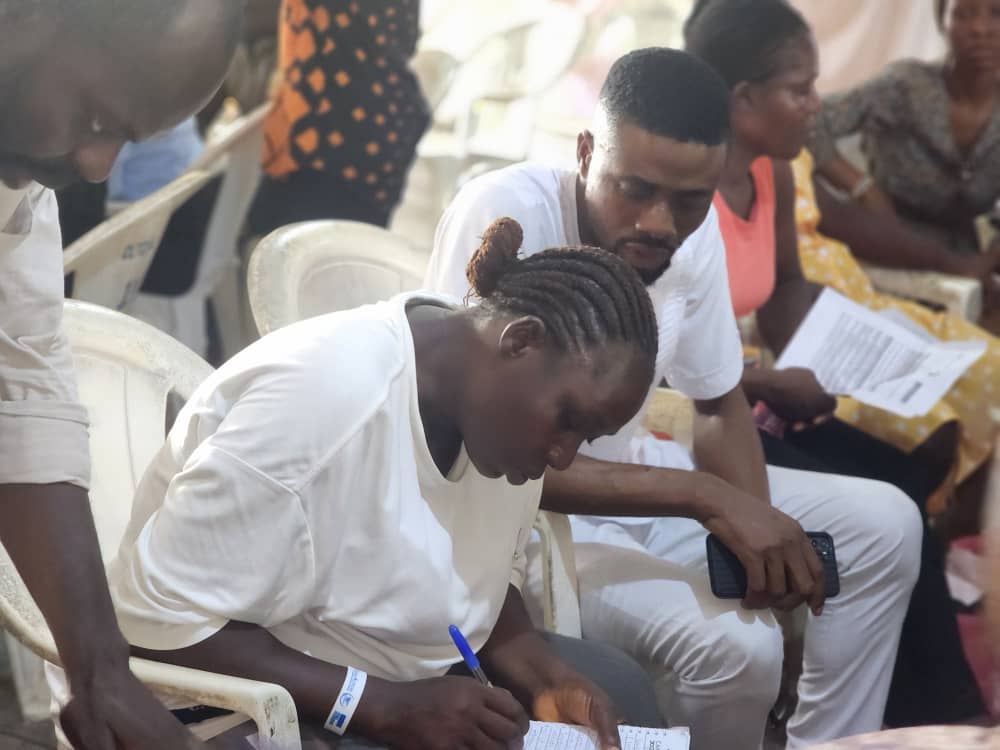

These sessions transformed keynote insights into shared analysis, reinforcing the Camp’s commitment to collective problem solving.
Historical Consciousness: Iva Valley Massacre Documentary
The screening of the documentary “Iva Valley Massacre”—on the colonial killing of striking coal miners in Enugu in 1949—situated contemporary struggles within a long lineage of resistance. Participants drew connections between colonial violence and present-day corporate/state repression, affirming that the fight for justice in Nigeria is historically continuous.
Conclusion: A Foundation for Days Ahead
Day One of the 2025 Social Action Camp ended as a resounding success—weaving together solemn remembrance, intellectual clarity, and activist resolve. By merging the legacy of Comrade Aremu with forward-looking debates on democracy, ecological justice, and human rights, the Camp firmly positioned itself as a site of ideological rearmament and movement renewal.
Armed with a deeper grasp of the interconnected nature of governance, ecological collapse, and civic repression, participants are now poised to spend subsequent days developing actionable strategies to reclaim their rights—and their future.