Anonymous Uniforms, Endless Abuse: Confronting Police Brutality in Nigeria
-
by
saction_
By Anumekanume Zudonu
Police brutality in Nigeria has not stopped, neither has it reduced. It has merely evolved; learning to wear a uniform and remove a name.
Today, one of the most dangerous tools of state abuse is not only the weapon, or the force deployed, but the growing practice of armed security personnel operating without visible identification. Police officers routinely carry out their duties without name tags, without service numbers, and without any traceable identity while exercising power over civilians.
When power is armed but unnamed, abuse becomes easier, accountability becomes difficult, and the rule of law begins to fade.
Across Nigerian states, it has become disturbingly normal to encounter fully armed police officers stripped of identity. They mount checkpoints, escort political actors, patrol neighbourhoods, and confront civilians while remaining effectively invisible in law.
In a constitutional democracy, this should be unacceptable. A democracy cannot survive on faceless force. Power that cannot be named cannot be challenged, and authority without identity is authority without limits. Anonymous uniforms do not protect officers, but protects their impunity.
Identification in policing is not comestic; it is a foundational accountability mechanism. When officers remove their names, they remove the public’s ability to demand accountability.Victims cannot identify perpetrators. Complaints cannot be properly investigated. Disciplinary systems collapse before they even begin.
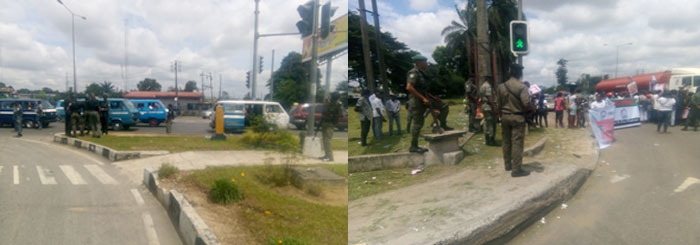
The removal of name tags by officers on duty is not an oversight, it is a calculated and deliberate attempt to cross legal and moral lines and eventually land safely in the shores of anonymity. A law abiding officer has no reason to hide. Only officers who intend to harass, extort, unlawfully detain, or brutalise civilians benefits directly from anonymity. In such situations, the uniform remains, but accountability disappears.
Nigeria’s legal framework is crystal clear. The Police Act 2020 establishes policing principles grounded in professionalism, transparency, and accountability, requiring officers to properly identify themselves in the course of their duties.
The Constitution of the Federal Republic of Nigeria 1999 further guarantees fundamental rights, including the right to dignity of the human person (Section 34), right to personal liberty (Section 35), and right to fair hearing (Section 36). When officers conceal their identities while conducting arrests, searches, or detentions, they undermine these safeguards and expose citizens to arbitrary state power.
Nigerian courts have repeatedly condemned police excesses, yet the abuses persist. In Fawehinmi v Inspector General of Police, the Supreme Court made it clear that the police must operate within the bounds of the law. Yet on Nigerian streets, the law often steps aside while unchecked power takes over. The law is not silent. The courts are not uncertain. What persists is not a lack of legal standards but a failure to enforce them.
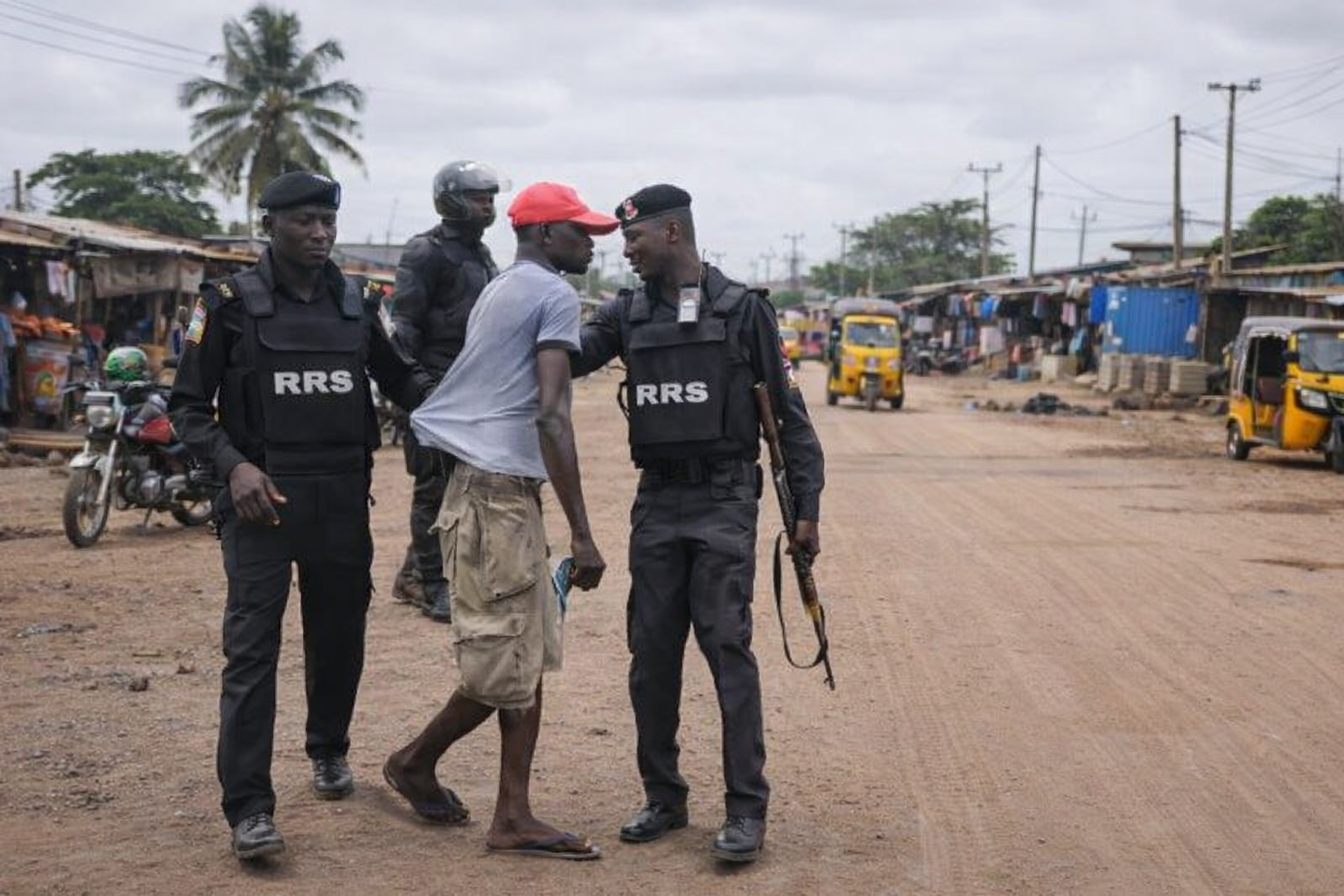
For many Nigerians, encounters with the police are no longer defined by protection, but by uncertainty and fear. Unlawful stop-and-search operations have become routine. Citizens are profiled based on appearance, age, or possession of mobile devices. Phones are searched without warrants. Individuals are detained arbitrarily. Extortion at checkpoints is normalised. Threats, coercion, and forced confessions occur in silence often without records, often without names.
Wrongful detention has become an investigative shortcut. Extortion has become an unofficial system. Exploitation has become embedded in everyday policing.
Even more disturbing is the growing use of the police as enforcers of private and political interests. Officers are increasingly deployed in civil disputes like debt recovery, contractual disagreements, and personal conflicts, matters that fall outside their constitutional mandate. The police Act 2020, under section 32(2), clearly provides that Police are not to interfere in civil wrongs. In Kure v Commissioner of Police, the Supreme Court condemned the misuse of police powers in civil matters and warned against the abuse of policing for private interests. Similarly, in Udeichi v Nigerian Police Force, the Federal High Court reaffirmed that the police are not tools for private battles.
In other instances, security personnel are used to intimidate political opponents or suppress dissent.
This represents a dangerous shift in policing priorities. When law enforcement becomes a tool for private gain or political control, it ceases to serve the public. It becomes power in uniform, detached from law.
The problem is no longer limited to the police. Armed military personnel now appear in civilian spaces, sometimes intervening in disputes that are purely civil in nature. When soldiers enter neighbourhoods armed, unnamed, and unaccountable, the law itself is placed under siege, and the line between security and suppression becomes dangerously blurred. Military uniforms were never meant to settle private disputes, and weapons of war were never meant to intimidate families in their homes.
A society where citizens fear the police more than criminals is a society in institutional crisis. When law enforcement becomes a source of fear rather than protection, trust collapses, citizens withdraw, crimes go unreported, and the justice system weakens. Legitimacy is not lost overnight, it is eroded through daily intimidation and silent fear. Public safety cannot be built on public terror.
In the face of persistent abuse, Social Action and many other civil society organisations have continued to play a critical role in promoting accountability and defending citizens’ rights. Through sustained advocacy, research, public education, and grassroots mobilisation, the organisation has supported communities affected by state abuse and strengthened civic awareness across Nigeria.
Beyond advocacy, Social Action has also engaged constructively with law enforcement institutions. Over the years, it has facilitated capacity building and human rights training programmes for the Nigerian Police Force and citizens, aimed at improving professionalism, strengthening accountability, and promoting rights based policing. This dual approach of challenging abuse while strengthening institutions, remains essential to long term reform.
Addressing police brutality in Nigeria requires more than rhetoric; it requires enforceable action. Officers on routine duty must be visibly identifiable at all times. Those who deliberately conceal their identities must face strict disciplinary consequences. Unlawful stop-and-search practices, including warrantless phone inspections, must be prohibited. The misuse of police for civil disputes must end. Independent oversight mechanisms must be strengthened, and human rights training must remain continuous within the force.
A uniform without a name badge is not an oversight. It is intentional. It signals power without responsibility, authority without restraint, and force without consequence. Until Nigeria confronts the culture of anonymous policing, brutality will remain not an exception, but a pattern.
Justice does not begin with weapons or uniforms. It begins with accountability, and accountability begins with a name.