Bayelsa Delegates Confront the Realities of HYPREP as the Niger Delta Awaits Its Own Reckoning
-
by
Peter Mazzi
The Visit That Carries a Region’s Hope
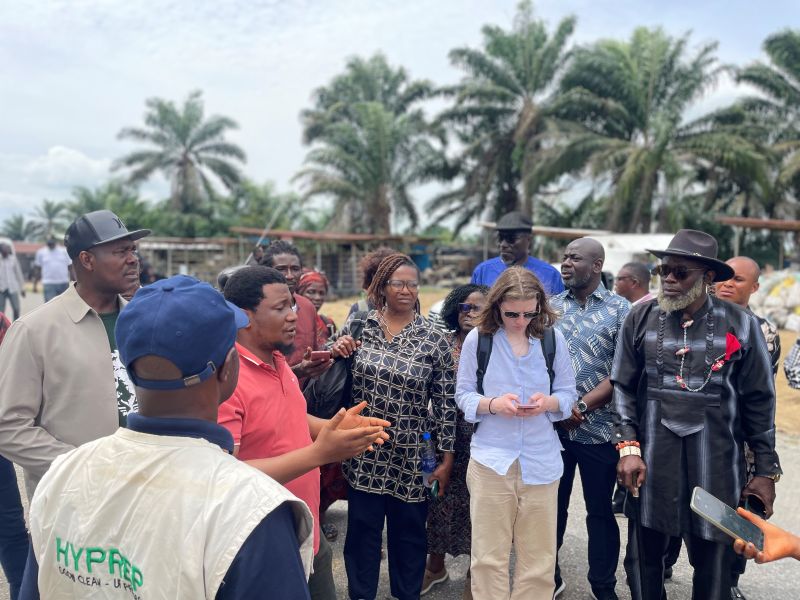
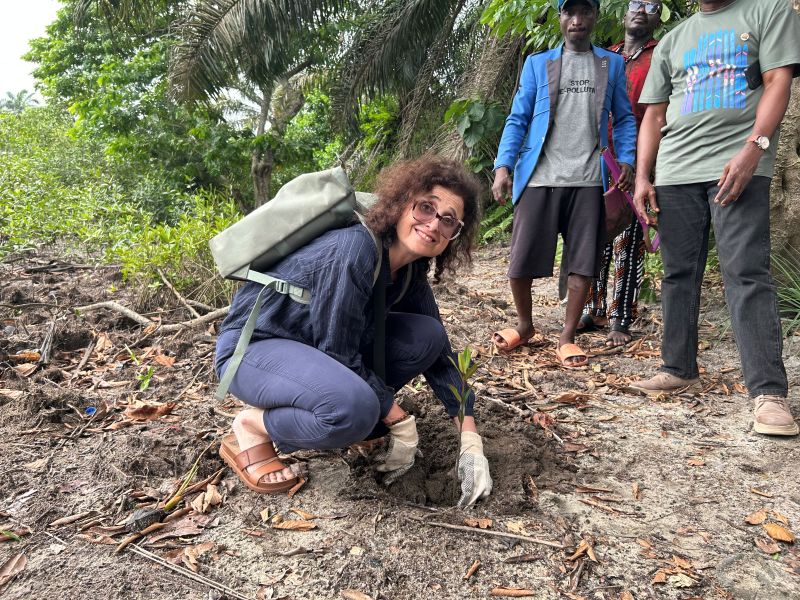
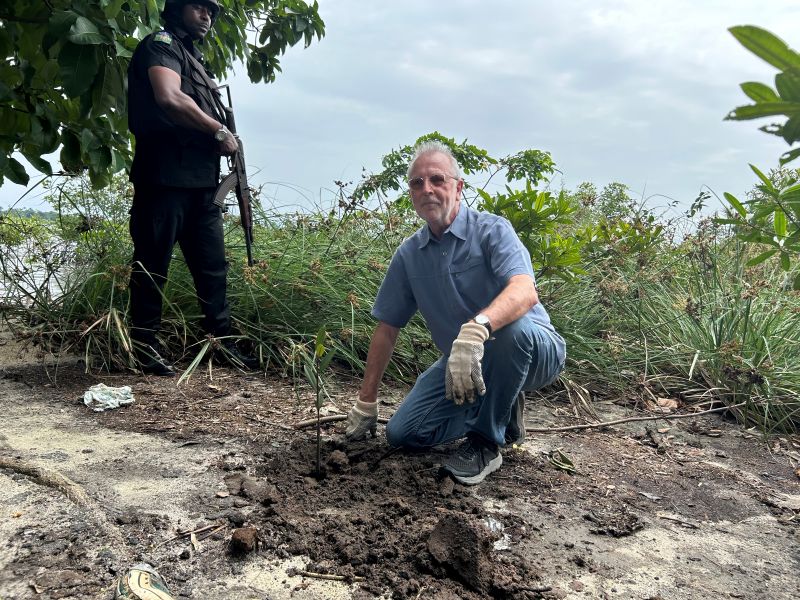
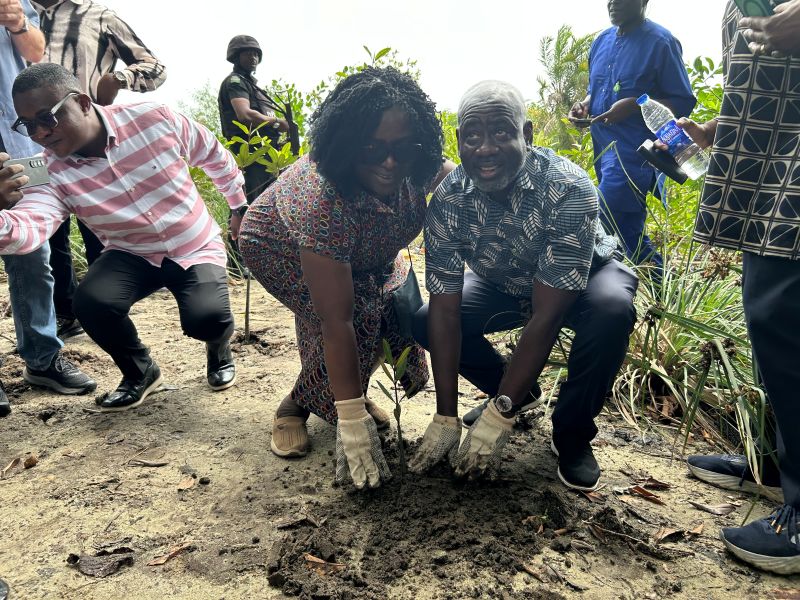
In a significant step toward translating environmental documentation into real-world action, a delegation from the International Working Group on Petroleum Pollution and a Just Transition in the Niger Delta (IWG) travelled to Ogoniland to observe firsthand the operations of the Hydrocarbon Pollution Remediation Project (HYPREP). The visit was not merely a study tour. It was a deliberate act of learning — an attempt by advocates, researchers, lawyers, community leaders, and civil society actors from across Nigeria and the international community to understand what a government-led remediation programme looks like on the ground, warts and all, before similar implementation is pursued in Bayelsa State.
The delegation that made the journey was broad and deliberately representative. Alongside the IWG’s core membership of advocates, researchers, and legal minds, the visiting party included representatives of Bayelsa State traditional institutions, the Bayelsa State NGO Forum (BANGOF), environmental groups, and youth and women’s organisations — a composition that reflected the conviction that the question of environmental remediation is not one for experts alone, but for every segment of society that has lived under the shadow of oil pollution. Their collective presence in Ogoniland sent an unmistakable signal: Bayelsa is not waiting for another generation to pass before it demands accountability
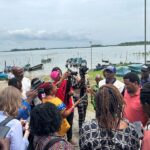
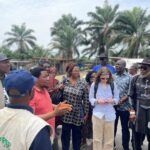
The IWG was established in direct response to the findings of the Bayelsa State Oil and Environmental Commission (BSOEC), whose report — An Environmental Genocide: Counting the Human and Environmental Cost of Oil in Bayelsa, Nigeria — revealed a pattern of contamination, ecosystem collapse, and public health catastrophe eerily familiar to anyone acquainted with the Ogoni story. As deliberations intensify around moving that report from documentation to implementation, the delegation came to Ogoniland with pointed questions: What has HYPREP achieved? Where has it fallen short? What institutional lessons must Bayelsa — and indeed the wider Niger Delta — learn before embarking on a similar path?
The delegation expressed appreciation to HYPREP for hosting them and enabling direct stakeholder observation of ongoing remediation efforts. They acknowledged that the UNEP Environmental Assessment of Ogoniland — the first globally recognised scientific assessment of petroleum pollution in the Niger Delta — remains a landmark document, one that not only catalogued the devastation wrought by decades of oil extraction on land, water, ecosystems, and public health, but also charted a practical pathway for recovery. For many across the Niger Delta, the UNEP report and the HYPREP project that followed it became twin symbols: one of the scale of environmental injustice, the other of the possibility — however imperfect — of institutional response.
The Weight of History Beneath the Soil
To understand why this visit matters, one must first understand what it means to be Ogoni.
For decades, the people of Ogoniland have lived with a pain that cannot be hidden beneath the surface of the soil. When they said no to oil extraction, it was not an act of rebellion without reason. It was the cry of a people exhausted by suffering — communities whose land had been stripped, whose waters had been poisoned, and whose future had been traded for promises that never came.
The oil companies did not only extract crude from Ogoni soil; they extracted years from the lives of the people. Farms that once fed families became lifeless. Rivers that once sustained communities turned dark with pollution. The air carried the heavy scent of hydrocarbons, and sickness quietly settled into homes. Yet, despite decades of oil exploration, many Ogoni communities still cannot boast of clean drinking water or any meaningful development to show for the wealth extracted beneath their feet.
Between 2020 and 2023, the Social Action team journeyed through communities such as Kporokpo-Tai, Bua, Bodo, and Eleme — not as tourists, but as witnesses. They met men and women whose lives had been shaped by broken promises and ecological destruction. They listened to mothers who pointed to polluted streams as their only source of water. They saw children drinking rainwater because the boreholes smelled of hydrocarbons. Everywhere they went, one message echoed with painful clarity: “Enough is enough. We are not enjoying anything from the oil companies.”
Their agitation eventually gained international attention. In 2011, the United Nations Environment Programme (UNEP) released its landmark report confirming severe hydrocarbon contamination across Ogoniland. Communities such as Bua, Olele, Nisisioken Ogale, Korokoro, and Bodo were identified as heavily polluted, with hydrocarbons discovered even in drinking water sources. Some boreholes emitted the sharp smell of petroleum.
HYPREP: Promise, Performance, and the Gap Between
Hope was renewed when the Federal Government launched HYPREP in June 2016 to implement the UNEP-recommended clean-up. The agency subsequently announced progress, claiming to have restored five polluted sites across three Ogoni Local Government Areas from the 21 sites it commenced remediation on in 2019.
But on the ground, the reality told a different story.
Community members lamented that the remediation efforts had produced little meaningful change. To many residents, HYPREP existed more in newspaper headlines and ministerial press releases than in the actual restoration of their environment. One community voice, speaking with unmistakable frustration, described the agency’s progress reports as “ridiculous” — a sign, he said, that HYPREP had “lost its social licence with the Ogoni people.”
Social Action refused to rely solely on community testimonies. The organisation sought direct engagement with HYPREP. Letters were written. Meetings were requested. Invitations were extended. There was no response.
Undeterred, Social Action embarked on its own field assessment of selected HYPREP project sites across Ogoniland. The purpose was clear: to gain firsthand insight into the progress, quality, and impact of ongoing remediation, environmental restoration, and livelihood support interventions — and to generate evidence-based recommendations that could strengthen accountability and improve project delivery.
One of the first stops was Bua community, where locals and tour guides walked the team through the site. What the team encountered was more than an environmental crisis. It was the story of a people still waiting — for justice, for restoration, for clean water, and for a future where their children no longer inherit poisoned land.
A Civil Society Voice: Remediation is a Moral Obligation, Not a Media Exercise
The IWG delegation’s areas of interest during the visit were specific and pointed: site remediation and environmental monitoring; community participation; mangrove and biodiversity restoration; potable water interventions; public health responses; institutional coordination; and the long-term sustainability of remediation efforts. They stressed the importance of strengthening dialogue among institutions, communities, civil society organisations, researchers, and policymakers — not as a formality, but as the foundation of any legitimate remediation process.
Speaking at the site, the Executive Director of Social Action, Dr Isaac Asume Osuoka, was unequivocal. Environmental remediation, he argued, is not merely a technical exercise. It is a moral responsibility owed to communities whose lives have been shaped by decades of neglect and exploitation. Reports, policy documents, and official statements may speak of progress, he noted, but the true measure of remediation must be seen in the daily realities of the people.
Success cannot be declared, he insisted, while families still struggle to find clean drinking water, while farmlands remain infertile, and while children continue to grow up surrounded by polluted creeks and contaminated soil. Genuine restoration requires transparency, accountability, and consistent engagement with the people who bear the consequences of environmental destruction — not after decisions are made, but throughout every stage of the process.
He warned against remediation that exists primarily as spectacle. What communities need, he said, are measurable changes: clean water running through homes, healthy rivers supporting fishing livelihoods once again, restored mangroves, safer air, and sustainable economic opportunities for affected families. Without these, remediation remains a performance staged for external audiences, not a service delivered to those who need it most.
The Lessons Ogoniland Holds for Bayelsa — and the Entire Niger Delta
The wider significance of the IWG delegation’s visit cannot be overstated. Bayelsa State is at a crossroads. The BSOEC report has set a foundation of evidence. Advocacy and public engagement are growing. The question now is not whether to act, but how — and whether the political will to act genuinely can be sustained against the entrenched interests that have long defined oil governance in the Niger Delta.
Ogoniland offers both a warning and a template. The warning is that well-resourced remediation agencies can still fail communities if accountability mechanisms are weak, community participation is tokenistic, and institutional transparency is lacking. The template is that with genuine political commitment, scientific rigour, and — critically — community ownership, large-scale environmental restoration in the Niger Delta is not a fantasy.
The Ogoni people’s struggle has never only been about oil pollution. It has always been about survival, justice, and the right to live on land that gives life instead of sickness. As the IWG delegation returns to Bayelsa armed with observations, questions, and hard-won insights from Ogoniland, that same struggle now belongs to a wider constituency.
The Niger Delta is watching. The communities most affected by oil pollution are watching. And civil society — unwilling to cede the field to official narratives — will continue to document, advocate, and demand that environmental justice is treated not as charity, but as the non-negotiable right of every community that has borne the cost of Nigeria’s oil wealth