
King Dakolo vs Shell: Corporate Escape, Court Delays, and a Community’s Case for Justice
-
by
saction_
Updated following court appearances of January 29 and March 18, 2026
Across the creeks and communities of the Niger Delta, the scars of oil extraction remain raw. For more than six decades, Shell’s operations polluted rivers, degraded farmlands, and left generations of families struggling to survive.
Shell’s decision to sell its holdings in the Niger Delta to Renaissance Africa Energy Limited (RAEL) — with President Bola Tinubu’s consent, against the considered opinion of the federal petroleum regulator (NUPRC) and the National Assembly, and without a prior environmental audit — threatens to transfer polluted assets without accountability. For affected communities, such divestment amounts to a corporate escape from justice.
Now, the people of Ekpetiama Kingdom are insisting that accountability must come before exit.
In a landmark legal challenge, His Royal Majesty, King Bubaraye Dakolo, Agada IV, Ibenanaowei of Ekpetiama Kingdom, has taken Shell and relevant Nigerian authorities to court, demanding that the company be held accountable before it leaves. Backed by Social Action Nigeria and allies in the struggle for environmental justice, the suit (FHC/YNG/CS/81/2025) has become a critical test of whether oil companies can walk away from decades of ecological destruction without first cleaning up and providing redress.
At the heart of the case is a simple but powerful demand: Shell must clean up, remediate, and compensate before any divestment of its onshore oil assets can be treated as lawful, complete, or legitimate.

The lawsuit therefore seeks orders compelling the Nigerian federal government and Shell to:
• reverse the divestment transaction until environmental remediation is completed;
• undertake comprehensive cleanup and ecological restoration; and
• establish a community compensation and restoration fund under independent oversight.
What the Case Is About
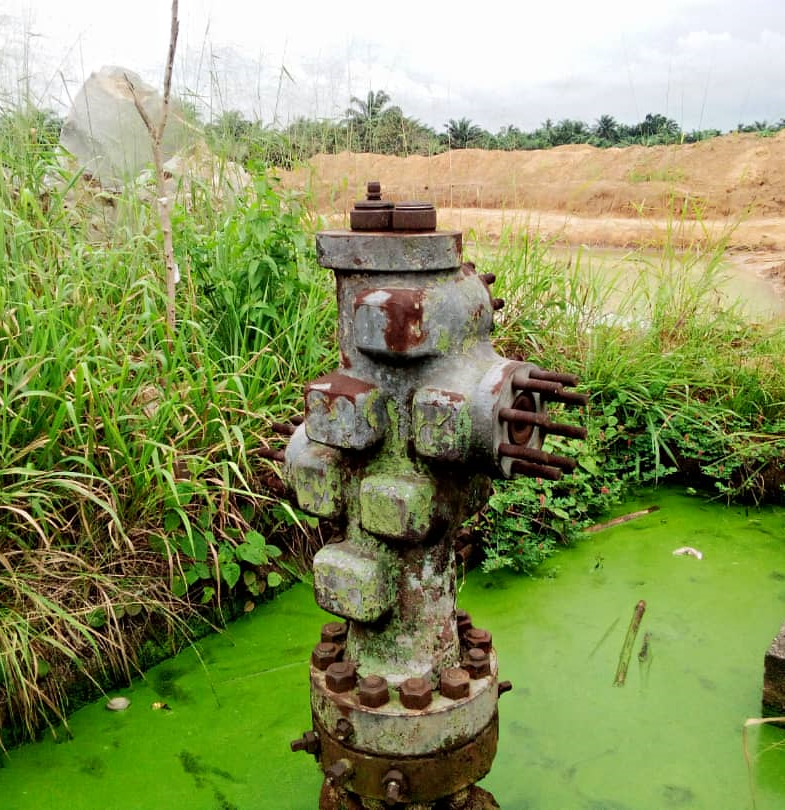
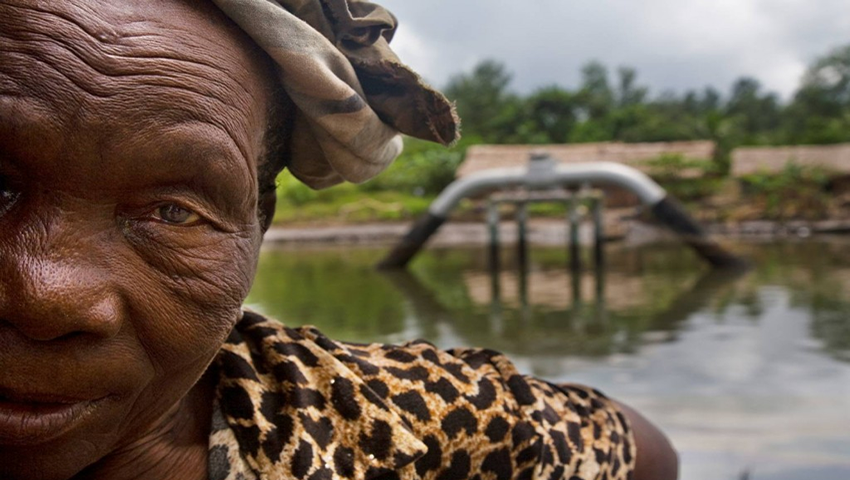
The Plaintiff’s Statement of Claim documents decades of destruction in Ekpetiama and surrounding areas: oil-spill sites left unremediated, gas flaring that blankets settlements in soot, and toxic discharges contaminating the Nun River and adjoining creeks. Farmland has been degraded, fishing livelihoods devastated, and communities exposed to continuing environmental and health risks.
The suit asks the court to halt the transfer of assets until environmental obligations are addressed, compel comprehensive cleanup and restoration, and secure compensation and other remedies for affected communities under credible and independent oversight.
Shell’s Preliminary Objection and the Pattern of Delay
In September 2025, Shell’s parent companies, Shell Petroleum N.V. and Shell plc, through their lawyers, filed a preliminary objection asking the Federal High Court to strike out the matter. They argued, among other things, that the court lacks jurisdiction, that the plaintiff has no standing, and that the foreign Shell entities cannot properly be sued in Nigeria.
These technical arguments seek to narrow the matter to procedural questions while avoiding the central issue: whether Shell can divest from polluted assets without first accounting for the extensive environmental and human damage left behind.
King Dakolo’s Response — Grounded in Law and Conscience
On behalf of his people, King Bubaraye Dakolo filed a Written Address in Opposition on October 13, 2025, rejecting Shell’s claims and urging the Court to exercise its constitutional mandate. His counsel, Chuks Uguru & Co., argues that:
• the Federal High Court has clear jurisdiction under the Constitution over oil-related and environmental matters;
• Ekpetiama Kingdom has locus standi as a community directly harmed by Shell’s operations;
• pollution constitutes a continuing violation of the constitutional rights to life, dignity, and a healthy environment; and
• Shell’s divestment without cleanup amounts to fraudulent concealment and unjust enrichment.
Relying on the African Charter on Human and Peoples’ Rights, the polluter-pays principle, and international norms such as Free, Prior and Informed Consent (FPIC), the plaintiff’s team presents the case as a struggle for human rights and environmental justice, not merely a commercial dispute.
Recent Court Developments: January and March 2026
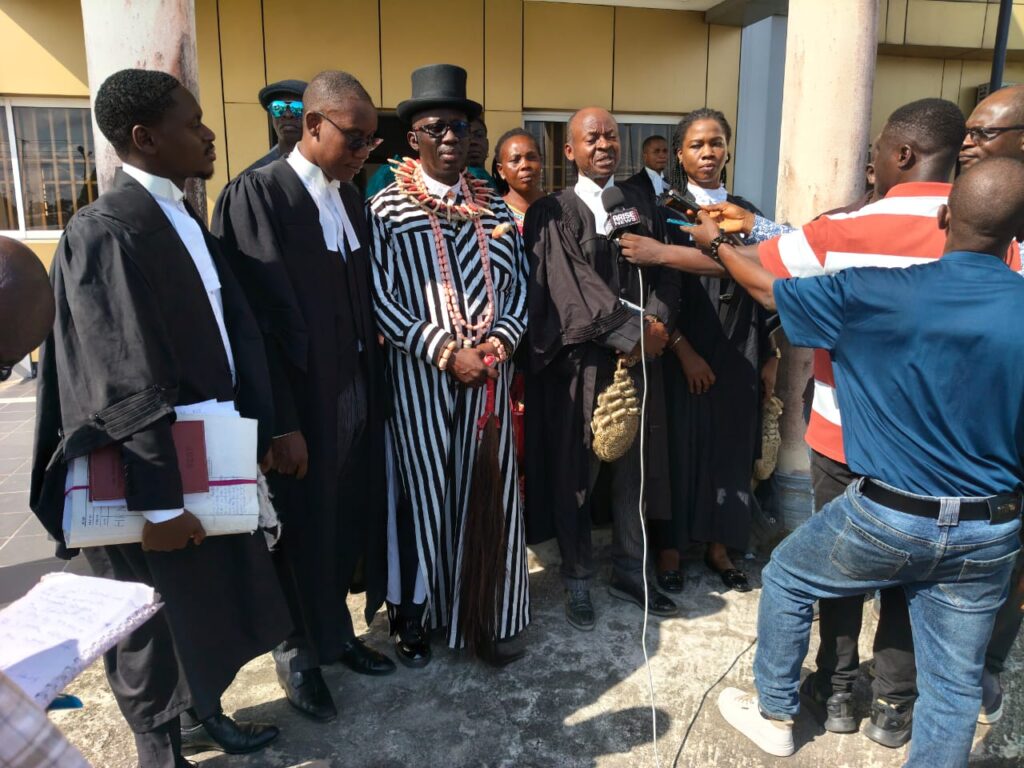
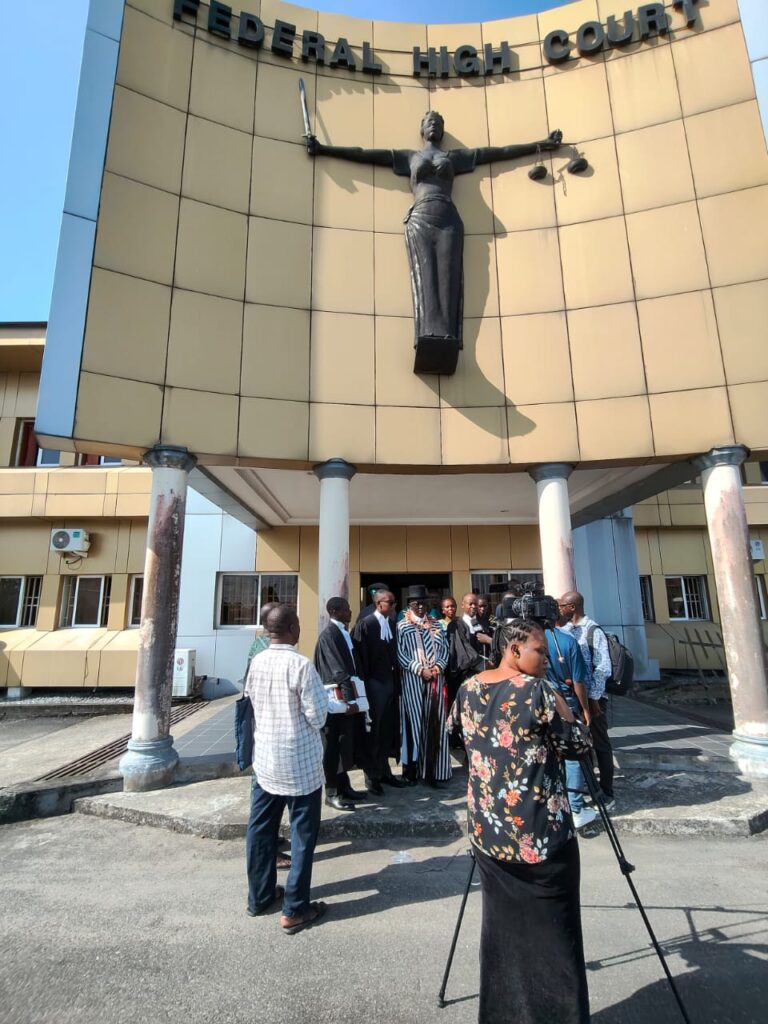
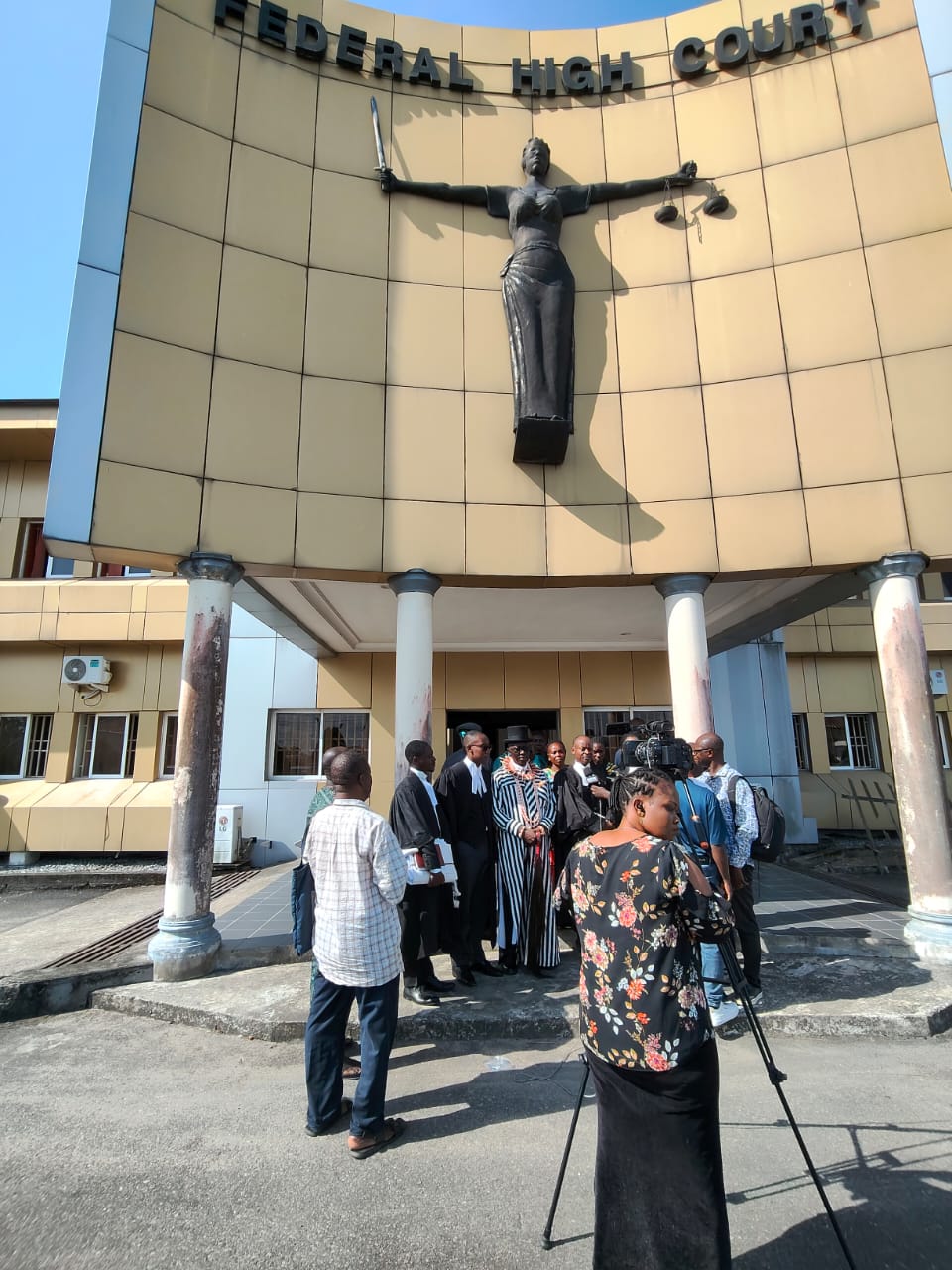
At the January 29, 2026 sitting in Yenagoa, Justice Ayo Emmanuel adjourned the matter to March 18, 2026, to hear the motion on the preliminary objection filed by the defendants. Counsel for the plaintiff also sought leave to amend earlier motions to correct typographical errors and serve updated copies.
When the matter came up again on March 18, 2026, the court did not proceed to hear the preliminary objection. Instead, the case was adjourned once more to May 6, 2026, because legal representatives from the office of the Attorney-General of the Federation were absent. Although the plaintiff’s counsel opposed the adjournment and urged the court to proceed, the court granted the request and fixed a new date.
These repeated adjournments are not neutral procedural events. They have real consequences for communities already burdened by decades of pollution, ill health, destroyed livelihoods, and the enormous financial and emotional costs of litigation. Every adjournment delays judicial scrutiny of Shell’s conduct and increases the risk that divestment will outpace accountability.
Why the Incessant Adjournments Matter
For affected communities, justice delayed is not an abstract concern. In the Niger Delta, delay has long been one of the most effective tools through which oil companies and state institutions wear down local claimants, stretch community resources, and weaken public attention. The burden of travel, legal costs, time away from livelihoods, and emotional strain falls overwhelmingly on communities already carrying the cost of extraction.
The March 18 adjournment was especially troubling because it resulted from the non-appearance of counsel from the office of the Attorney-General of the Federation, even though that office has ample institutional capacity to ensure representation. Such avoidable delays risk sending the message that the justice system is more accommodating of corporate and official convenience than of the urgent rights of citizens living with contamination.
A Community Position: Accountability Before Exit
King Bubaraye Dakolo has made clear that Ekpetiama Kingdom will not be deterred by procedural setbacks. The community’s position remains firm: Shell cannot simply disappear from Ekpetiama after decades of destruction and hand over polluted assets to another operator without first answering for the harm done to the people, the land, and the water.
Social Action Nigeria and the International Working Group on Petroleum Pollution and Just Transition share this concern. The incessant adjournments are undermining access to justice for communities that have already endured environmental devastation for decades. The case should be heard expeditiously, and all parties, especially public institutions, should act in ways that advance justice rather than delay it.
Why This Case Matters Beyond Ekpetiama
This case is about far more than one community. It raises a fundamental national question: can multinational oil companies divest from onshore operations in Nigeria without first addressing outstanding environmental liabilities and community claims?
A favourable outcome would affirm that cleanup, remediation, and compensation are not optional moral gestures, but necessary conditions for any legitimate transition or transfer of assets. It would also send a powerful signal to affected communities across the Niger Delta that the law can still serve the people and not only the polluters.
Toward a Just Transition
The Niger Delta cannot move into a new energy future while still drowning in the toxic waste of the old one. A just transition must begin with truth, remediation, restitution, and accountability. Anything less would amount to a managed escape for polluters at the expense of frontline communities.