
No Ecological Justice Without Gender Justice in Nigeria
-
by
Peter Mazzi
From the Social Action Camp 2025 Lecture by Comrade Betty Abah
Introduction: Forging a New Path
In a nation where the conversation about oil and ecology often centers on statistics, revenue, and political bargaining, the voice of those who bear the human cost can be drowned out. At the Social Action Camp 2025, themed “Reclaim Your Future: Nigeria’s Activists Forge New Path for Women and Youth in the Ecological Justice Fight,” one voice cut through with unflinching clarity and lived experience. It was the voice of Comrade Betty Abah—environmental journalist, feminist, and executive director of the Centre for Children’s Health Education, Orientation and Protection (CEE-HOPE).
This was not a lecture of abstract theory. It was a testimony, a chronicle of resistance, and a strategic blueprint delivered from the frontlines of Nigeria’s most profound environmental and social crisis: the Niger Delta. Abah reframed the narrative, compelling her audience to see the gas flares, oil slicks, and polluted creeks not merely as ecological disasters, but as manifestations of a deeper, gendered injustice
1. The Gendered Scars of the Niger Delta: Beyond Statistics to Lived Reality
Abah moved beyond abstract policy discussions to paint a visceral picture of the Niger Delta, where the promises of oil wealth have translated into a nightmare of pollution, poverty, and gendered violence.
- Health and Livelihood Catastrophe: She detailed how gas flaring, Nigeria is one of the world’s top gas-flaring nations, burning approximately 243.8 billion standard cubic feet of gas in 2023 alone (NNPC data), and incessant oil spills have devastated the ecosystem. For women, whose traditional roles involve farming, fishing, and fetching water, this is an economic and health death sentence. The 2011 UNEP Report on Ogoniland documented carcinogens like benzene in water sources at levels over 900 times the WHO standard, directly linking to reproductive health crises, miscarriages, and maternal mortality Abah highlighted.
- Disproportionate Economic Impact: With farmland and waterways poisoned, women lose their primary means of subsistence and income. This exacerbates poverty and dependency, forcing them into vulnerable situations.
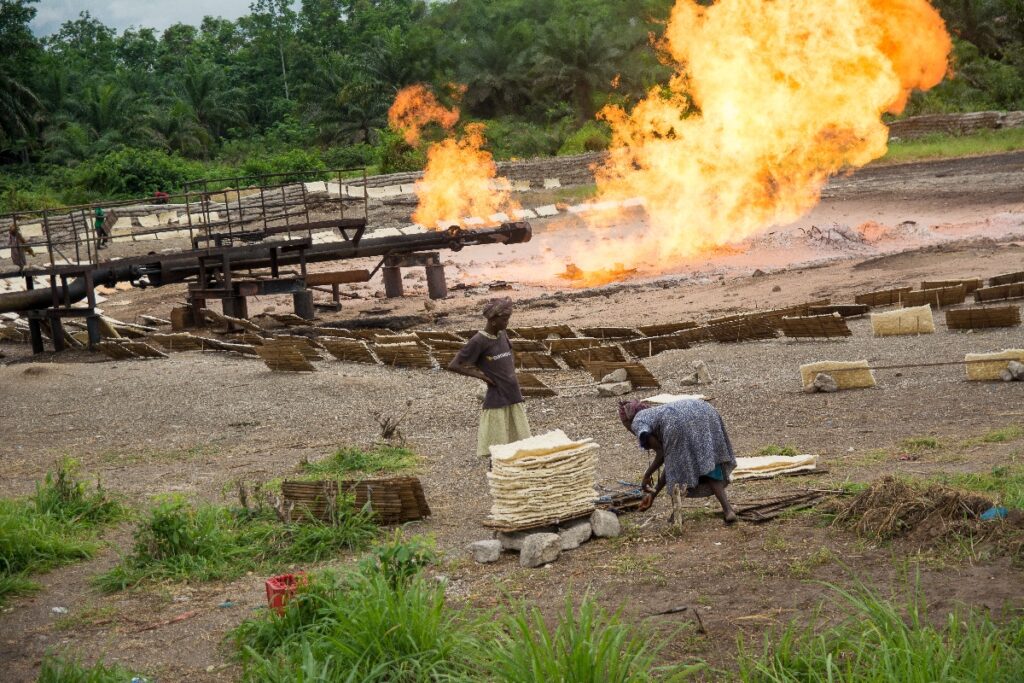
“In the Niger Delta, the poison in our water and the flames in our skies are not just an environmental crisis—they are a war waged on the bodies and futures of our women. You cannot separate the fight for a clean earth from the fight for a woman’s right to life, dignity, and a seat at the table. To reclaim our future, our environmental movement must be fundamentally feminist and fiercely inclusive, or it will fail.” — Comrade Betty Abah,
2. Gender-Based Violence as a Tool of Ecological Injustice
Abah’s most harrowing testimony centered on sexual violence as a direct consequence of the region’s militarized and exploitative oil economy.
- Violence from State and Corporate Actors: She shared interviews with women raped during military raids on communities protesting environmental degradation. Furthermore, she exposed the exploitation by some oil company workers who use promises of jobs or money to sexually exploit young women and girls. This frames environmental injustice not merely as pollution, but as a system that enables the violation of women’s bodies.
- The Data Void and the Silence: While comprehensive national data on this specific nexus is scarce, organizations like Nigeria’s National Bureau of Statistics (NBS) and Amnesty International have documented widespread sexual violence in conflict settings. Abah’s work underscores that in the Niger Delta’s “silent war,” Gender-Based Violence (GBV) is a weapon, and women’s bodies are the battleground.
3. Gender Justice is Ecological Justice: A Foundational Principle
Abah’s core thesis is uncompromising: there can be no true ecological justice without gender justice. The fight to reclaim the environment is inseparable from the fight for women’s equality.
- Equal Representation in Activism and Decision-Making: She lamented the frequent sidelining of women and youth from community leadership, negotiations with oil companies, and environmental policymaking. If the future is to be reclaimed, those most affected, women and youth, must lead the charge. This aligns with global findings that environmental projects with women’s full participation are more sustainable and effective.
- Systemic Change Over Tokenism: The call is for a fundamental shift, not just including women in broken systems, but transforming those systems to be inherently equitable.

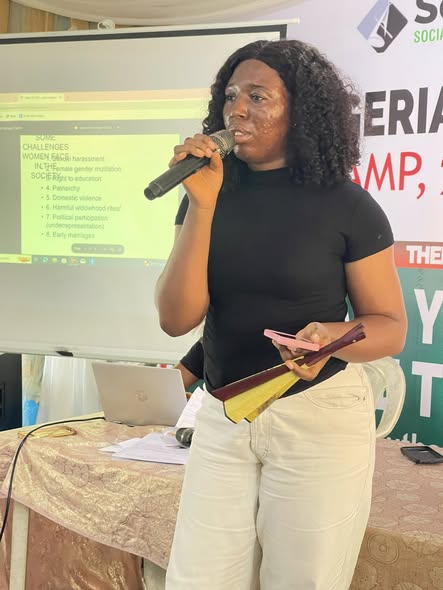
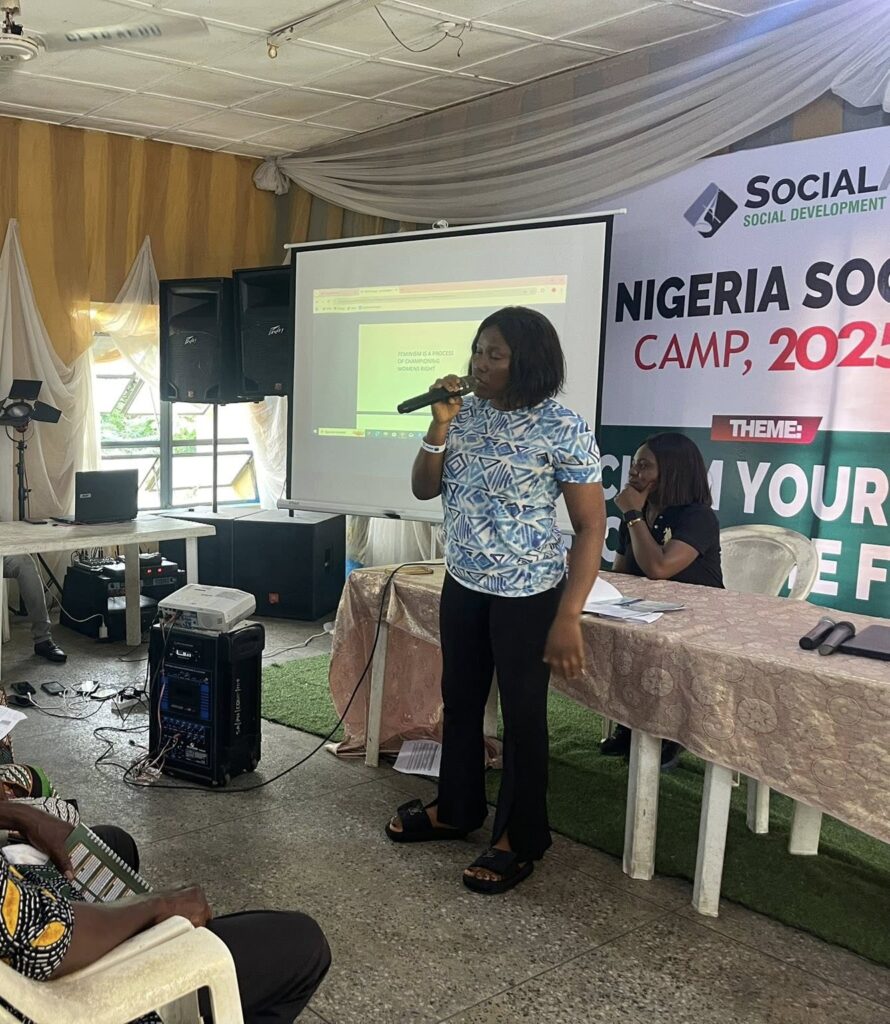
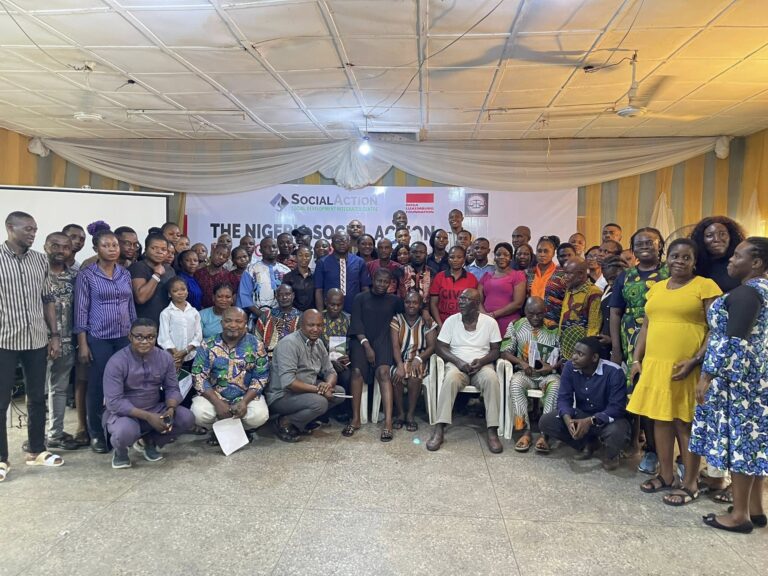
Women making impact at the Social Action Camp 2025
4. Expanding the Fight: Period Poverty, Culture, and Legal Frameworks
Linking the Niger Delta struggle to nationwide issues, Abah discussed broader barriers to women’s equality that impact their capacity to engage in activism.
- Period Poverty: She highlighted how a lack of access to sanitary products keeps girls out of school, limiting their education and future agency. With over 37% of Nigerian women and girls living in extreme poverty (World Bank), the cost of period management is a significant justice issue.
- Harmful Cultural Practices: Abah addressed discriminatory inheritance laws, widowhood practices, and child marriage, which disempower women economically and socially, making them more vulnerable to environmental shocks.
- The Imperative for Legal Frameworks: She stressed the need for robust laws and their enforcement, such as the Violence Against Persons Prohibition (VAPP) Act, which only about 35 of Nigeria’s 36 states have adopted, and the Climate Change Act, whose implementation must be gender-sensitive.
5. The Role of Men and the Methodology of Change
Responding to audience questions, Abah clarified that feminism is not about male antagonism but about collaboration for a just society. She called on men as allies, as fathers, husbands, and leaders, to champion equality. Crucially, she advocated for non-violent, persistent activism, education, and the need for an open mind to unlearn patriarchal norms.
Conclusion: Reclaiming the Future – An Urgent, Inclusive Mobilization
Comrade Betty Abah’s lecture at the Social Action Camp 2025 provided a masterclass in intersectional activism. The contemporary realities are stark:
- Nigeria faces escalating climate impacts, desertification in the North, floods in the South, that will disproportionately affect women.
- The ongoing oil exploration, including controversial moves in the Niger Delta Basin and new frontiers like the Benue Trough, threatens to repeat the gendered injustices of the past.
- With a youth bulge and a population where women constitute about 49.6%, sidelining them is not only unjust but strategically foolish for any movement seeking transformative change.
To “Reclaim Your Future,” Nigeria’s ecological justice movement must be fundamentally feminist and youth-led. It must fight for the cleanup of the Niger Delta with the same vigor it fights for girls’ education and women’s political representation. It must document environmental data with the same precision it documents cases of sexual exploitation. As Abah’s life work exemplifies, the path forward is one of collective courage, where the fight for a healthy planet and the fight for gender equality are one and the same.
The future will be reclaimed not by a few, but by the full, empowered, and equal participation of all—women, youth, and men—standing on the frontline of justice