
Social Action & IWG Partners Draw Global Attention to Nigeria’s Oil Pollution at New York Climate Week
-
by
saction_
New York, September 25, 2025 — At the Ford Foundation’s Center for Social Justice, Social Action International and partners formally launched the International Working Group on Petroleum Pollution & Just Transition (IWG) during Climate Week. The event brought together community leaders, global advocates, artists, and scholars to deliver a message that reverberated from New York to the Niger Delta: polluters must pay, cleanup must happen, and communities must lead the way into a just energy transition.
A Coalition for Justice
The IWG emerged from the work of the Bayelsa State Oil and Environmental Commission (BSOEC), which in 2023 published the landmark Environmental Genocide report. That report documented decades of oil-induced destruction in the Niger Delta, exposing high levels of toxic contamination. It called for the creation of a multibillion-dollar recovery fund, effective decommissioning of abandoned oil wells, and legal mechanisms to hold oil multinationals to account. With Shell, ENI, and TotalEnergies divesting from onshore operations in the Niger Delta, the IWG was created to ensure that divestment does not mean desertion. The coalition insists that companies must first remediate and restore the lands and waters they have devastated.
Poetry and Performance as Resistance
The convening, held under the theme “Make the Polluter Pay: Environmental Genocide & Just Energy Transition,” opened with cultural performances that set a tone of memory, defiance, and resistance.

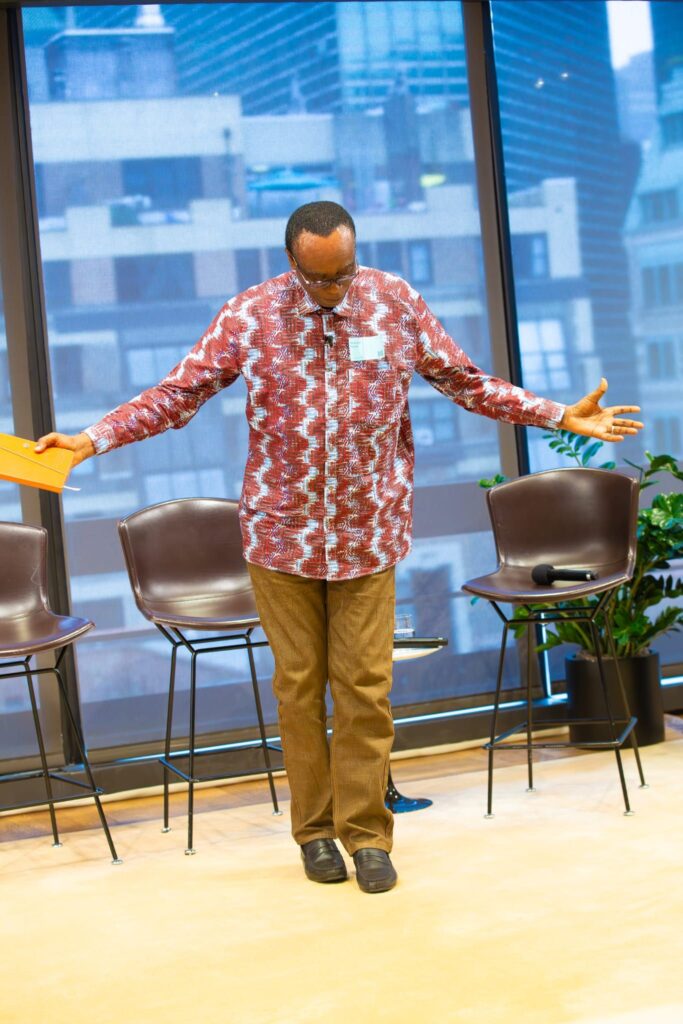

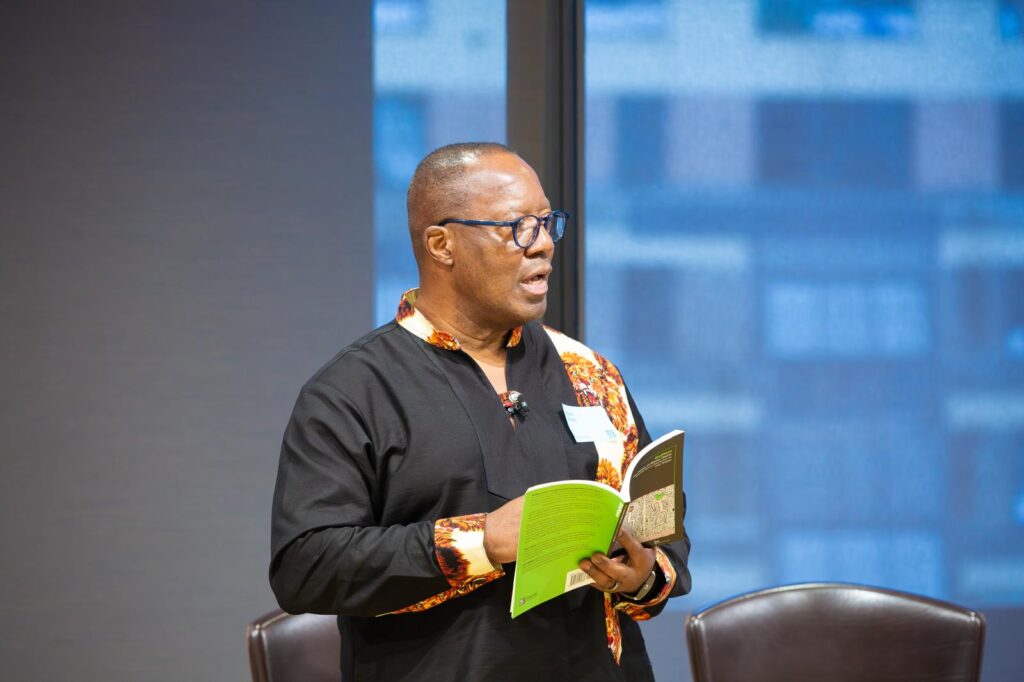
Nnimmo Bassey, Director of the Health of Mother Earth Foundation (HOMEF) and member of the IWG, recited his iconic poem “We Thought It Was Oil, But It Was Blood.” The performance, raw and evocative, reminded participants that the oil economy has extracted life itself from the Niger Delta — leaving blood, not prosperity, in its wake. Following this, Professor Nduka Otiono, Director of the Institute of African Studies at Carleton University, Ottawa, Canada, performed “Oil and Guns” in collaboration with Professor Engobo Emeseh, who heads the School of Law at the University of Aberystwyth, UK, and is a founding member of the IWG. Their joint performance wove together art and law, painting a picture of the violence — physical, political, and environmental — that has accompanied petroleum extraction, while also insisting that resistance can and must shape the future.
Testimony and Truth from the Frontlines
Dr. Isaac Asume Osuoka, Director of Social Action International and co-convener of the IWG, and Emmanuel Kuyole, Programme Officer for Extractives and Climate Change at the West Africa office of the Ford Foundation, welcomed the participants. Dr. Osuoka highlighted the stakes: “The energy transition must be about people, their environment, and their future. Communities that bore the costs of extraction must participate in shaping the future away from fossil fuels — and polluters must finance cleanup, restoration, and a just transition. How do we make that happen?”. Emmauel Kuyole,
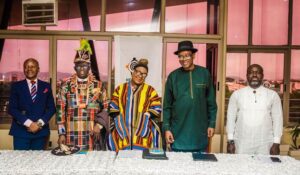
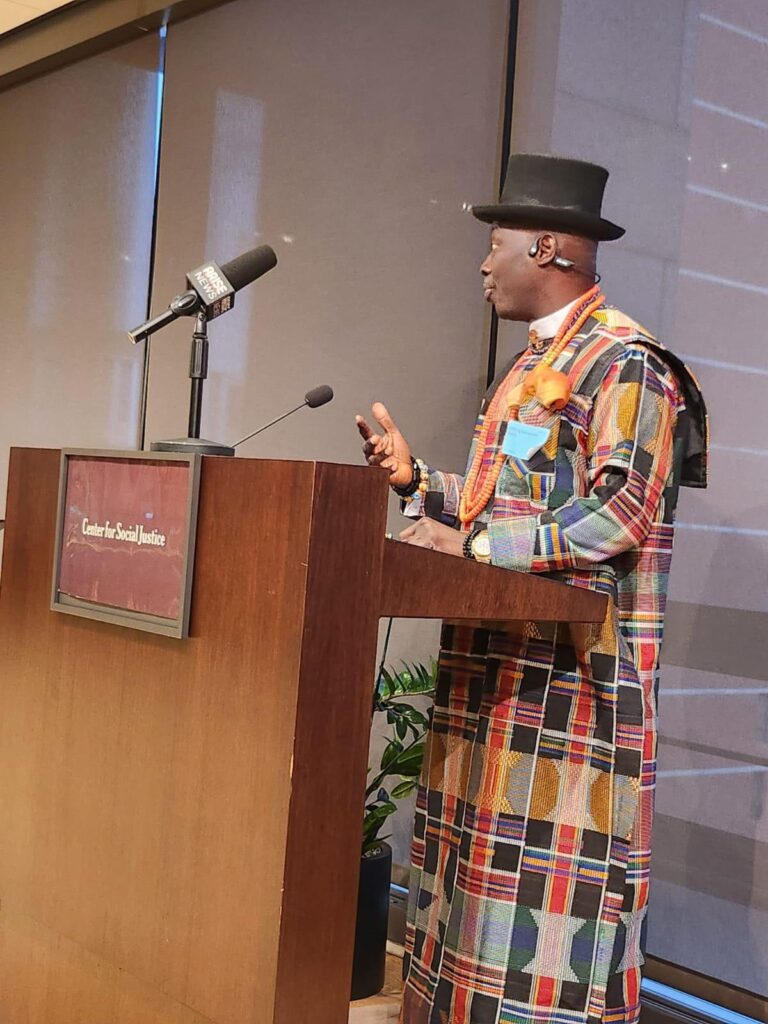
His Royal Majesty King Bubaraye Dakolo, Ibenanaowei of Ekpetiama Kingdom and Chairman of the Bayelsa State Council of Traditional Rulers, recounted the devastation of his people’s lands and waters, describing how livelihoods and traditions have been eroded by relentless pollution. Emem Okon, Executive Director of the Kebetkache Women Development and Resource Centre, added the critical perspective of women, detailing the health impacts, economic losses, and generational trauma faced by women in oil-impacted communities. Their testimonies grounded the convening in lived realities that statistics alone could not convey.
“The energy transition must be about people, their environment, and their future. Communities that bore the costs of extraction must participate in shaping the future away from fossil fuels — and polluters must finance cleanup, restoration, and a just transition. How do we make that happen?”. Emmauel Kuyole

Linking Lived Experience to Law and Policy
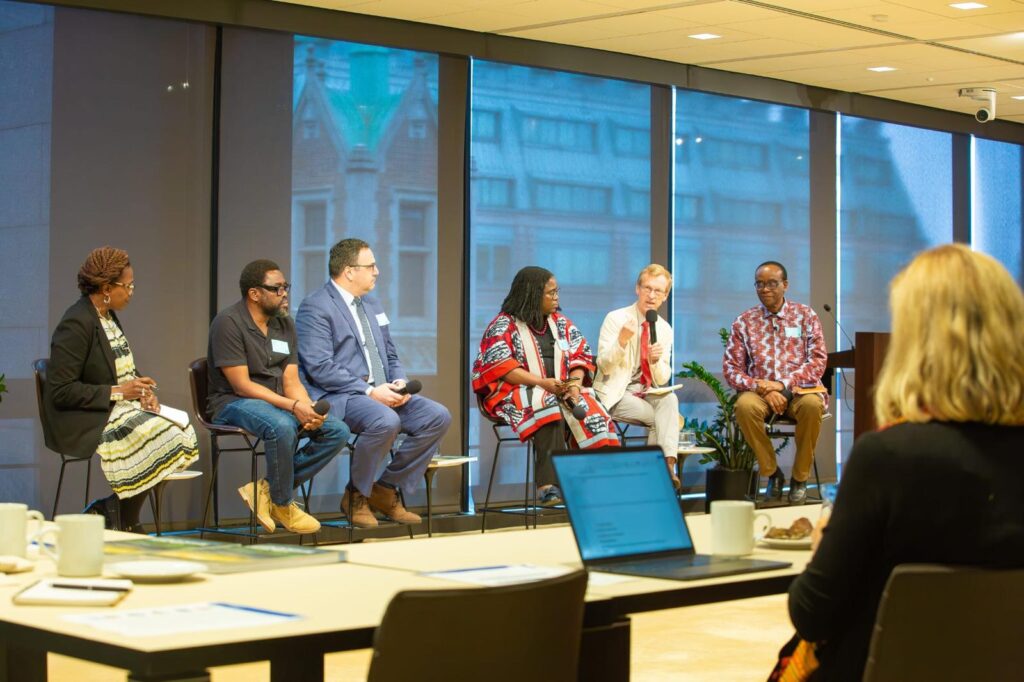
A high-level panel, moderated by Dr. Kathryn Nwajiaku-Dahou, Director of Governance at ODI Global and a co-convener of the IWG, connected these testimonies to global debates on justice, law, and finance.
Professor Anthony Bebbington, Director of the Natural Resources and Climate Change Program at the Ford Foundation, warned that the costs of transition often accumulate in vulnerable communities. “Transition comes at a cost,” he observed, “and those costs accumulate somewhere else, with huge environmental, human and social consequences. This must not be allowed.”
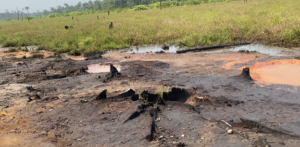
Nnimmo Bassey spoke again, recalling visits to Bayelsa where wells drilled in the 1950s — abandoned for decades without decommissioning — continue to drip crude oil, contaminating soil and rivers. “This is why hydrocarbons are found in the blood of our people,” he said. Professor Engobo Emeseh analyzed how regulatory failures enable such neglect, underscoring the urgent need for enforceable liability frameworks. Alex Doukas, Director of the Polluter Pays Project, examined institutional frameworks and constraints for ensuring corporations bear remediation costs rather than offloading them onto states or communities. Lanre Suraju, Chair of the Human and Environmental Development Agenda (HEDA) Resource Centre, called on the Government of Bayelsa State to do more, questioning the Governor’s open acceptance of the Shell asset sale.
Reflections and Commitment
The day’s rhythm shifted once more to poetry and cultural reflection, with Professor Otiono’s performance of Homeland Securities, and Professor Emeseh’s spoken words performance. Nnimmo Bassey offered a poetic tribute to Ken Saro-Wiwa and the Ogoni Nine, whose execution 30 years ago remains a rallying cry for environmental justice.
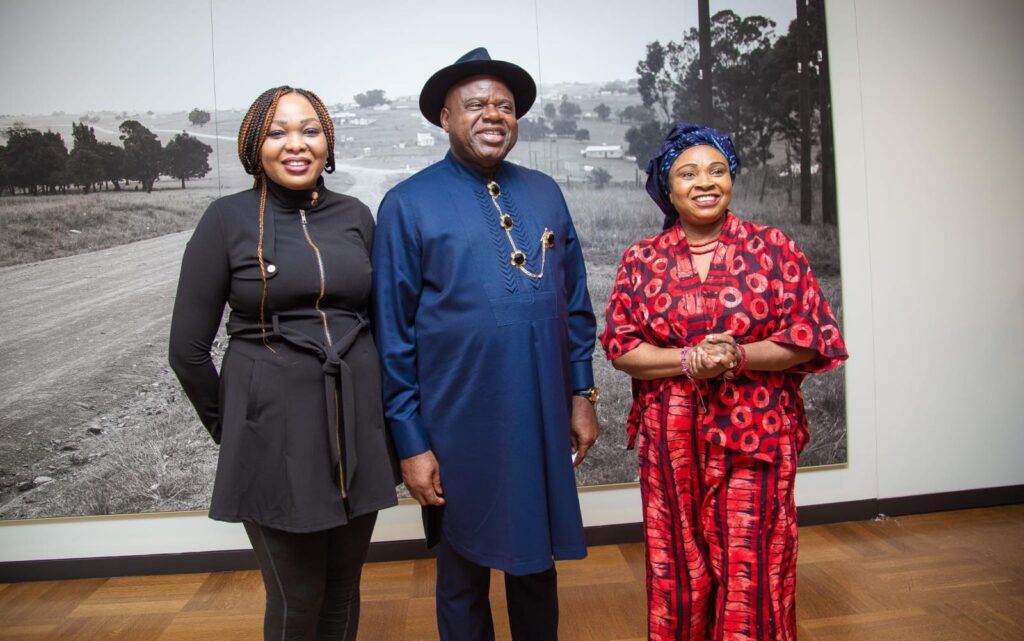
In a special address, Senator Douye Diri, Governor of Bayelsa State, affirmed his government’s resolve to act on the BSOEC recommendations. He committed to presenting the report to Nigeria’s President and pledged to work with the Bayelsa State legislature to pass enabling laws for environmental recovery. His remarks underscored the need for effective political leadership at the state level to complement global advocacy efforts.

A Launch with Global Reach: The Road Ahead
Dr. Osuoka closed the event by reflecting on the day’s journey: “Friends, we opened with art and testimony; we deliberated on law, finance, and policy. The through-line is clear: polluters must pay, communities must lead, and the transition must be just.” He then formally launched the IWG, unveiling justcleanupiwg.org as its public platform.
The IWG will now build a repository of evidence, publish policy briefs, support the creation of a Bayelsa Recovery Agency and Fund, and advance a Just Fossil Fuel Divestment Framework in global forums such as COP30. By combining the lived testimonies of frontline communities with the tools of research, litigation, and international policy advocacy, the IWG is set to become a powerful engine for ensuring that “polluter pays” becomes more than a slogan.
Emmanuel Kuyole of the Ford Foundation closed with words of thanks and reaffirmed the Foundation’s commitment to the cause.