Social Action Trains Over 150 Ndokwa Youths on Democratic Participation, Human Rights, and Advocacy
-
by
saction_
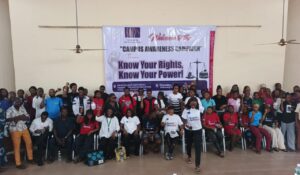
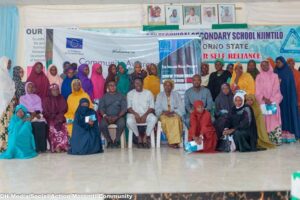
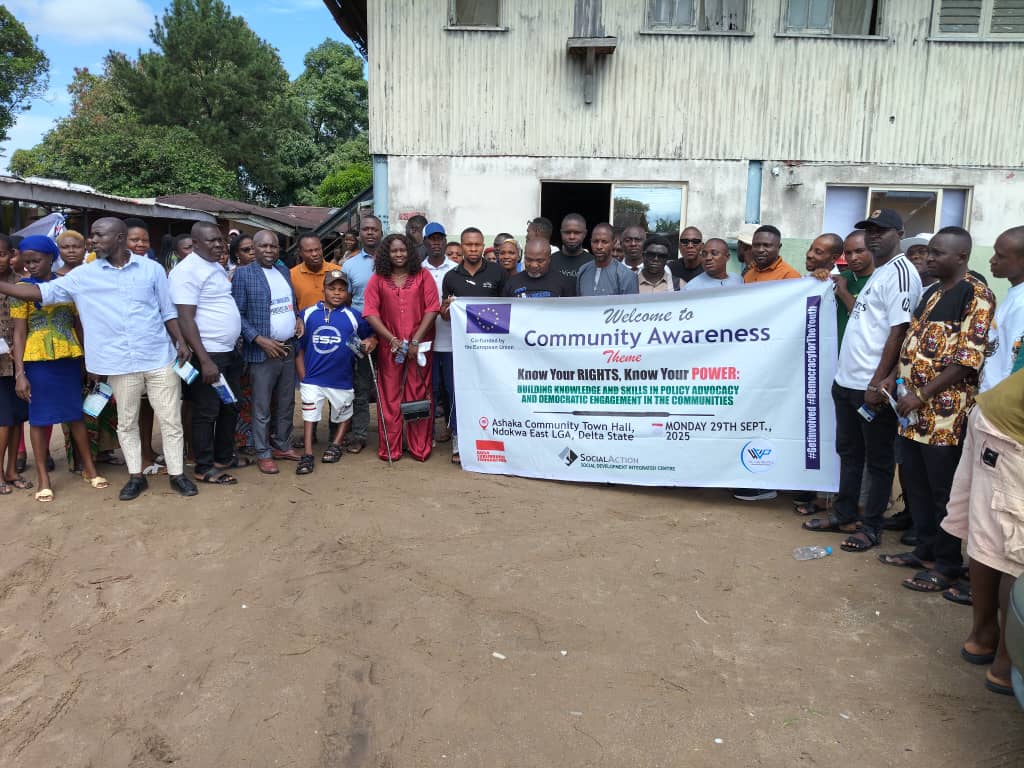
In a renewed push to strengthen youth participation in democratic processes and improve policy reforms and service delivery, Social Development Integrated Centre (Social Action) convened a one-day capacity-building workshop for over 150 young people from Ndokwa Local Government Area of Delta State.
The event, which brought together students, activists, community leaders, and aspiring politicians, sought to equip youths with the knowledge and skills required to engage meaningfully in governance, demand accountability, and build resilience in the face of weak institutions and failed systems.

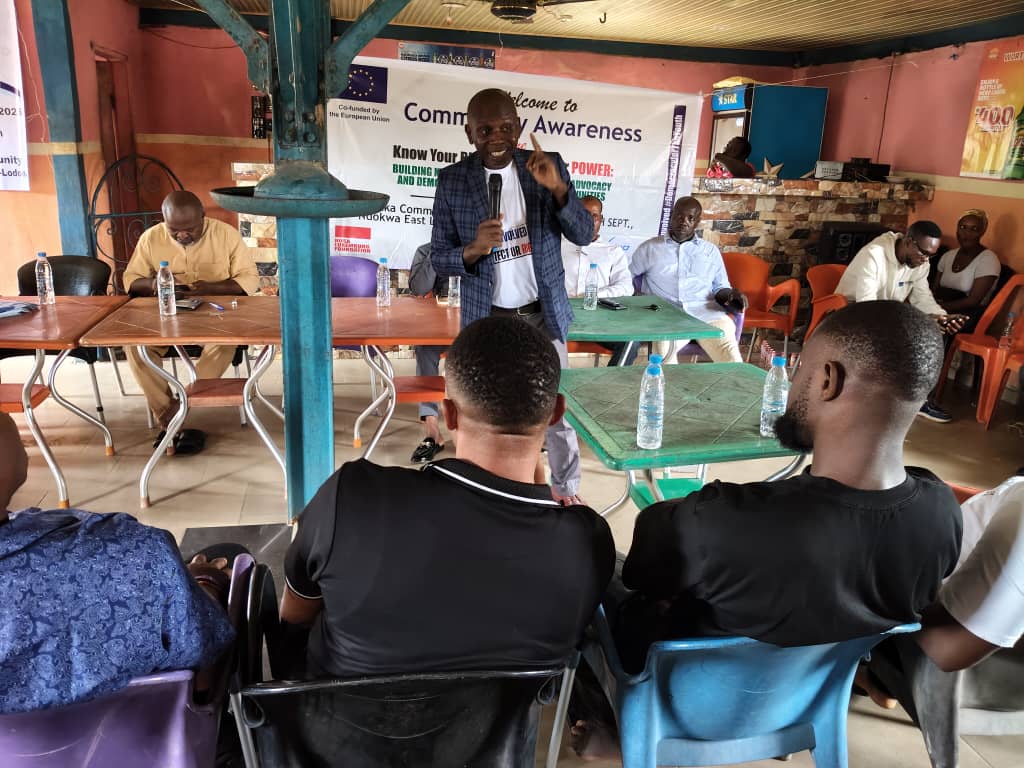
Speaking during the training, Barr. Arochukwu led sessions on Human Rights, Access to Justice, and Social Inclusion. He highlighted the role of legal organisations that provide free legal aid and urged participants to always uphold the law while courageously testing its provisions to defend justice. Touching on issues of equity, he stressed that people with disabilities must be given a place in governance and development, reminding the youths that “where one person’s right stops, another person’s right begins.”
On governance and civic responsibility, Mr. Sebastian Kpalap delivered an interactive talk on Good Citizenship, Transparency, and Accountability. He encouraged the youths to get actively involved in politics, including contesting for offices, and to uphold integrity as a guiding principle in public life. Kpalap underscored the importance of holding politicians and contractors accountable for abandoned projects and mismanaged funds, emphasizing that the law should be used as an instrument to demand justice. He also walked the participants through the stages of the budget process, explaining practical ways citizens can engage to influence development priorities and service delivery.
Dr. Prince Edegbuo facilitated a session on Advocacy, Communication, and Engagement Strategies. He explained how effective messaging can amplify youth voices and attract the attention of policymakers. According to him, advocacy should always serve the right purpose and be backed by clear communication that fosters understanding. He further introduced the concept of power mapping, outlining how power relations within communities and government structures can determine the success of development initiatives.
The workshop ended with a renewed sense of commitment among participants, many of whom expressed readiness to apply the knowledge gained in engaging government, promoting inclusivity, and championing accountability in their communities.
Social Action, through this initiative, reaffirmed its commitment to building a new generation of informed and active citizens who can play critical roles in reshaping Nigeria’s democratic and development landscape