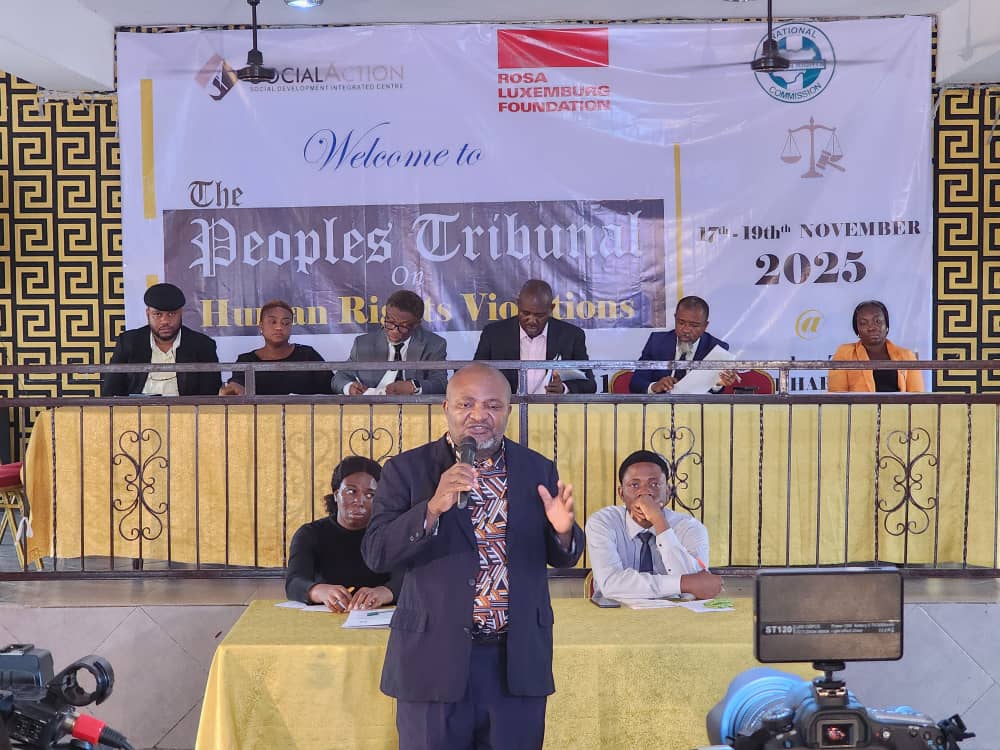
The Peoples Tribunal on Human Rights Violations and Environmental Justice – Port Harcourt Day 1 Proceedings 17th November 2025
-
by
saction_
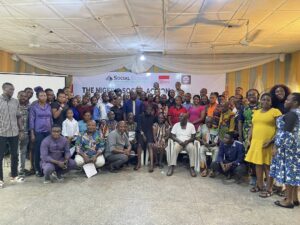
The first day of the People’s Tribunal on Human Rights Violations and Environmental Justice, convened in Port Harcourt from 17th to 19th November 2025 at the Oroworukwo Town Hall. The tribunal brings together a broad coalition of human rights advocates, community representatives, professional bodies, and government institutions in a three-day civic intervention aimed at addressing deepening cases of human rights abuses and systemic injustices in Nigeria.
The tribunal, jointly organized by Social Action in partnership with the National Human Rights Commission (NHRC) and supported by allied civil society and professional networks, served as a symbolic yet structured platform for victims to tell their stories, demand redress, and publicly engage institutions responsible for protecting their rights.
Diverse Stakeholders in Attendance
The gathering drew participation from notable institutions, including:
- Public Complaints Commission (PCC)
- National Agency for the Prohibition of Trafficking in Persons (NAPTIP)
- Nigerian Bar Association (NBA), Rivers State Branch
- Nigerian Bar Association (NBA), Human Rights Committee
- Representatives of the Civil Society (Niger Delta)
- International Federation of Female Lawyers (FIDA)
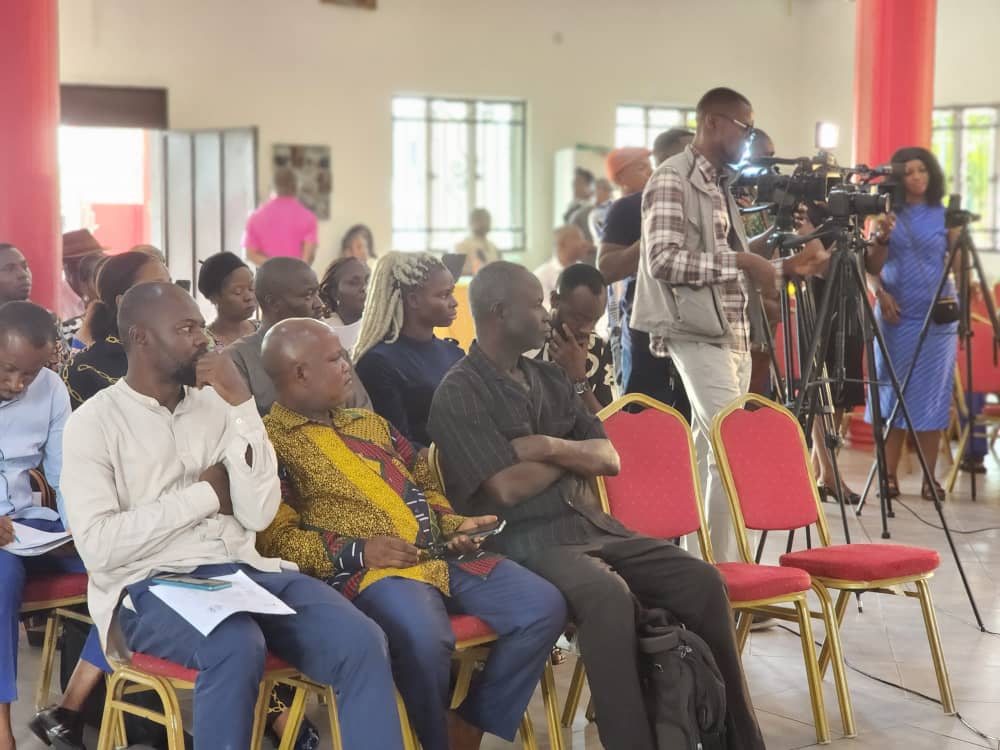
Also present were human rights defenders, media practitioners, community representatives, faith-based organizations, non-governmental organizations, and victims of various forms of abuses seeking justice.
Opening Session and Context Setting
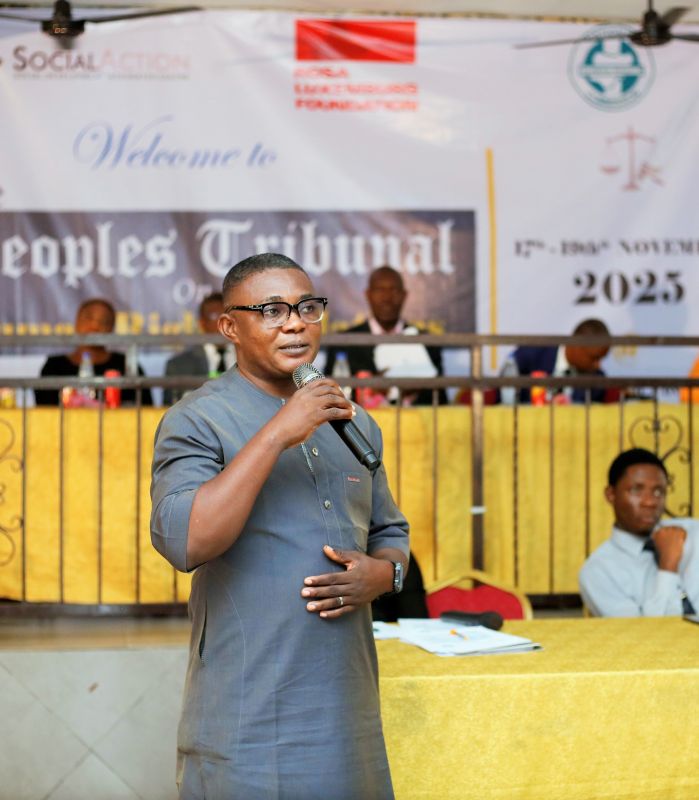
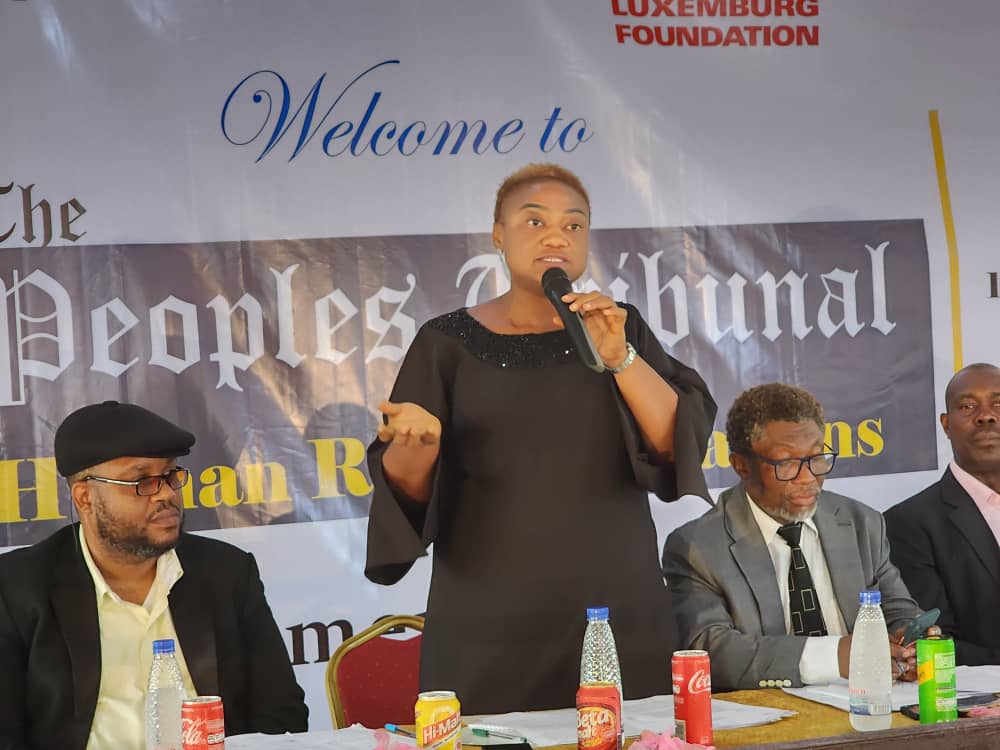
The tribunal commenced with a welcome address by Barr. Arochukwu Ogbonna, who underscored the civic purpose of the Tribunal: providing a bridge between voiceless victims and relevant institutions capable of delivering justice. He reflected on the growing urgency to address worsening human rights violations, particularly in resource-dependent communities of the Niger Delta.
Speaking on behalf of Social Action’s Executive Director, Dr. Isaac Osuoka, Programme Coordinator Isaac Botti emphasized that the tribunal was convened against the backdrop of persistent police brutality, gender-based violence, economic exclusion, trafficking in persons, and environmental degradation rooted in weak institutional accountability. He noted that despite existing legal mechanisms, many victims remain locked out of justice due to poverty, institutional inertia, and bureaucratic red tape.
He assured that the Tribunal’s findings would be compiled into a comprehensive report and formally submitted to relevant authorities including the NHRC. He further highlighted that the outcomes would support ongoing litigation efforts with partners such as the NBA and FIDA.
Chairman of the Tribunal Panel and Vice Chairman of the NBA Port Harcourt Branch, Barr. Emmanuel John, explained that the NBA’s involvement aligns with its mandate to uphold the rule of law and deepen access to justice. He described the Tribunal as a fact-finding, semi-judicial body whose recommendations would guide victims on next steps, including litigation, mediation, and institutional engagement.
Presentation of Petitions
A total of six petitions were presented before the Tribunal on the first day, exposing a range of human rights violations affecting individuals and communities. These included:
1. Sexual Violence Against a Minor
Petitioner: Dimkpa Barnabas
Barnabas appeared on behalf of a six-year-old girl allegedly defiled by a 48-year-old man. He appealed for institutional intervention as the child’s physically incapacitated parents lack the resources to pursue justice.
2. Domestic Violence and Marital Abandonment
Petitioner: Barine Pretty Lakia
A survivor of long-term domestic abuse, Barine sought the Tribunal’s support in compelling her husband, who abandoned her after 12 years of marriage, to formally dissolve the union and compensate her for the emotional and psychological trauma endured.
3. Gender-Based Violence and Fear of Reprisal
Petitioner: Damiete Omieba (represented by CRC Diobu)
Her petition detailed repeated physical and psychological violence at the hands of her husband. Present at the venue, Damiete was too afraid to testify openly due to fear of retaliation from her husband who already showed signs of violence towards her.
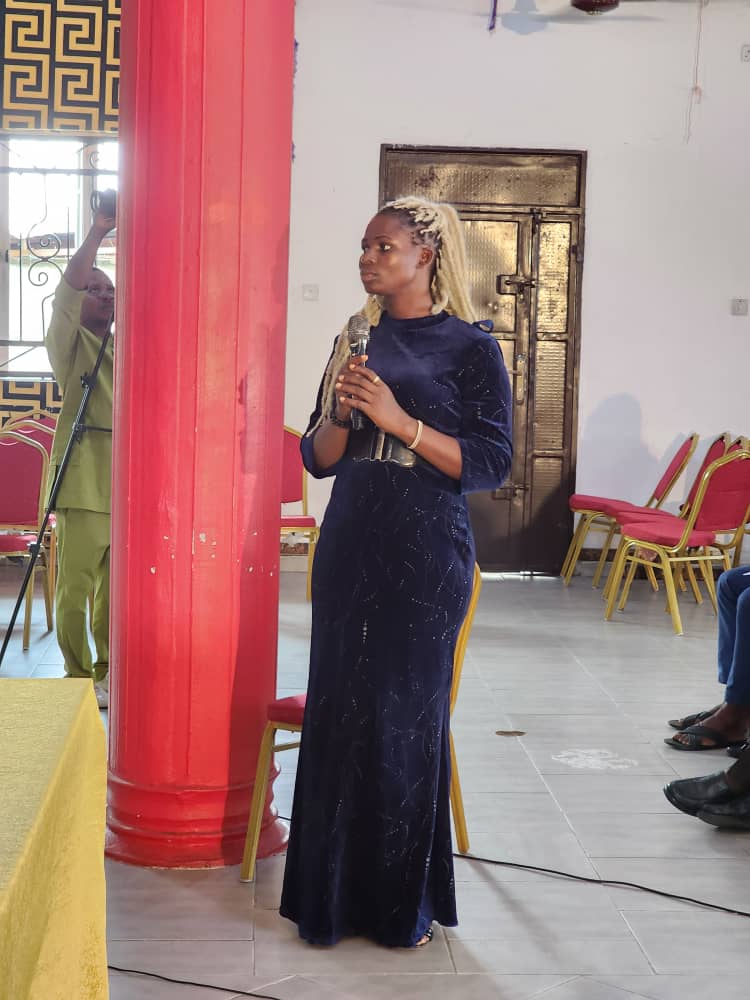


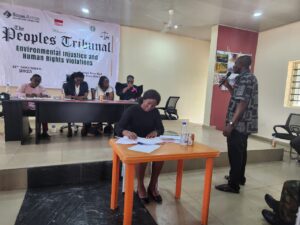
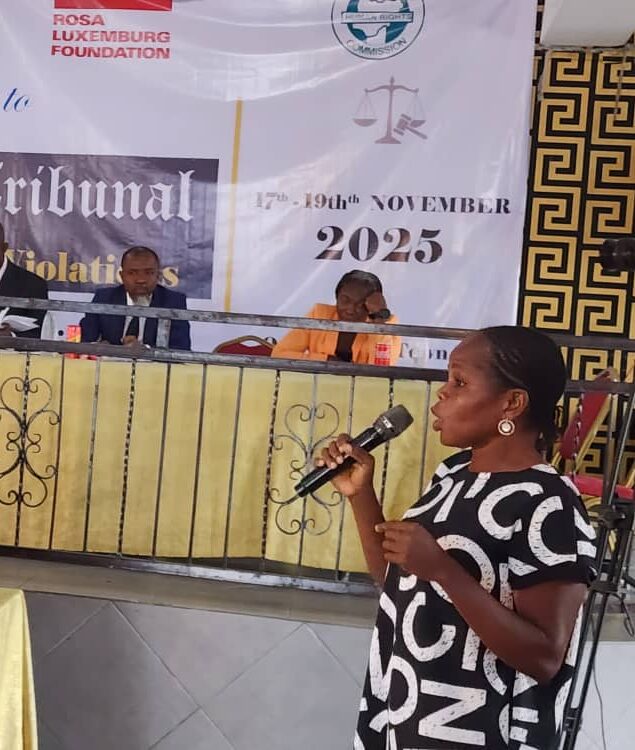
Some petitioners at the dock stating their cases before the people’s tribunal
4. Child Neglect and Family Abandonment
Petitioner: Anna Lesom
A mother of two, Anna recounted how her husband, who works for the Nigeria Immigration Services, abandoned the family for 12 years, leaving her solely responsible for their welfare. One of her children had been sent home for unpaid school fees, and the family frequently struggles to feed.
5. Unlawful Withholding of Earnings
Petitioner: Owolo Santos Owolo
Santos accused the Chairman of Emuoha Local Government Area of withholding his salary for nearly three and a half years without notice, despite having been duly employed and officially issued an appointment letter. As a result of the circumstances that the denial of his salary has placed him, his wife has left his home with their only child.
6. Environmental Degradation and Corporate Negligence
Petitioner: Damian Gbogbara (representing farmers and fishermen of Bodo City, Gokana LGA)
Gbogbara called on the Tribunal to compel Shell, now operating as Renaissance, to decommission obsolete oil infrastructure in the community. He stressed that ongoing oil extraction without cleaning up environmental damage constitutes a serious violation of the community’s economic and ecological rights.
Tribunal Deliberations and Advisory
Following the presentations, the Tribunal panel provided advisory remarks to each petitioner, outlining immediate steps for institutional engagement. Petitioners were directed to liaise with relevant agencies—such as NHRC, FIDA, NAPTIP, and the NBA—to begin formal processes for legal redress.
The Tribunal also assured participants that cases supported with adequate evidence would be escalated to responsible authorities and pursued through appropriate legal and administrative mechanisms.


Purpose and Strategic Importance of the Tribunal
The People’s Tribunal, although symbolic in its authority, serves as an innovative civic mechanism for:
- Documenting systemic abuses
- Amplifying voices of marginalized individuals
- Strengthening collaboration between communities and justice institutions
- Influencing reforms in policing, human rights protection, and environmental governance
It aligns with Social Action’s long-standing advocacy for strengthened democracy, environmental justice, and community rights in the Niger Delta.
Next Steps and Expected Outcomes
Social Action will consolidate testimonies, evidence, and jurors’ recommendations into a comprehensive Tribunal Report, which will be disseminated to:
- National Human Rights Commission (NHRC)
- Ministry of Justice
- Nigerian Bar Association (NBA)
- FIDA
- State security agencies
- Relevant state and federal authorities
Additional outputs will include a Media Documentary, public communiqués, and litigation support through pro bono legal networks.
The 2025 Port Harcourt session of the People’s Tribunal reaffirmed the pressing need for credible, people-centred justice mechanisms in Nigeria. By giving voice to victims, spotlighting institutional failures, and facilitating access to justice, the Tribunal continues to play a crucial role in shaping national discourse on human rights, corporate accountability, and environmental governance.
Social Action remains committed to deepening civic engagement, strengthening advocacy for vulnerable communities, and pushing for a Nigeria where rights are respected, institutions are accountable, and justice is accessible to all.