Communities in Bille Kingdom Demand Urgent Intervention Over Escalating Environmental and Health Crisis
-
by
Peter Mazzi
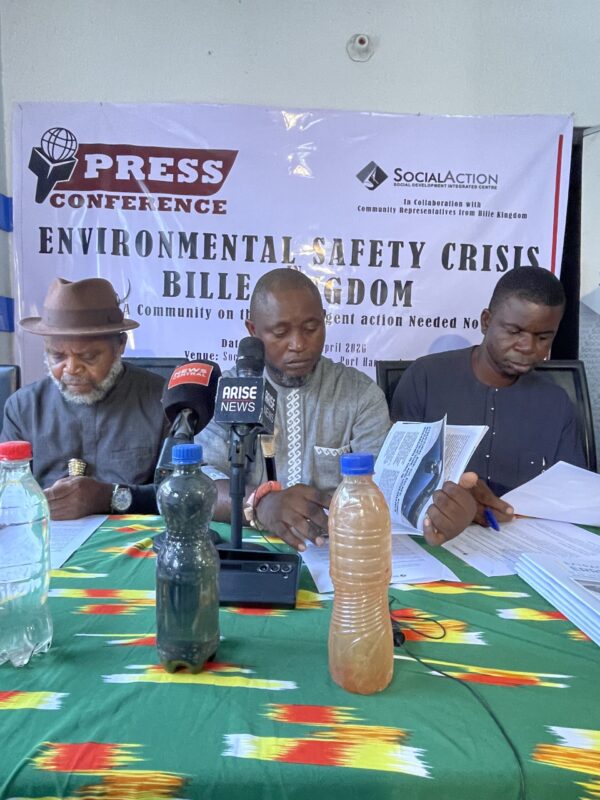
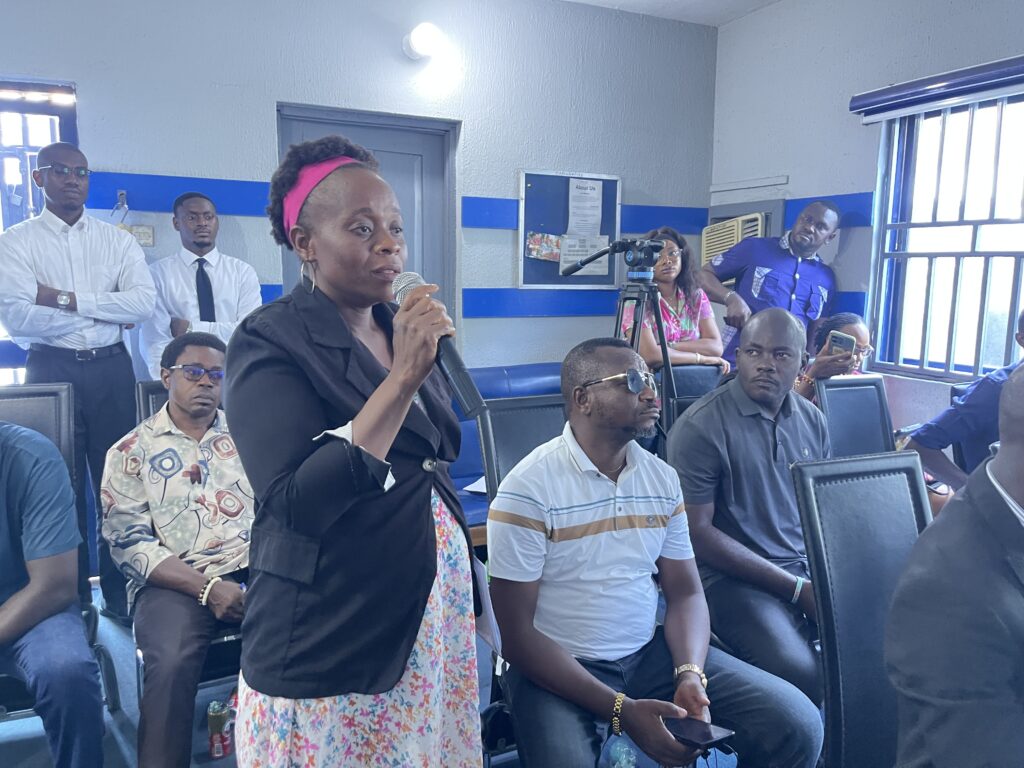
Residents and leaders of Bille Kingdom in Degema Local Government Area of Rivers State have issued an urgent appeal for government intervention over what they describe as a deepening environmental and public health emergency linked to oil and gas activities in the area. The call was made in Port Harcourt during a press conference where Social Action, working with community representatives and environmental justice partners, formally presented a new report titled “From Extraction to Eruption: Oil, Gas and the Unfolding Environmental and Health Crisis in Bille Kingdom.”
The report paints a troubling picture of life in the riverine kingdom, documenting severe environmental contamination, declining health conditions, and mounting anxiety over the safety of water sources and the wider living environment. At the event, Dr. Prince Ekpere Edegbuo said the briefing was being held not merely for the community, but with the community, emphasising that the voices, experiences, and demands of Bille residents remain central to the campaign for justice and accountability.
For residents, the report is being presented not simply as a record of neglect, but as a warning that long-standing environmental concerns may be entering a more dangerous phase. The speakers repeatedly returned to one point: that what had once been treated as routine pollution complaints now carries the hallmarks of a broader public safety emergency with immediate implications for water access, health, and community survival.
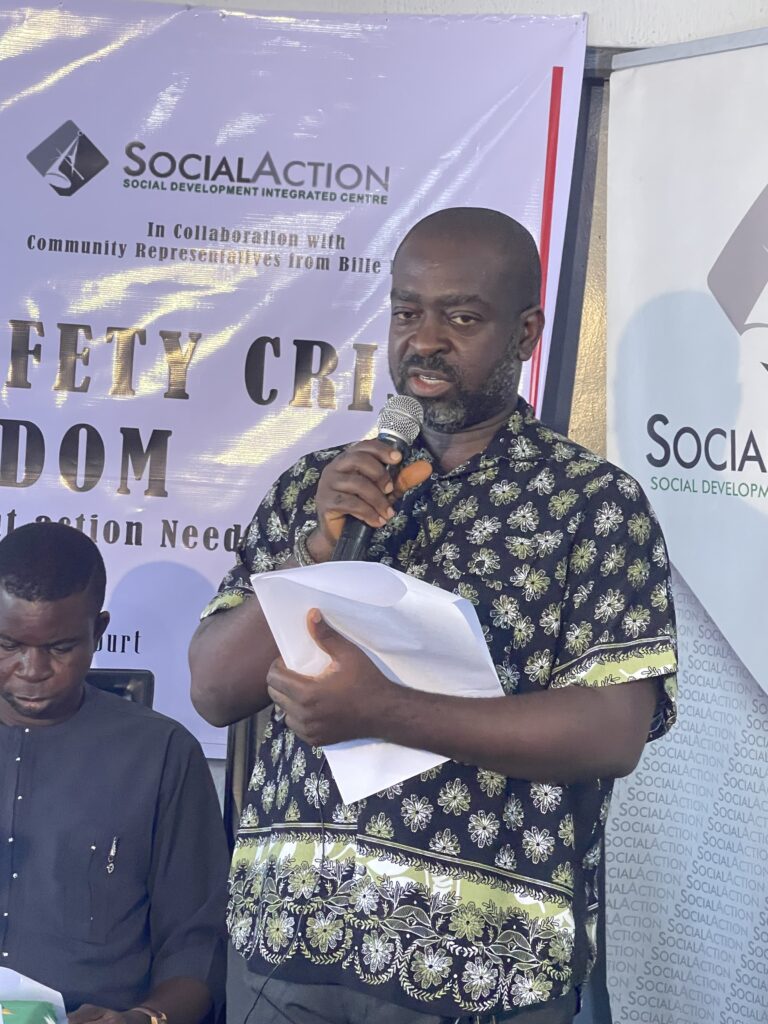
Dr. Edegbuo said the findings confirm what many residents have lived with for years without what he described as an adequate institutional response. “When the team from Social Action visited Bille Kingdom, they did not just encounter statistics, they encountered human suffering,” he said.
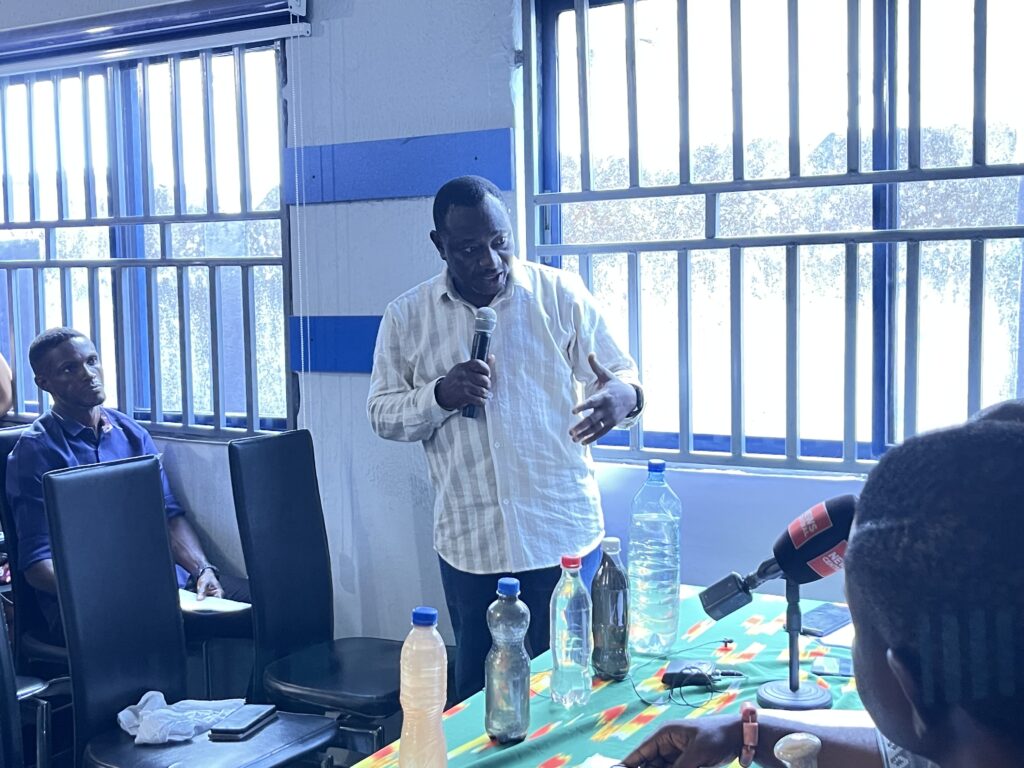
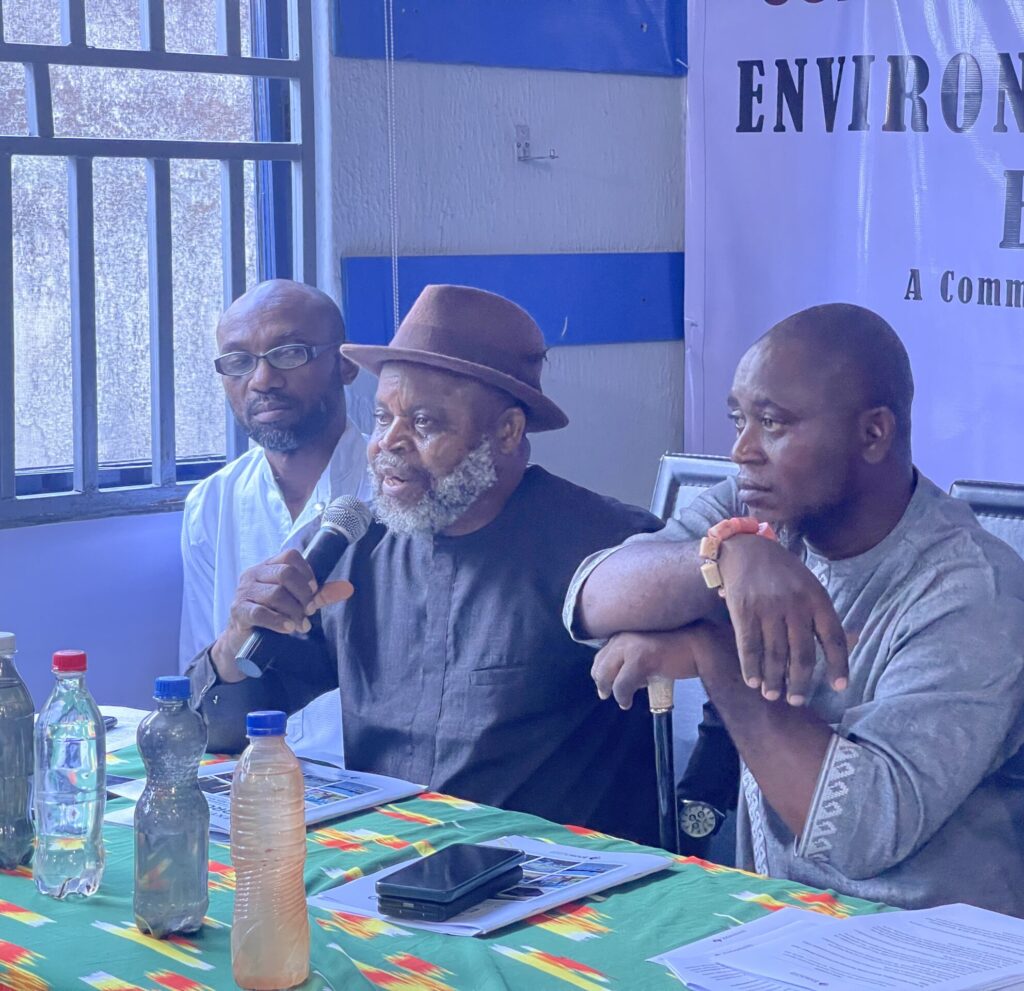
He added that the organisation had also documented conditions in the community through a short documentary expected to be released soon, though he cautioned that the footage offers only a narrow window into the scale of the problem. “The actual conditions are far more severe, far more distressing, and far more urgent than any short visual can fully convey,” he said.
Among the most disturbing findings highlighted at the briefing were reports of gas bubbling from wells and other water sources used daily by residents for drinking, cooking, and household chores.
In practical terms, speakers said, that means potential exposure is woven into the routines of daily life. In communities where wells and surrounding water points remain essential for domestic use, any sign of contamination immediately raises questions not only about environmental damage, but about whether ordinary acts such as fetching water, preparing food, or bathing can be carried out safely.
Members of the Social Action team who visited the community said the contamination carries serious health risks through ingestion, skin contact, and inhalation, exposing residents to potentially dangerous substances on a recurring basis.
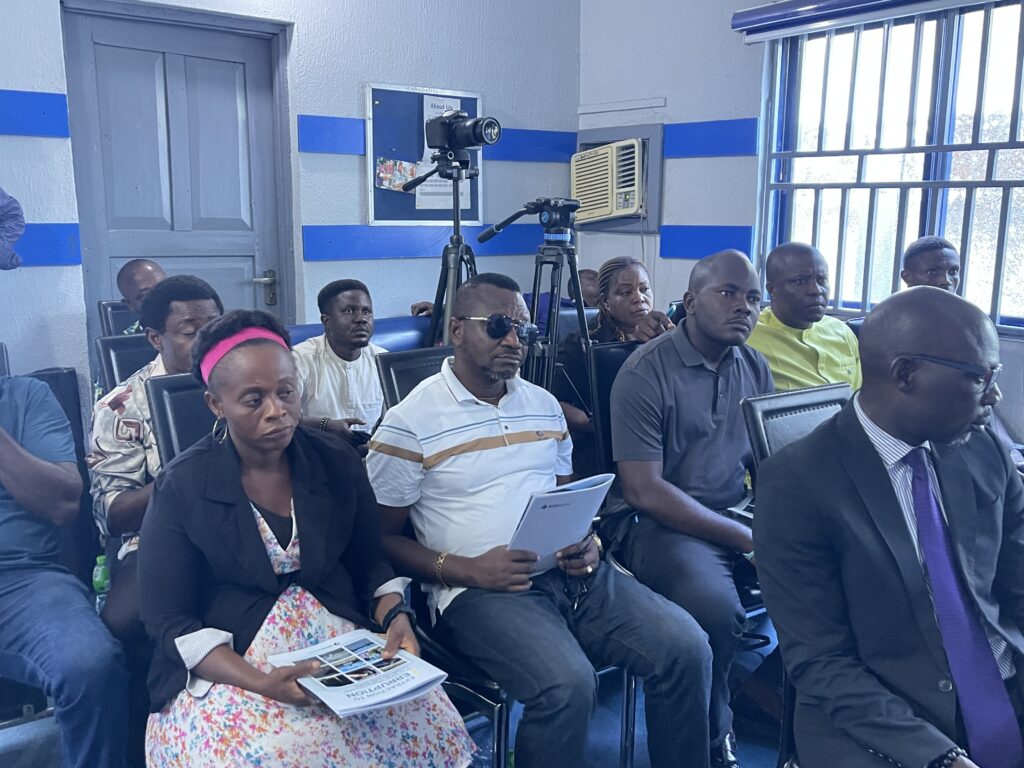
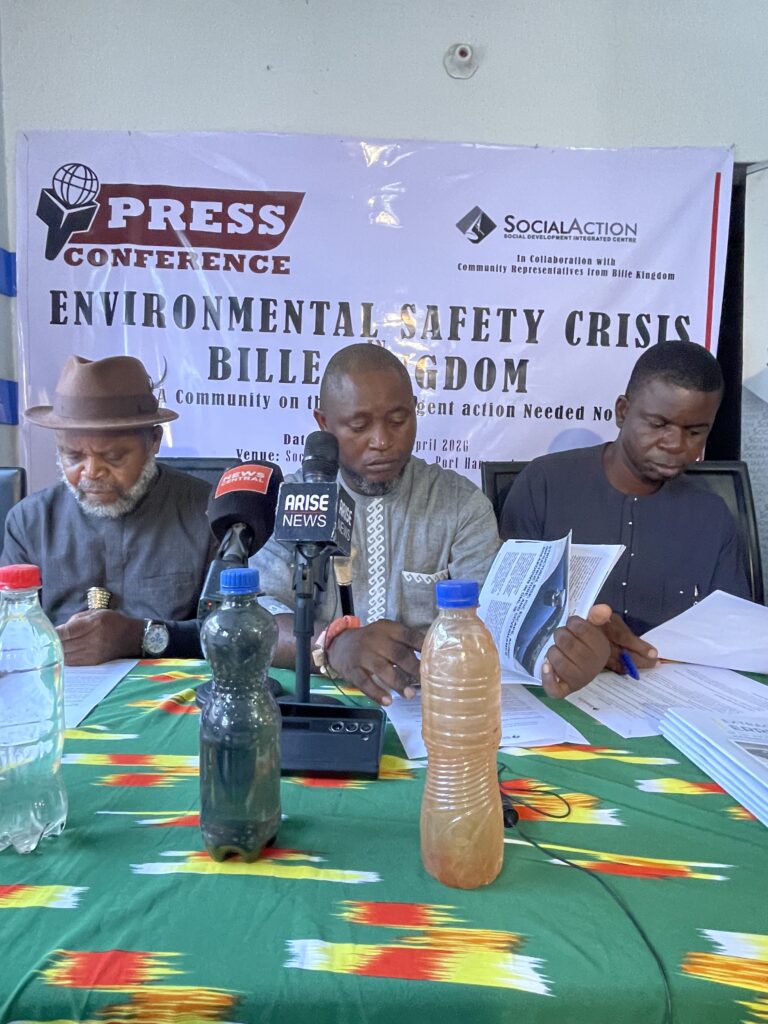
On that basis, the organisation said the situation can no longer be understood as environmental degradation alone, but as a developing public safety and humanitarian emergency.
That framing broadened the discussion beyond pollution as an abstract ecological issue. Speakers described a crisis that touches nearly every part of community life, from household health and food security to income, mobility, and the ability of families to remain safely in place if conditions deteriorate further.
Community leaders told journalists that the consequences extend well beyond immediate health fears, threatening livelihoods, food systems, and the long-term survival of affected communities.
Speaking on behalf of traditional rulers in the kingdom, Benneth Okpokiye-Dokubo acknowledged the ₦100 million support announced by the Rivers State Government as a palliative intervention. He said the gesture was appreciated, but argued that the scale of suffering and environmental damage in Bille Kingdom far exceeds what such assistance can realistically address.
“We want it on record that the magnitude of the crisis being faced by the people of Bille, both old and young, is much more than what the money can cover, even as a palliative measure,” he said. He urged governments at all levels to move beyond temporary relief and put in place comprehensive measures capable of preventing the crisis from deepening.
Luckyman Egila urged the Nigerian government to respond decisively and transparently, arguing that its constitutional obligation to protect citizens’ rights to life, health, and a safe environment cannot be ignored.
His remarks added a legal and governance dimension to the appeals made at the event, with speakers insisting that the issue is no longer only about environmental remediation, but also about responsibility, transparency, and the duty of public institutions to act before the consequences become even more severe.
“Pollution without accountability is injustice,” he said, urging regulatory agencies, development partners, and international human rights institutions to ensure that those responsible for environmental harm are identified and held accountable.
Immediate Actions Demanded
Against that backdrop, the coalition of community leaders, civil society organisations, and environmental justice advocates outlined a set of immediate priorities they said should form the basis of an urgent emergency response:
- Emergency provision of safe drinking water
- Independent and transparent environmental and gas risk assessments
- Deployment of mobile health services for screening and treatment
- Clear public risk communication to prevent exposure and panic
- Containment of hazardous zones
- Humanitarian relief for affected households
- Preparedness for evacuation if conditions worsen
- Establishment of a coordinated multi-stakeholder emergency response system
The groups said the measures should be understood as immediate safeguards rather than long-term aspirations, arguing that delay would only increase the risk to lives, deepen community vulnerability, and make any eventual response more difficult and more costly.
Omuso Miebaka, President of the Bille Kingdom Youth Council, said failure to act swiftly could trigger wider and more destabilising consequences, including serious public health outbreaks, worsening water insecurity, fire and explosion hazards linked to gas accumulation, and long-term ecological devastation. He described the current moment as a defining test for both government authorities and corporate actors operating in the region, warning that inaction would not only deepen suffering in Bille Kingdom but could also widen the scale of the emergency.
In closing remarks, Peter Mazzi said the report represents more than a record of suffering, arguing that it should be read as a body of evidence and a call for action. “This report is not just documentation, it is evidence, it is testimony, and it is a demand for action,” he said. He reaffirmed solidarity with the people of Bille Kingdom and with their demands for justice, dignity, health, and environmental protection, framing the report as both a public warning and an appeal for immediate intervention.
The press conference ended with renewed calls for urgent intervention, accountability for environmental harm, and sustained support for communities across the Niger Delta living with the long-term consequences of extractive activity. For those who spoke at the event, the message was clear: the crisis in Bille Kingdom can no longer be treated as a local complaint on the margins, but as an escalating emergency demanding a credible and immediate response.