Mapping the Path to Climate Justice: Research Workshop Explores Support for Grassroots Movements in the Niger Delta
-
by
Peter Mazzi
Strengthening Grassroots Movements for Social and Ecological Transformation Through Research and Community Engagement
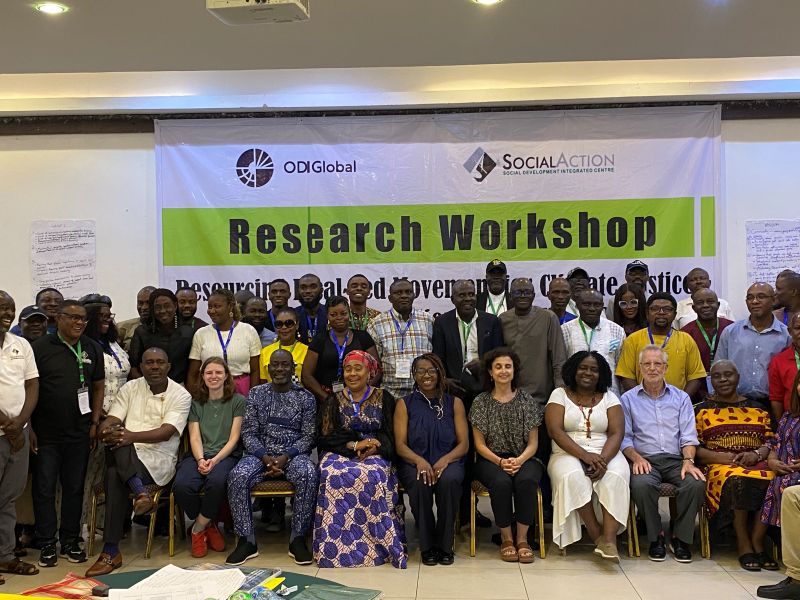
Social Action in partnership with ODI Global and the International Working Group (IWG) on Petroleum Pollution and Just Transition convened a research workshop on “Resourcing Locally-Led Movements for Climate Justice and Just Energy Transition in the Niger Delta.” The workshop formed part of a broader research project titled “Enabling Locally-Led, Climate Resilient Responses in Conflict-Affected States,” which seeks to examine barriers and opportunities facing climate actors and grassroots movements across the Niger Delta.
The workshop brought together community activists, civil society organizations, media practitioners, lawyers, academics, influencers, and climate justice advocates to explore how grassroots movements and climate justice networks can be better supported, connected, and resourced for sustainable impact..
Setting the Context
Delivering the opening remarks, Dr. Kathryn Nwajiaku-Dahou of ODI Global outlined the purpose of the meeting and highlighted the importance of strengthening locally-led responses to environmental and social challenges in the Niger Delta. She explained that the Nigerian component of the research focuses on understanding the challenges confronting climate actors and identifying practical pathways for supporting grassroots social movements working towards climate justice and a just energy transition. According to her, the workshop aimed to provide participants with an opportunity to share their experiences of the funding and resourcing landscape in the Niger Delta, examine how existing funding structures have shaped or hindered social movement organising, and generate recommendations for sustaining and strengthening movements working towards social and ecological transformation.
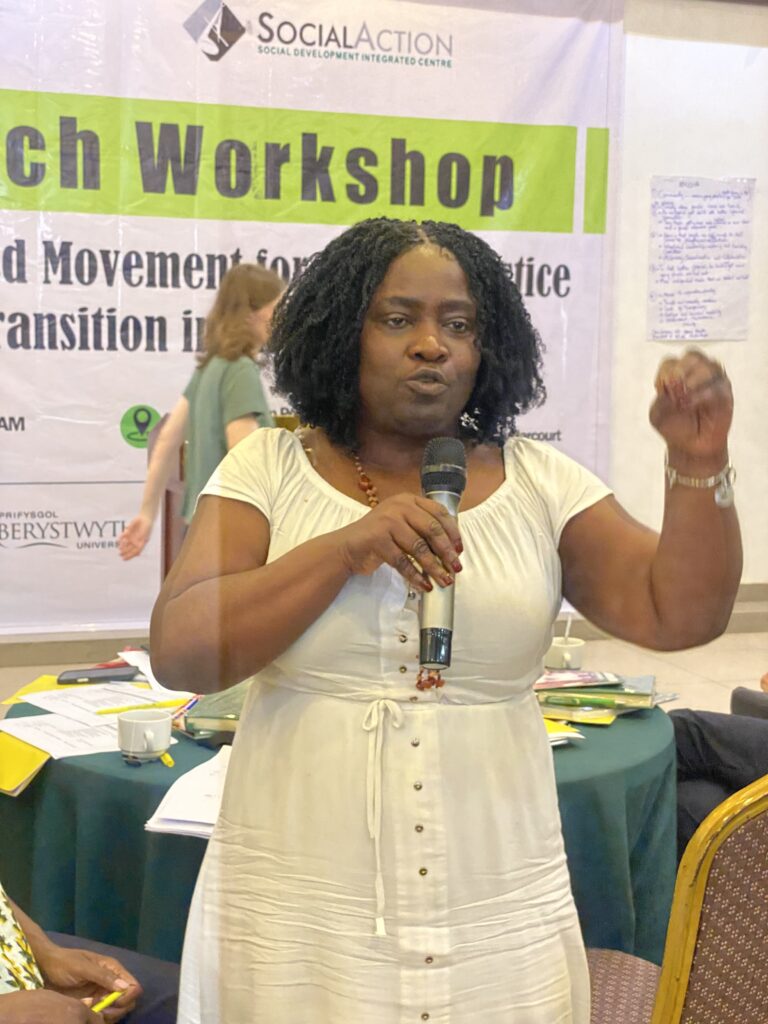

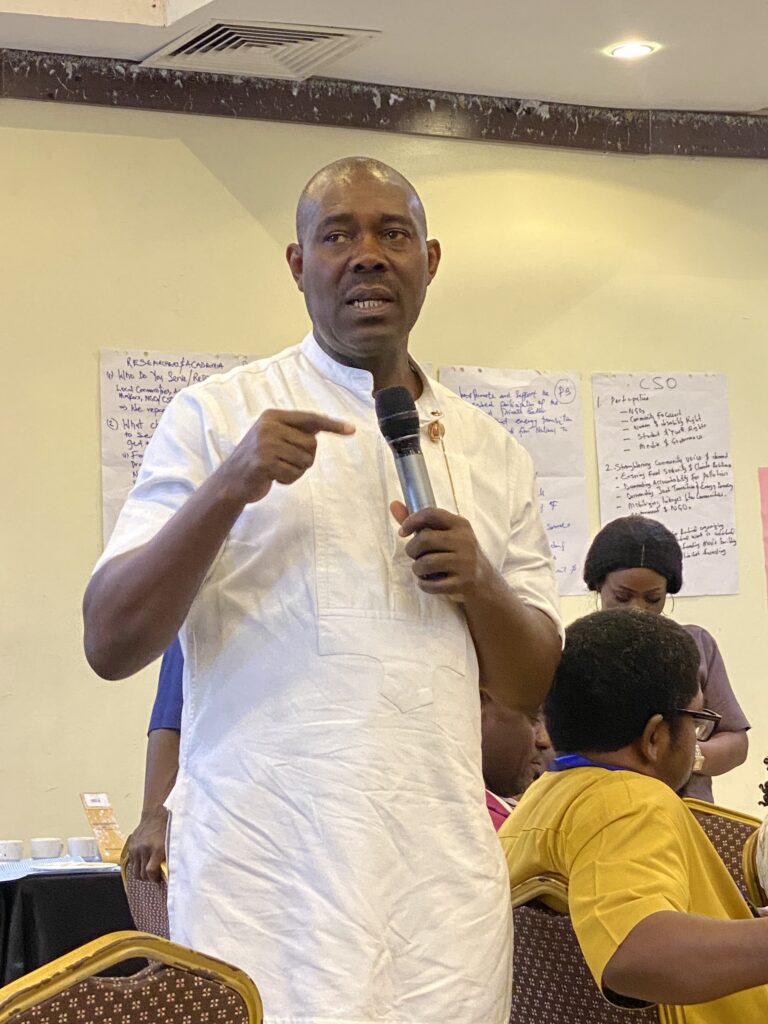
Reflecting on her decades of engagement with environmental issues in the region, Dr. Nwajiaku-Dahou painted a sobering picture of the worsening ecological crisis. Drawing from over 30 years of experience working with non-governmental organisations and government institutions on pollution-related challenges, she noted that despite sustained advocacy and interventions, environmental conditions in many parts of the Niger Delta have continued to deteriorate. “In different capacities over the last 30 years working for NGOs and working for the government on pollution crises, things have gotten worse. I am shocked that some parts of the Delta that I visited long ago, which had the beauty of nature, now look barren. There are no more birds.”
Her remarks underscored the urgency of strengthening grassroots movements capable of demanding accountability, advancing environmental justice, and championing community-centred solutions. Presenting preliminary findings from research conducted by ODI Global, she noted that international funding in the Niger Delta is largely influenced by a relatively small group of long-standing foundations alongside a fragmented network of newer and specialised funders. She observed that support for social movements in the region appears to have declined amid shrinking global aid budgets and shifting donor attention to other regions. The presentation further highlighted concerns about the mismatch between what funders prioritise and what is politically necessary to drive meaningful change. It also underscored the growing mistrust between some funders and social movement leaders, with donors often wary of confrontational advocacy approaches, while communities remain cautious about opaque funding structures and perceived links to international oil companies. The findings suggested alternative funding approaches, including ecosystem support through consortium grants, social impact investing, local philanthropy, and funding models that are geographically, politically, and relationally embedded within communities
Understanding the Current Context
Dr. Isaac ‘Asume’ Osuoka of Social Action examined the history and evolution of social movements and activism in the Niger Delta, reflecting on the legacy of community-based struggles of the 1990s, including the Movement for the Survival of the Ogoni People (MOSOP), and how contemporary mobilisation has been shaped by recent developments such as the divestment of international oil companies without adequate environmental accountability.
Drawing from focus group discussions conducted ahead of the workshop, he reported that participants noted that activists continue to operate within a complex political and security environment characterised by state repression, co-optation by powerful interests, entrenched local political and oil-linked elites, the continued presence of armed actors, and the challenges posed by digital media, which can both amplify and distort advocacy efforts. The focus groups raised concerns about the effects of the “NGOisation” of activism, with participants observing that increased dependence on donor-driven programmes has, in some instances, weakened grassroots organising and shifted accountability away from communities and towards funding institutions..
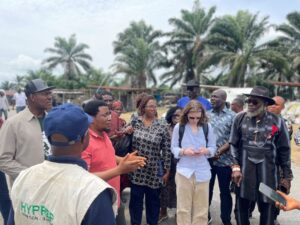
Field Visit to HYPREP Project Sites
Dr. Osuoka stressed that while research findings and community documentation are important, meaningful progress ultimately depends on political action and accountability.
He further situated the discussion within the wider climate justice movement, arguing that environmental governance must go beyond pollution control to address questions of power, citizenship, and historical injustice.
His intervention reinforced Social Action’s long-standing position that environmental justice cannot be separated from democratic accountability, community rights, and the restoration of human dignity.
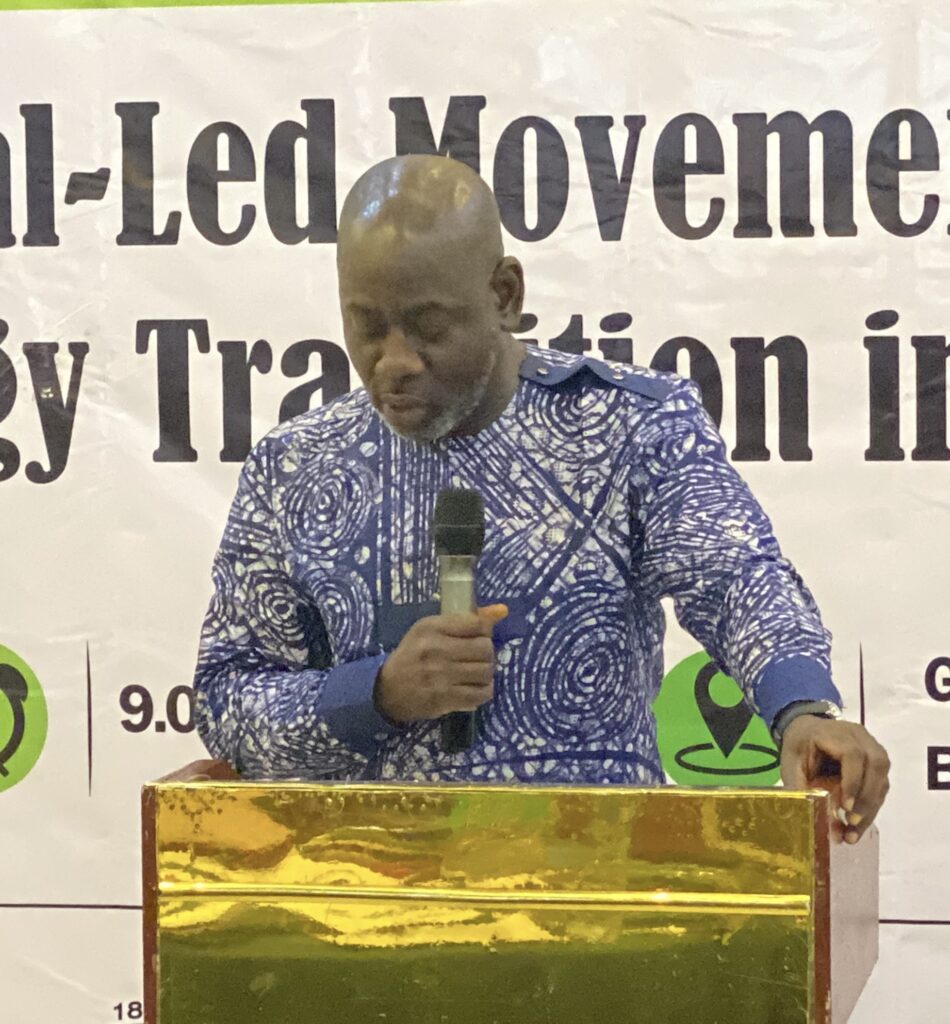
“While research findings and community documentation are important, meaningful progress ultimately depends on political action and accountability”
– Dr Isaac Asume Osuoka
Breakout Sessions and Stakeholder Engagement
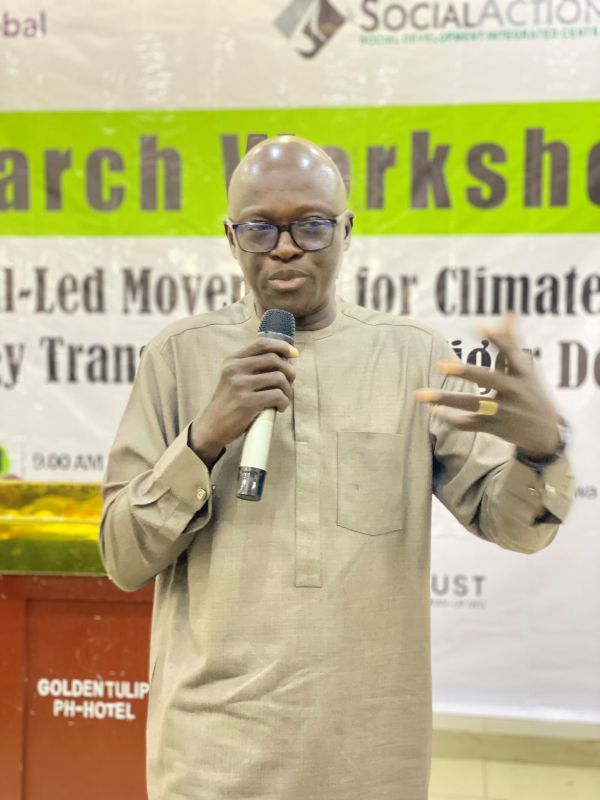
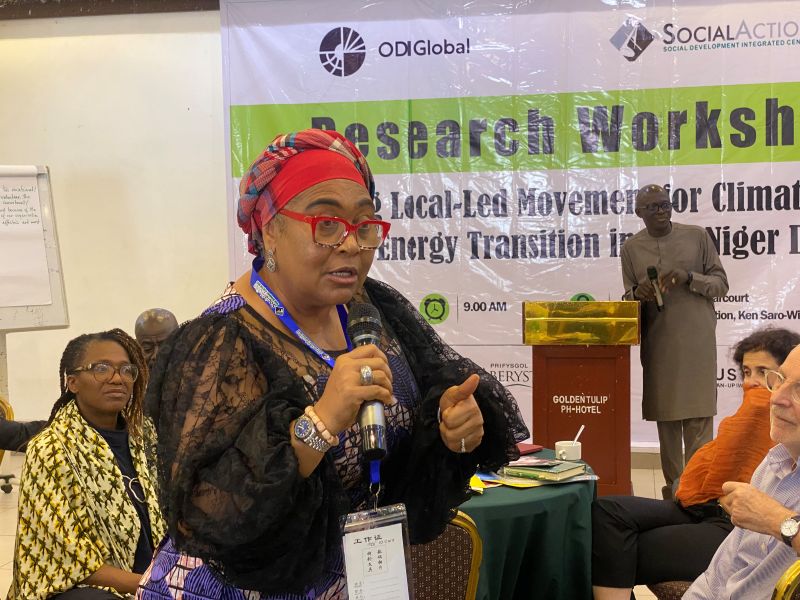
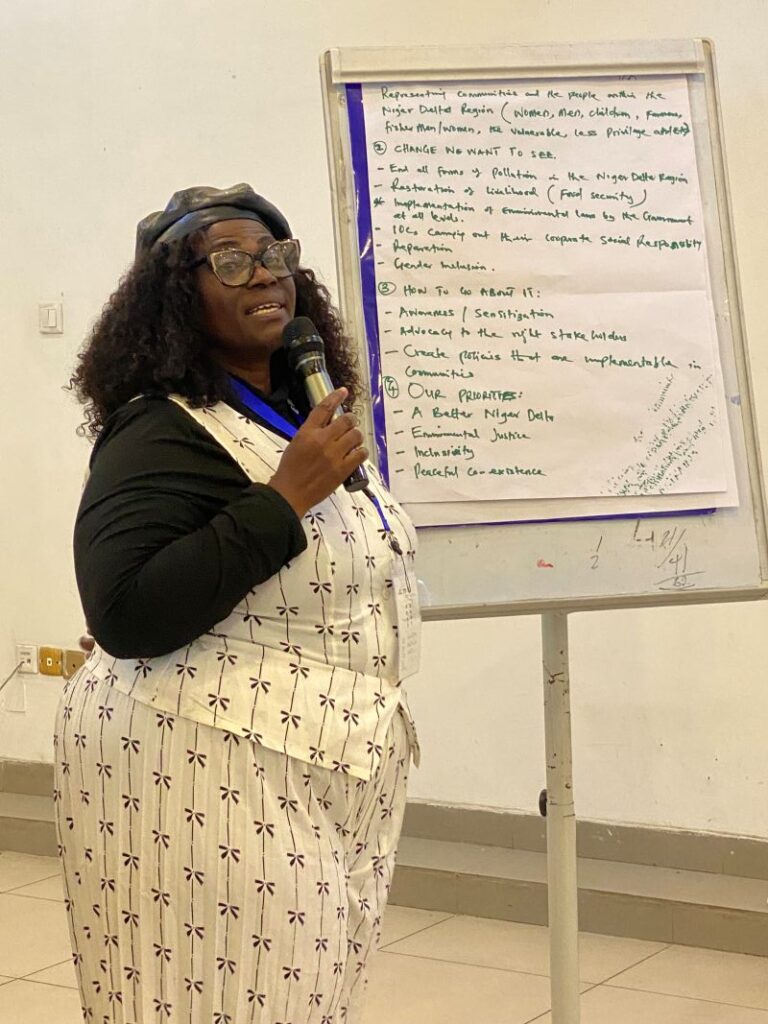
The workshop proceeded into an interactive breakout session facilitated by Tijan Bolton, Executive Director of Policy Alert. Participants were divided into groups representing the media and influencers, academia, community members, civil society organisations, and non-governmental organisations. Each group engaged in discussions centred on key questions, including:
- Who do they serve or represent?
- What changes do they want to see in the Niger Delta?
- What strategies can help achieve those changes?
- What are their priorities?
- What constraints limit their effectiveness?
- What outcomes do they hope to achieve through their work?
The discussions generated rich perspectives on the diverse roles stakeholders play within the climate justice ecosystem. At the end of the session, each group presented its findings and recommendations to the plenary.
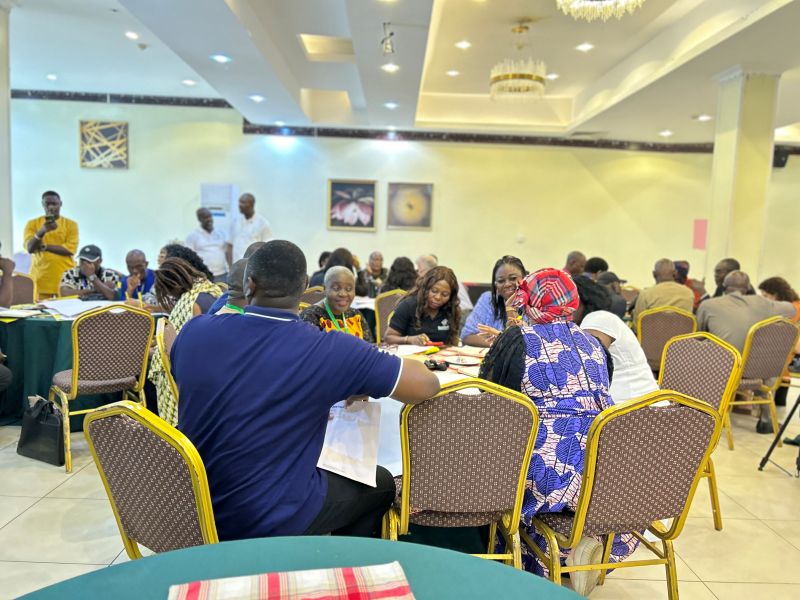
A second round of group discussions focused specifically on issues of funding and movement sustainability. Participants examined barriers to accessing resources, explored alternative funding models, and proposed practical strategies for strengthening locally-led movements and community organising efforts. The groups again presented their findings, creating an opportunity for collective reflection and cross-learning..
From Discussion to Action
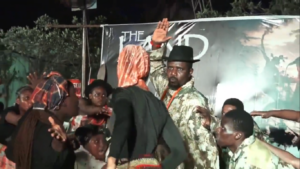
As the workshop drew to a close, participants moved beyond identifying challenges to discussing concrete actions that could be taken immediately to address pressing environmental and social justice concerns in the region. Particular attention was given to the ongoing crisis in Bille kingdom. Participants discussed advocacy opportunities and strategies for increasing public awareness and mobilising support around the issue. Among the immediate actions proposed was the launch of a coordinated online awareness campaign. Veteran actress and activist Hilda Dokubo emphasised that affected communities must remain at the centre of environmental governance processes, clean-up initiatives, and compensation mechanisms. She cautioned against advocacy efforts that fail to actively involve local people.”You see this waka wey we dey so, if community no follow us waka this waka, we are on our own” she said. She further stressed the importance of empowering communities to tell their own stories and shape public narratives around environmental injustice. “Communities should be encouraged to tell their stories, and where they are unable to do so, we should teach them how to tell those stories, even if it is in vernacular.” she conclusively said.
Her intervention resonated strongly with the workshop’s emphasis on locally led movements and the importance of amplifying community voices in decision-making processes.
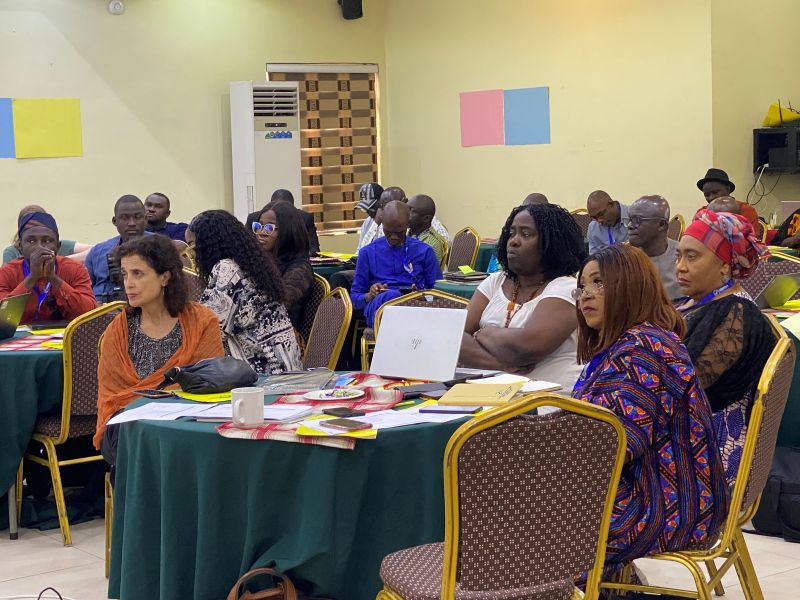
Echoing the call for accountability, environmental and human rights advocate Iniruo Wills challenged participants to critically assess the impact of decades of advocacy and to confront public institutions more directly. In his words, “We must challenge these people; otherwise, we are wasting our time. There are people in this room who have been in this business for 30 years. That is a generation, and we must ask ourselves what has been achieved.” He argued that advocacy campaigns would be more effective when they clearly identify and target responsible authorities rather than treating governance failures as abstract problems. For him “When developing advocacy campaigns, we must direct our messages to those responsible for taking action. Public officials and institutions must be reminded of their obligations and held accountable for fulfilling them.”
Referring to findings presented during the workshop, he noted that reports and evidence are only meaningful when they translate into tangible improvements for affected communities. “The BSOEC report is fantastic work, but we must ask what value it has for communities if polluted land remains uncleansed and compensation remains unpaid. As a collective, we must hold authorities accountable and insist that they do their jobs.” he asserted.
These reflections helped sharpen the workshop’s focus on strategic advocacy, public accountability, and community-driven action as essential pillars of environmental governance and justice in the Niger Delta. In addition, Social Action committed to publishing advocacy materials on the front pages of national newspapers to draw attention to the ongoing situation in Bille and amplify calls for accountability and justice. Participants also viewed a short documentary highlighting the realities of the Bille crisis, providing a visual account of the environmental and social challenges confronting affected communities..
A Renewed Commitment to Justice
The workshop concluded with a strong call to action, urging participants to move beyond dialogue and actively deploy every available tool, platform, and network to advance climate justice, environmental accountability, and a just transition in the Niger Delta. Participants were challenged to strengthen collaboration, deepen community engagement, and sustain advocacy efforts that place the rights, voices, and aspirations of affected communities at the centre of environmental and development policies. The gathering reaffirmed a shared commitment to building resilient, locally-led movements capable of driving lasting social and ecological transformation across the Niger Delta.