We Can No Longer Breathe: Inside the People’s Assembly and Tribunal That Put Nigeria’s Government on Trial in Bille
-
by
Peter Mazzi
Bille Kingdom, Rivers State — June 13, 2026
Since November 2025, Bille Kingdom has been living with a gas crisis whose origins remain, officially, unresolved. Subterranean eruptions of gas — believed to be linked to decades-old, decaying oil infrastructure — have contaminated the community’s water sources, filled its air with toxic emissions, and triggered repeated fire outbreaks, including fires sparked simply by the act of someone trying to cook a meal.
The National Oil Spill Detection and Response Agency, NOSDRA, has released air quality test results. No comprehensive scientific data on water contamination has been made public. The Rivers State government allocated ₦100 million as palliative support but the gas is still venting. The fires are still happening. And the people of Bille are still there — because most of them have nowhere else to go.
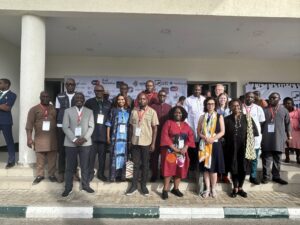
What June 13 represented was a formal act of community justice in the face of institutional failure. The Niger Delta People’s Assembly — convened by Social Action and supported by Kebetkache Women Development and Resource Centre, Miideko, the Civil Rights Council, Health of Mother Earth Foundation, OilWatch International, the Ijaw National Congress, the Chikoko Movement, and others — arrived not merely as sympathizers. They arrived as a tribunal. And the people of Bille had petitions to deliver.
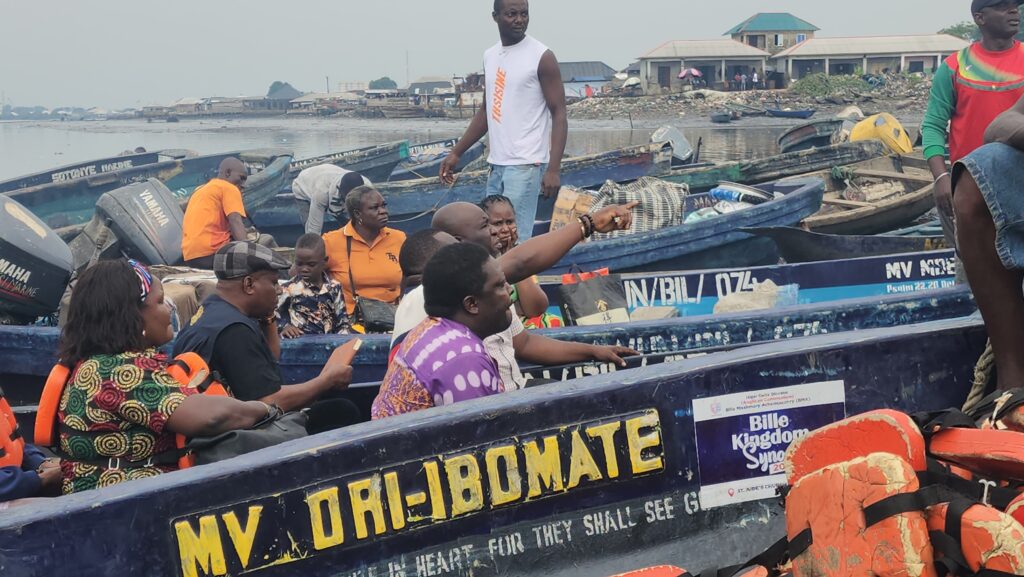
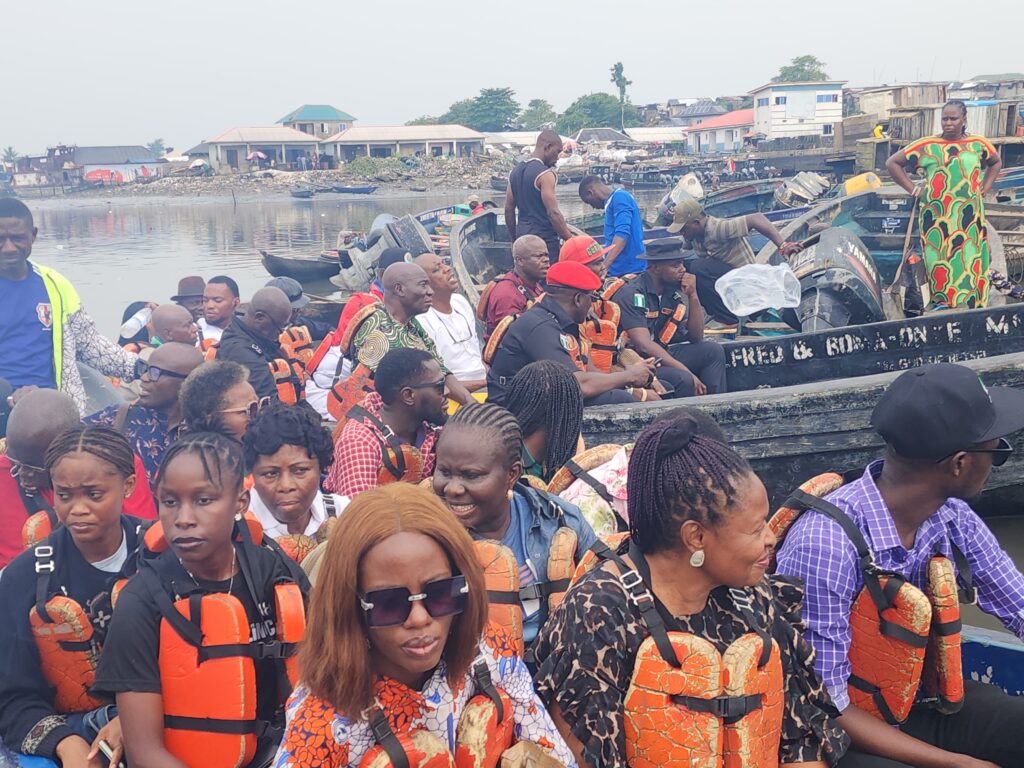
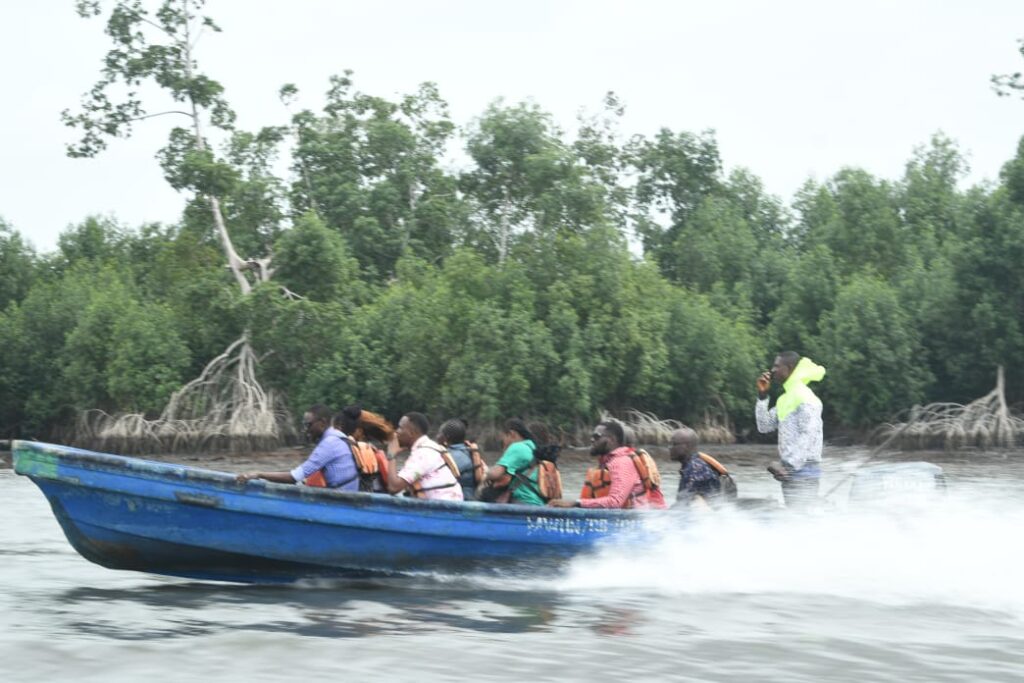
The Unique Welcome
When the boats docked at Bille, the delegation was not met with silence. The community came out to receive them the Ijaw way — with drums, and with traditional war songs that rolled across the waterfront and announced, unmistakably, that this was not a community that had given up. It was a reception that carried both joy and defiance: the warmth of a people glad that someone had come, fused with the fighting spirit of a people who refuse to be forgotten.
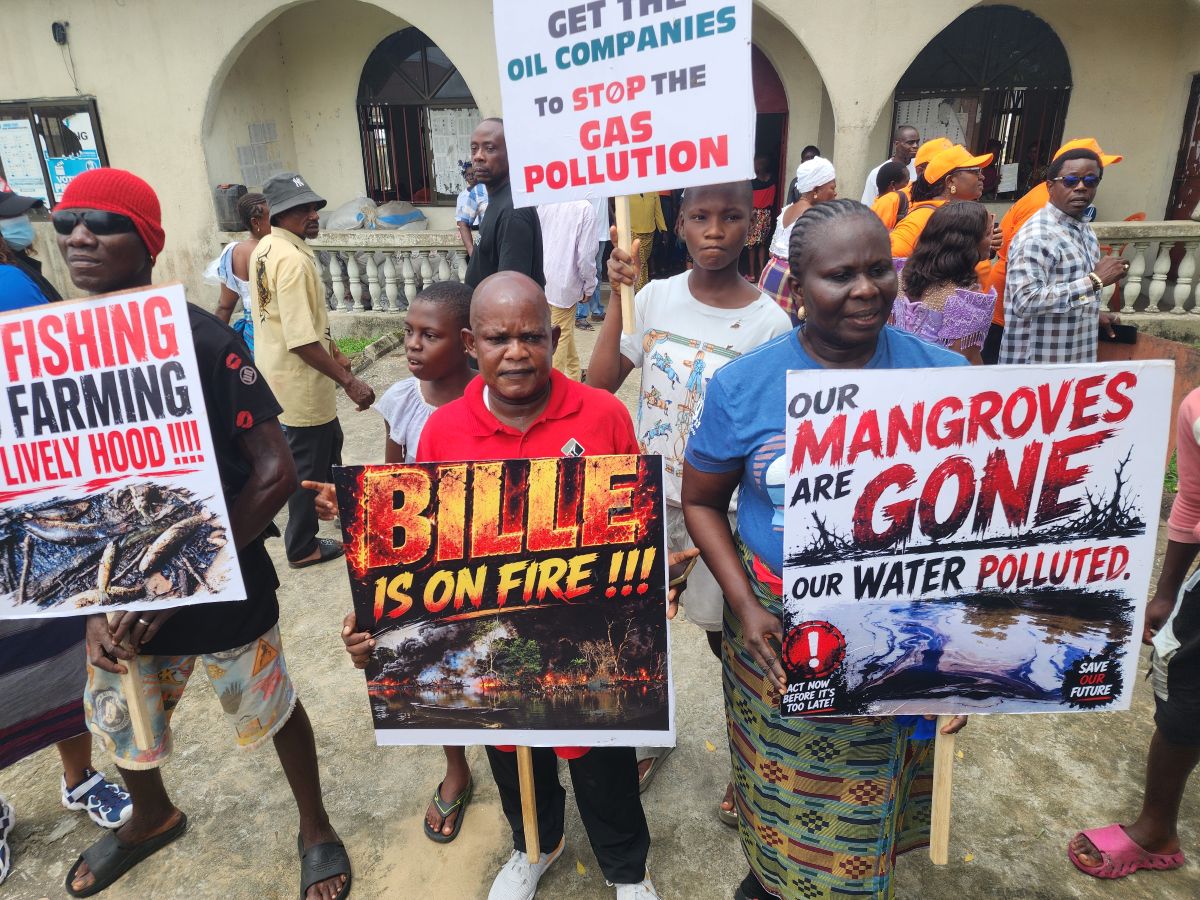
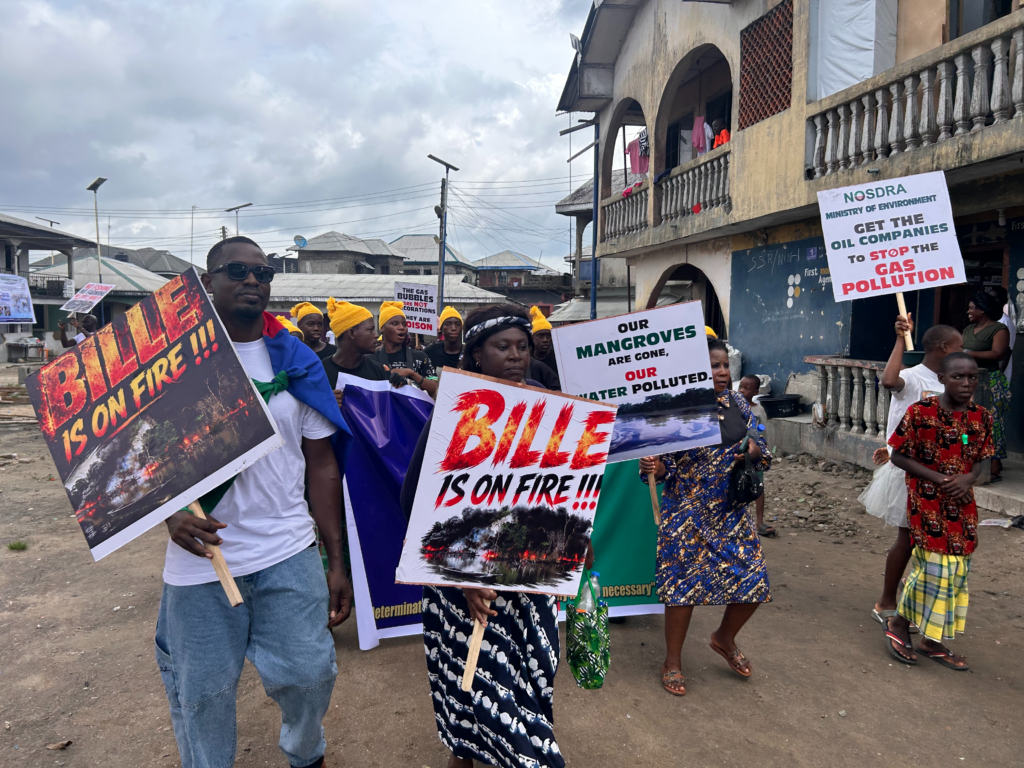
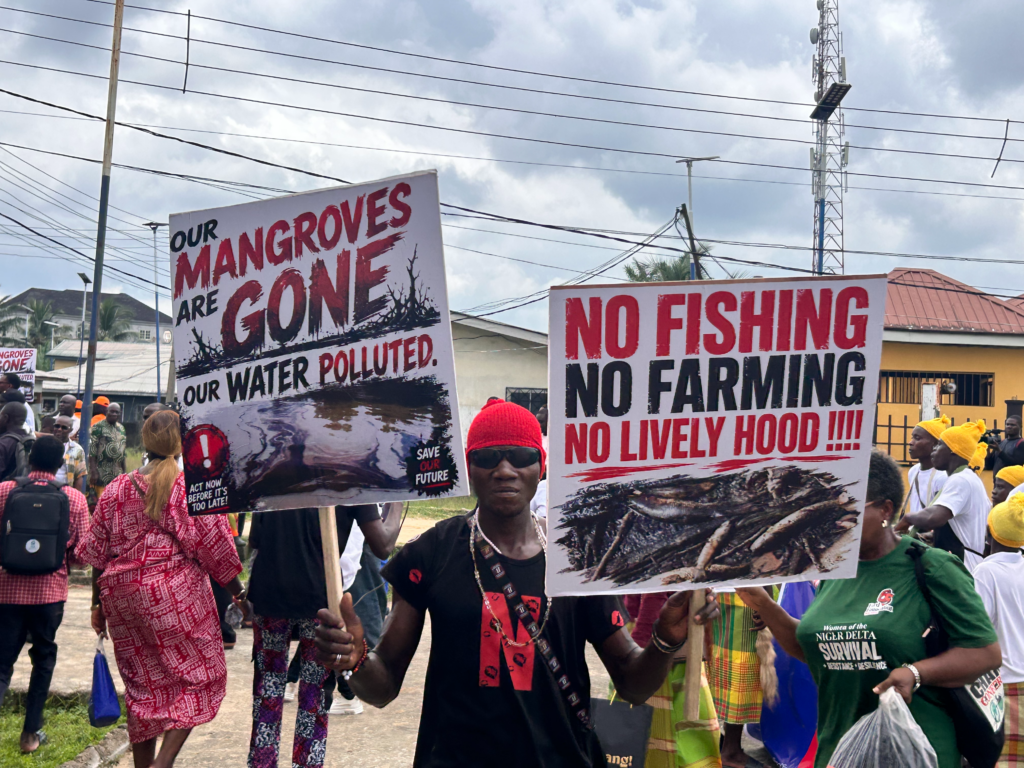
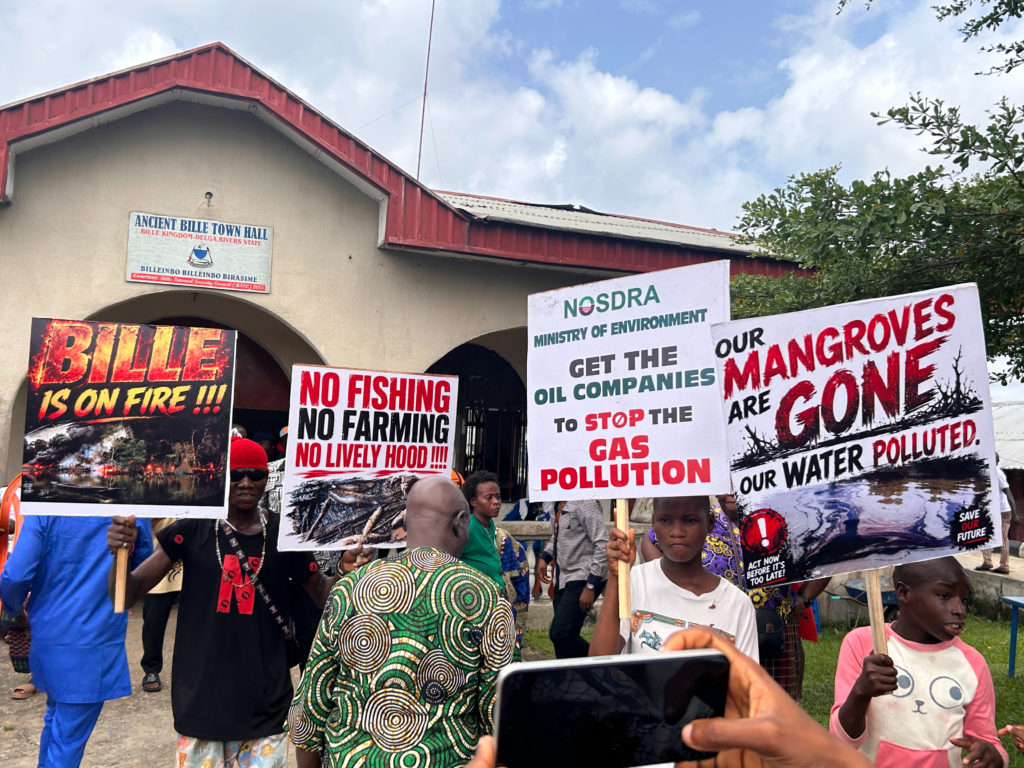
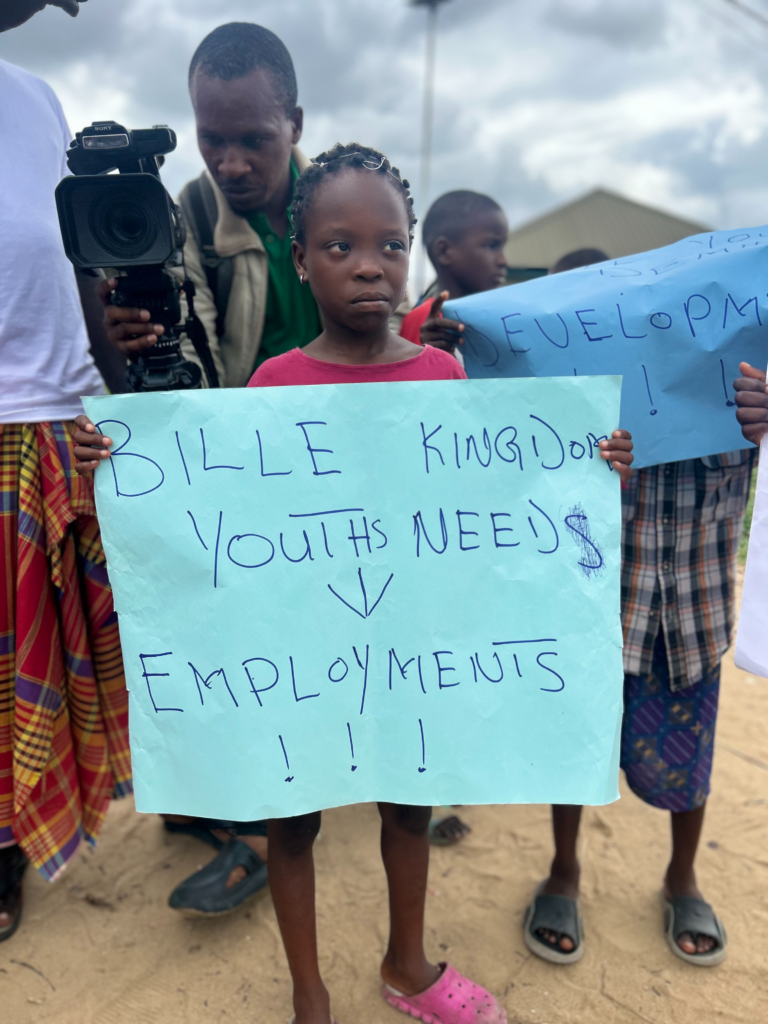
What followed was a procession through the community that doubled as a peaceful protest. Men, women, youth, and children marched together, many of them carrying handwritten and printed placards that bore the words they had been trying to say to the world for months. “Bille is on Fire.” “Bille is Boiling, Bubbling and Burning.” “Stop the Environmental Genocide.” The inscriptions were stark and unambiguous — a community’s cry rendered in ink and cardboard, held aloft under a sky that smelled of gas.
It was, in its own way, one of the most powerful moments of the day. Not a speech, not a document, not a press release — just people, walking through their own contaminated streets, demanding to be seen.
Before the Tribunal: An Audience with the King
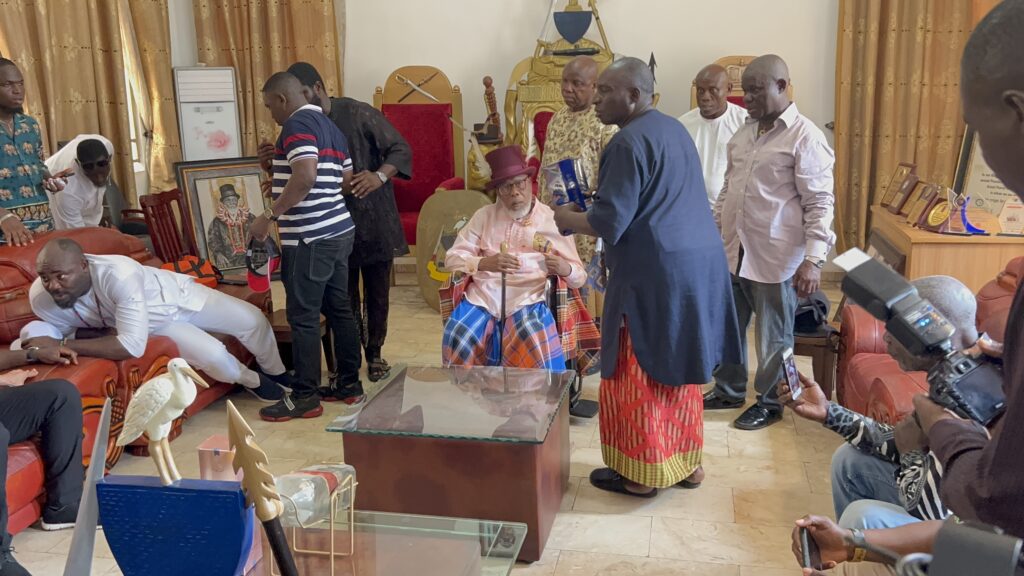
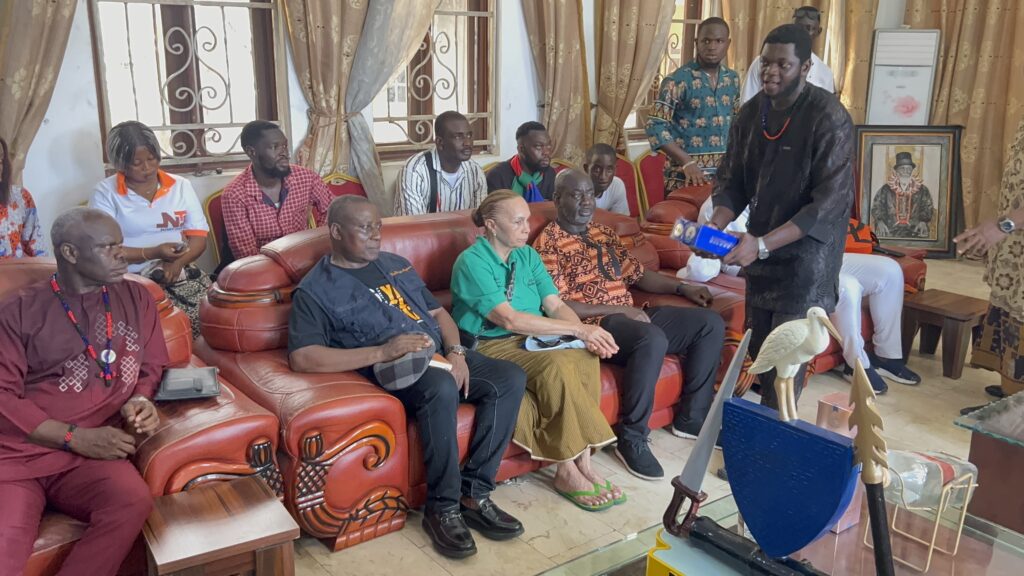
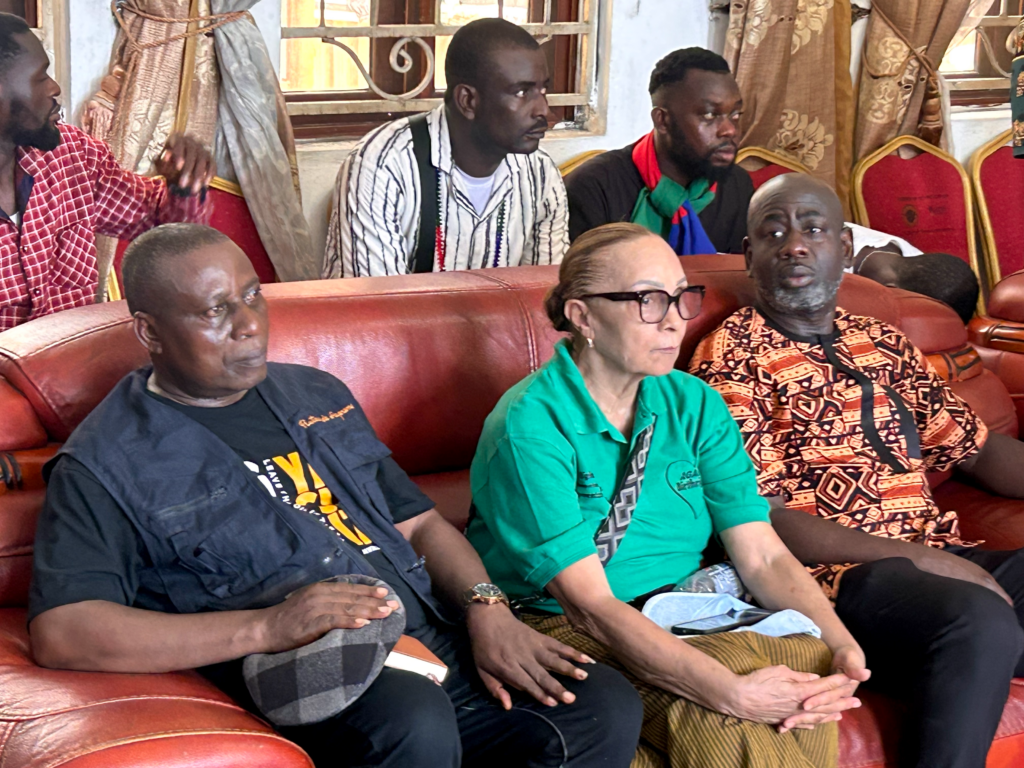
Before the formal proceedings began, the delegation paid a courtesy call on the Amayanabo of Bille, His Royal Majesty, Hon. King Igbikingeri Ngowari Cornelius Herbert. It was more than protocol. In a region where federal and state governments have repeatedly failed their obligations, the traditional institution remains a site of trust and continuity. Dr. Isaac Osuoka, Executive Director of Social Action, addressed the king on behalf of the coalition — thanking him for receiving them, and giving his word that the Assembly’s commitment would not end with the visit. The people responsible for this crisis, he said, would be named, pursued, and held to account.
The Petitioners Speak
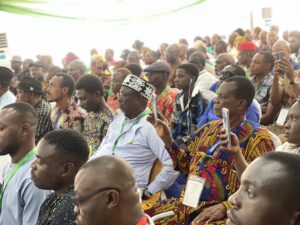
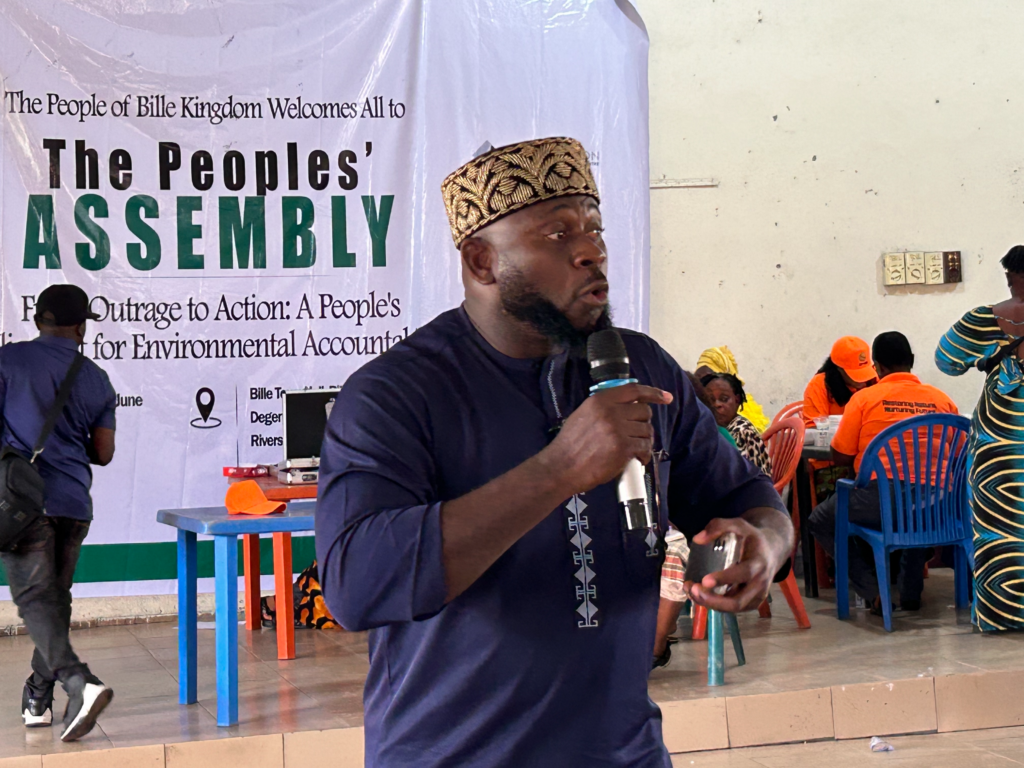
When the tribunal convened, it was the voices of Bille’s residents that opened the proceedings — and nothing that came afterwards was more powerful.
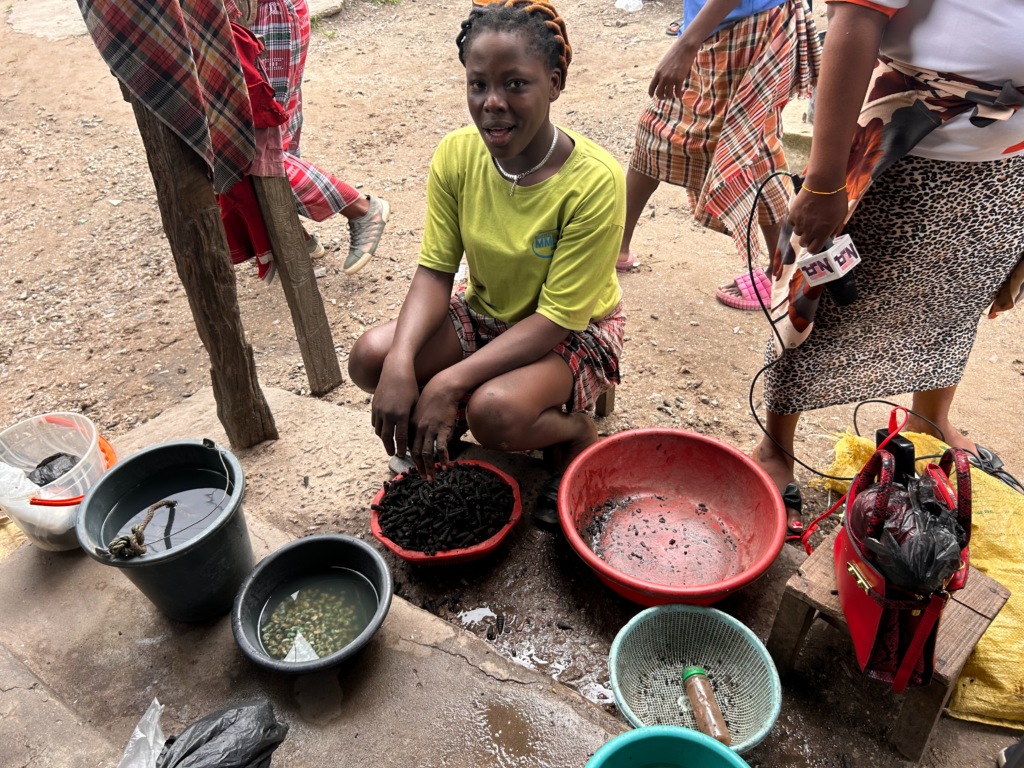
A local periwinkle trader, her livelihood erased by the contamination of the forests and waterways she depends on, put the community’s reality with unadorned clarity. “In Bille, everywhere is boiling — both the land and the water,” she said. “We are suffering. In the bush where we used to pick periwinkles, we no longer see any. All the periwinkles have died. We are suffering. We really need help.”
Henry Omiete Kaffy, a young man from the community, spoke with the measured restraint of someone determined to be heard. “It is very painful,” he said. “Before you will see us come out like this, we are in pains and we are crying. We just want to maintain a peaceful protest. If rain doesn’t fall, we no longer have water to drink — because our water is polluted. The water is poison now.”
Boma Horsfall offered a quieter, no less devastating account. “Life is not so good with us because of what is happening in the community,” she said. “The place is all polluted and we are continuously inhaling the polluted gas, every day and every night.”
Then Madam Nene Akinta, the women’s leader of Bille, stood to speak. She wept as she spoke, and her words — delivered in the Pidgin that is the mother tongue of suffering across the Niger Delta — carried the weight of every woman in that community who has watched her children fall ill and her home become a hazard.
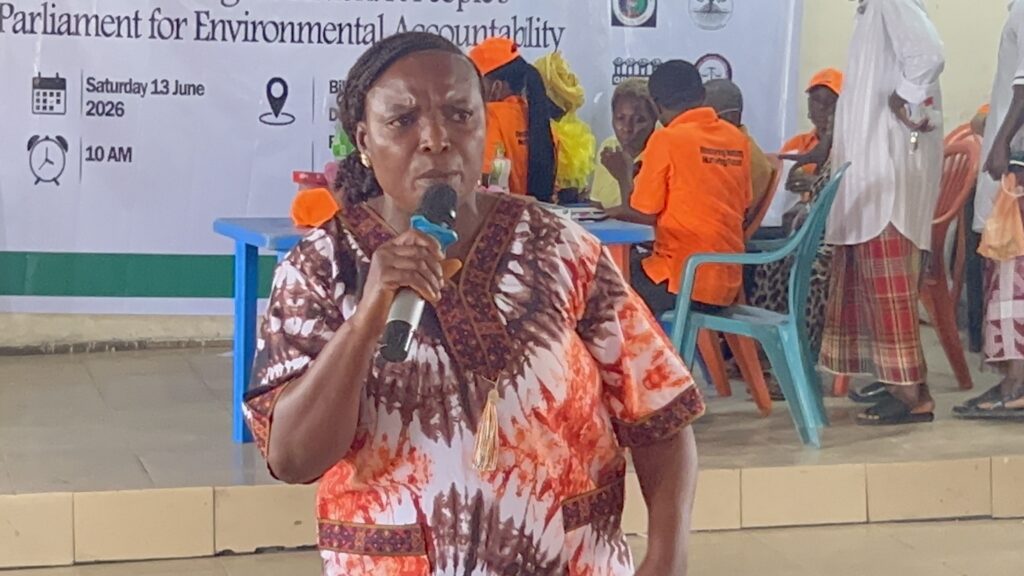
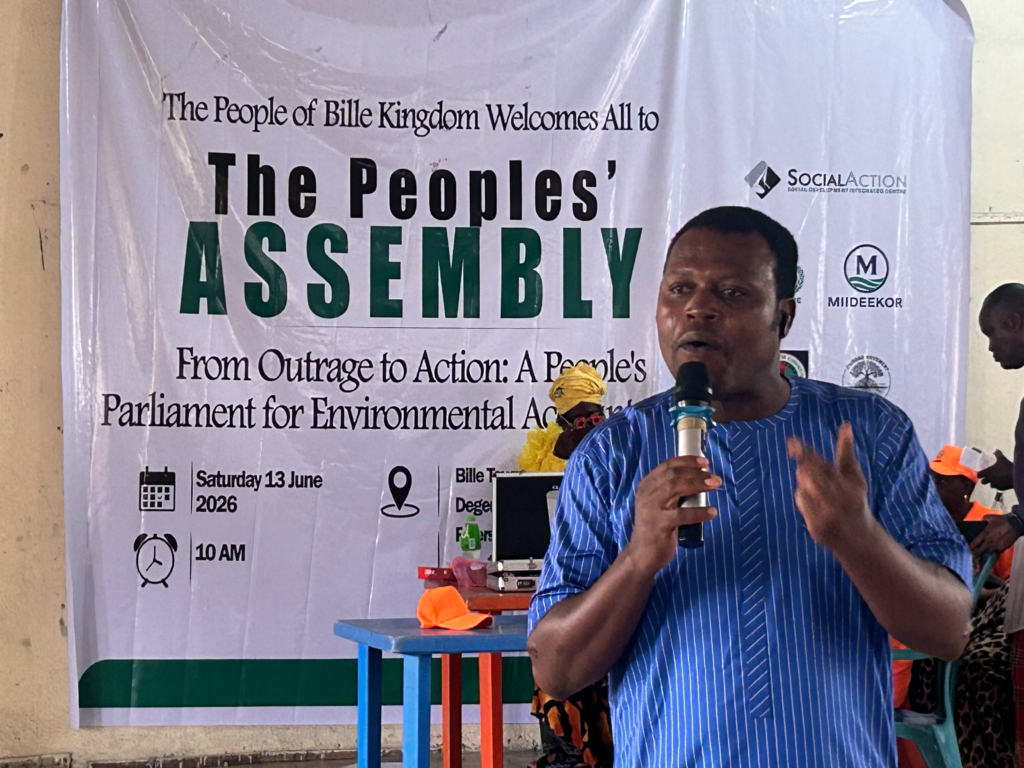
“Suffer, suffer — no be small suffer,” she said. “Go river, no way. You dey for your house self, no way. You comot for house, go reach where wey dey boil, gas go enter your throat, enter your body. Cough. Chest pain. Body pain. Leg pain. Stomach pain. Everywhere dey pain — nowhere wey no dey pain. We want make government come stop this thing for us. We no go fit again. The water wey we dey drink self dey boil — if you mistakenly drink am, you don die. Rashes everywhere. All over your body go dey scratch you, boil everywhere. Our children, if them drink water, na stooling, vomiting. We no dey rest. Every week we dey go clinic.”
Pastor Boma Paul gave voice to a fear that has become ambient in Bille — the fear that no one in power actually wants them to survive. “The government gave us ₦100 million as palliative,” he said. “For what? What is it going to do? How is it going to help us? The gas is still there. Recently we have seen fire incidents. We need to know the root cause — except maybe the government wants all of us to die. Any day, any time, fire may engulf the whole community. Whatever we are inhaling now, we don’t know its consequence in the next five years. Probably people will start dying. Many persons are already complaining of rashes, and even when they take drugs it doesn’t work. When we drink water here, we purge.”
Dappa Okiente Eliot did not speak about himself. He spoke about a friend — and in doing so, he illuminated the quiet, invisible exodus of those who can afford to leave. “My friend lives near this area,” he said. “After some time, he became sick and came to Port Harcourt for treatment — persistent coughing. The first question the doctor asked him was what environment he lived in. It wasn’t difficult to conclude it was the gas. He has not returned since. He has to take his treatment in Port Harcourt.” He paused. “Imagine those who have no one to take them out of the community when they fall ill.”
Asikiya Obomate Allison described the morning last year when gas began bubbling from the ground near a primary school. The smell of rotten eggs filled the air. Children could not breathe. They had to be evacuated. “The bubbles that come from the ground are inflammable,” she said. “When you strike a match, it connects to flammable gas. We have recorded several fire incidents in this community just because someone wanted to cook. There is apprehension every time anyone wants to light a fire. We cannot eat raw food, can we?”
And Abigail Malor Telebo, representing Bille’s women, brought the tribunal back to the ground level — to the dried wells, the poisoned water, the bodies of women and children who have absorbed this crisis in their lungs and skin and stomachs for more than seven months. She appealed to every tier of government. She asked, plainly, where the ₦100 million had gone and what it had changed. She recognised the medical support of ATOIBI as a rare gesture of genuine care. But she wanted more than gestures. “We need help,” she said. “We need it now.”
The Jury Delivers Its Findings
The coalition that had made the journey to Bille was not assembled by accident. Among them were environmental scientists with decades of Niger Delta fieldwork, human rights lawyers, seasoned advocates who have confronted oil corporations in Nigerian and international courts, and community elders who have watched this region’s story unfold across generations. When they spoke, they did so as jurors who had heard the evidence — and their findings were not provisional.
Dr. Isaac Osuoka was direct. “There is no accountability from the Minister of Petroleum Resources or his Minister of State,” he said. “The leadership of NUPRC, NNPC, the Ministry of Environment, NOSDRA — all of them must be called out by name. They have mandates. They have budgets. And the people of Bille are still breathing poison.” He did not spare the South-South governors, whose silence he described as its own form of complicity. And on the presidency, he was unambiguous: “President Tinubu has failed Bille. His ministers have failed Bille. His agencies have failed Bille. We are here today because they will not come.”
Ann Kio-Briggs, one of the Niger Delta’s most prominent oil and gas rights advocates, turned her attention to the political architecture that enables this kind of abandonment. “Elections are coming,” she said. “Vote wisely. Every politician who has looked away from what is happening in Bille should know that the people of the Niger Delta are watching — and they will remember.” She was clear that sentiment is not enough. Elected officials must be held responsible — not just criticized, but confronted with consequences at the ballot box.
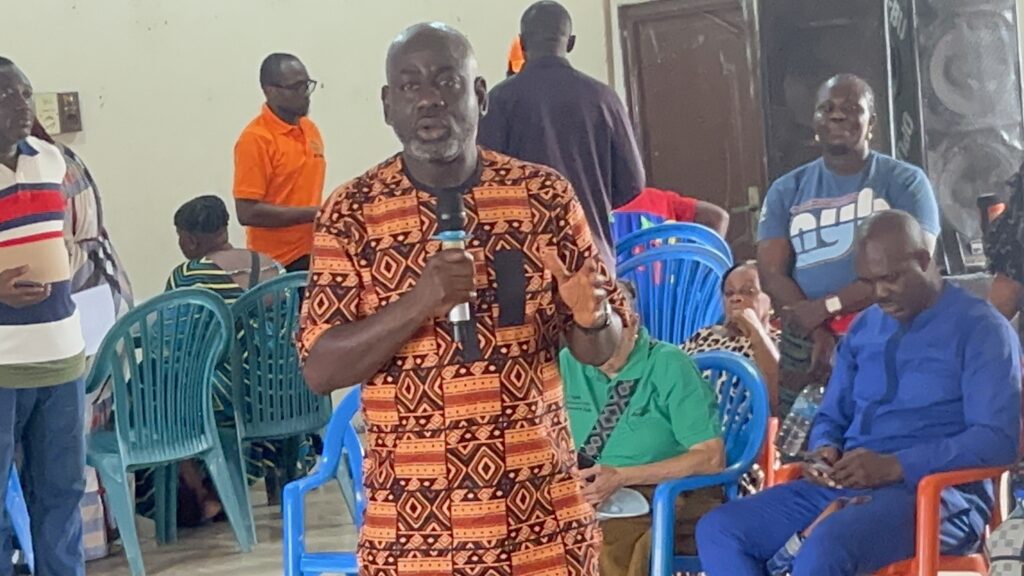
Celestine Akpobari placed Bille in a lineage of Niger Delta communities that have been used, contaminated, and abandoned. He called for an immediate reversal of the industry’s current divestment trajectory, arguing that oil companies cannot be allowed to transfer assets and walk away from the environmental liabilities they leave behind. “Clean up Bille. Provide clean water. That is not a request — it is a minimum obligation,” he said. Then he named the places the people of Bille fear becoming: “Bille will not become another Rumuekpe. Bille will not become another Ogoni. Bille will not become another Odi.”
Legal advocate Iniruo Wills acknowledged the medical outreach running alongside the tribunal — and then, with characteristic precision, defined its limits. “A one-day medical outreach is not a solution. It is a gesture. What Bille needs are long-term, impactful measures — not charity visits.” He called on the Governor of Rivers State, the NOSDRA Chairman, the Minister of Petroleum Resources, and the Minister of Gas to come to Bille in person — not to send representatives, not to issue statements, but to stand in the community and look at what their inaction has produced. “If they will not act,” she said, “then they must declare a state of emergency and bring in the resources this community deserves.”
The former President of the Ijaw Youth Council framed the crisis in terms that left no room for diplomatic distance. “An injury to one is an injury to all,” he said. Among the measures the coalition was prepared to pursue, he stated, was the suspension of oil and gas operations in Bille — a step designed to make the government and industry feel the cost of inaction. “What is happening in Bille is environmental terrorism,” he said. “And we will use every legitimate measure available to us to make the government act.”
The President of the IYC Eastern Zone, Comrade Datolu Sukubo, called for something that has been conspicuously absent from the official response: science. Proper subsidence studies. Rigorous water contamination assessments. An honest accounting of what decades of extraction have done to the geology and hydrology of this island. Without that data, he argued, remediation cannot be designed — and accountability cannot be assigned. He urged everyone in the room to treat accountability not as an occasional demand but as a daily practice.
The IYC’s Vice President for Youth delivered the numbers that anchored the tribunal’s findings in measurable, irrefutable terms. An estimated 85 percent of water sources across the affected communities are now polluted. There are 360 points where gas is actively bubbling to the surface — in one community alone. Across Bille’s forty communities, the scale multiplies. Eighteen fire incidents have been recorded by residents; only six appear in any official documentation. “What else do you call this if not ethnic cleansing?” he asked. He made an immediate appeal for nose masks, clean water, milk for children, and basic palliatives — not as a solution, but as the absolute minimum owed to a community in crisis.
The Verdict
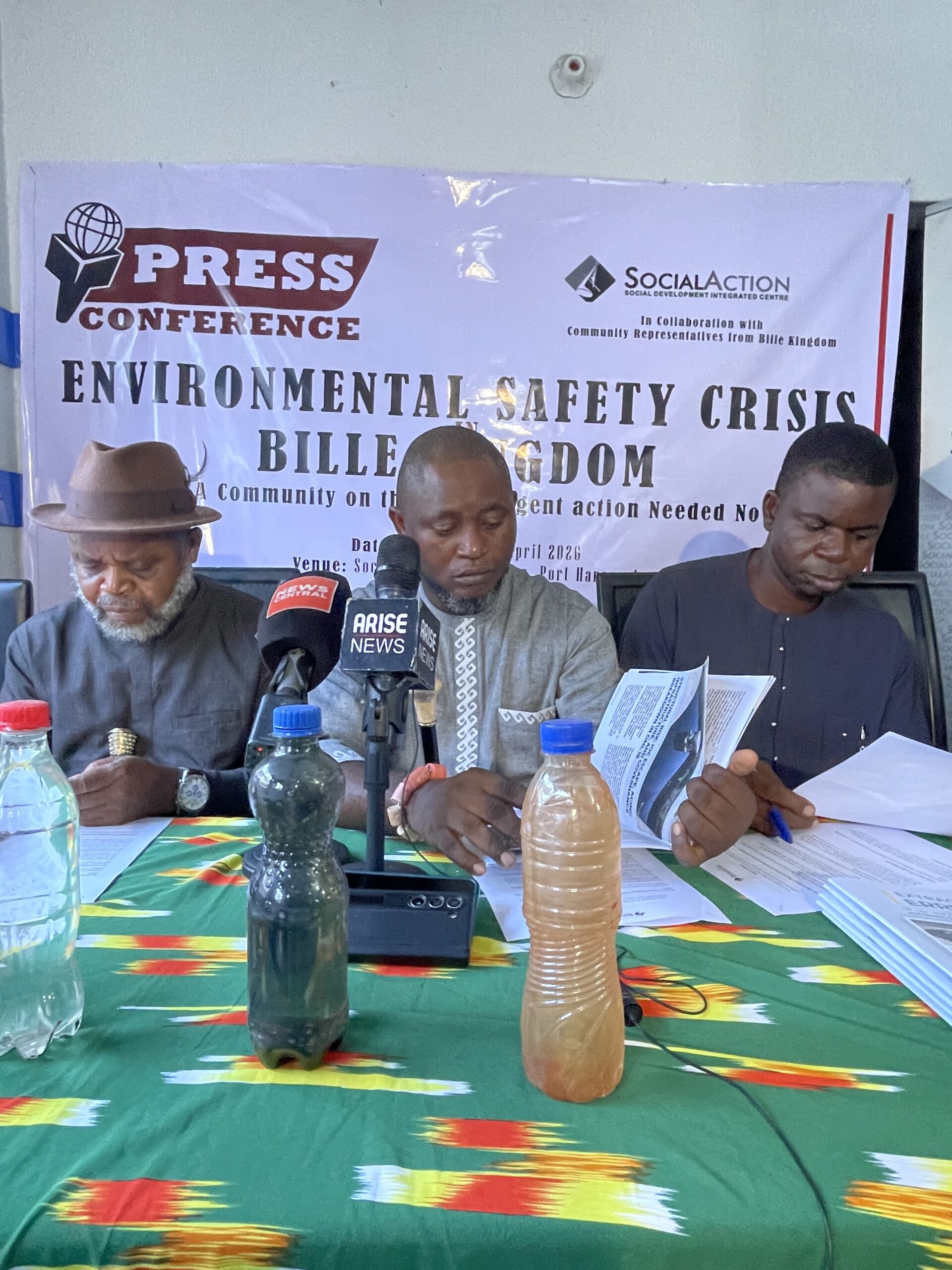
The tribunal’s findings, delivered by the coalition at the close of proceedings, were unambiguous.
The federal government of Nigeria — through the Ministry of Petroleum Resources, the Ministry of Environment, NOSDRA, NUPRC, and the NNPC — has failed in its statutory obligations to the people of Bille. The governors of the South-South states have failed to exercise the political will their offices demand. The oil industry’s divestment process, as currently structured, threatens to permanently abandon contaminated communities without remediation. And the Tinubu administration has treated a public health and environmental emergency as a matter for press releases rather than policy.
The tribunal called for an immediate halt to asset divestment pending resolution of environmental liabilities; independent subsidence and water contamination studies; a formal declaration of emergency in Bille with funded, verifiable remediation; transparent deployment and public accounting of the ₦100 million already pledged; and a mandatory, in-person visit to Bille by the ministers of petroleum, gas, and environment, the NOSDRA Chairman, and the relevant state governors.
The people of Bille brought their case. The jury has ruled. What happens next is a test of whether Nigeria’s government is capable of hearing it.
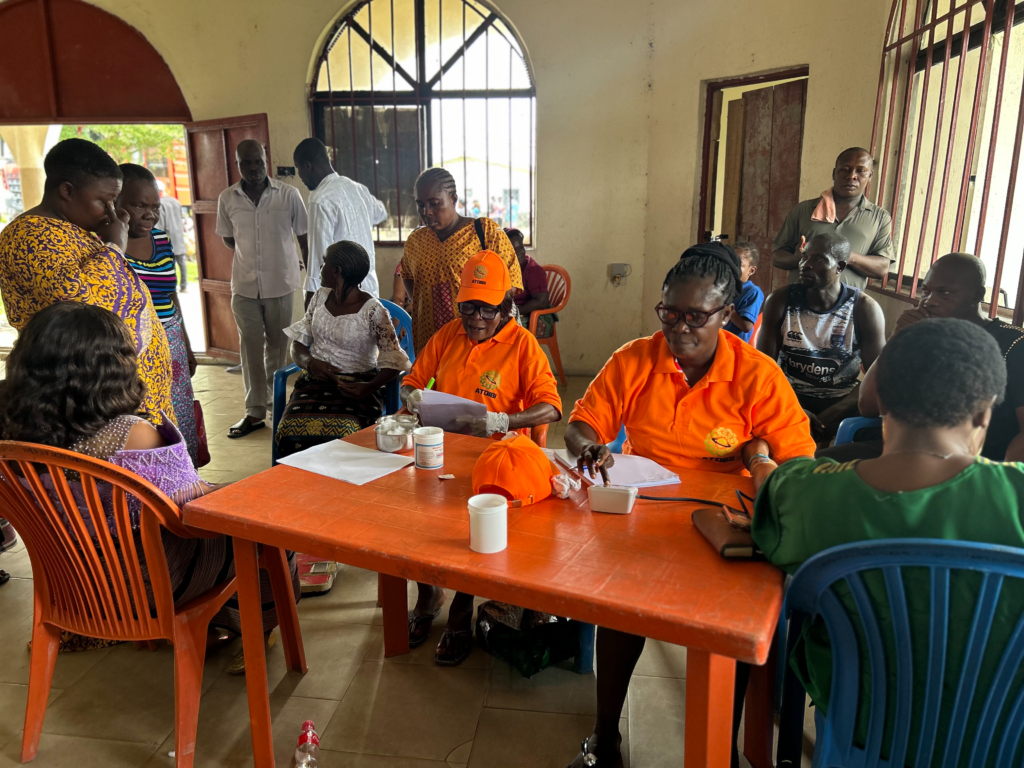
A Note on the Medical Outreach
Running alongside the tribunal, a medical outreach coordinated with support from ATOIBI and supported by The Niger Delta Assembly attended to community members — conducting eye examinations and providing first-aid treatment to adults and children alike. In the absence of an adequate government health response to the crisis, civil society is doing what the state has not. It matters. And as every speaker made clear, it is not sufficient.
Why This Day Was Different
Social Action has visited Bille before. It has documented, published, and advocated. But June 13 was something else — a deliberate act of collective witness, conducted at scale, on the land of the affected community itself, with the community’s own people as the primary voices of record. Scores of local, national and international journalists and civil society representatives, community leaders and lawyers made the journey across the creeks and heard, first-hand, what seven months of a gas crisis does to a human being.
The drums were still sounding when the boats left. In Bille, the war songs have not stopped. The tribunal has delivered its verdict. The question now is whether those named in it will respond — or whether the gas will keep rising, the fires keep starting, and the people of Bille keep waiting, in water that boils and air that burns, for a government that has yet to come.